


Peace breakthrough: DRC-Rwanda end 30-year war in stunning U.S.-backed deal

 Quick Read
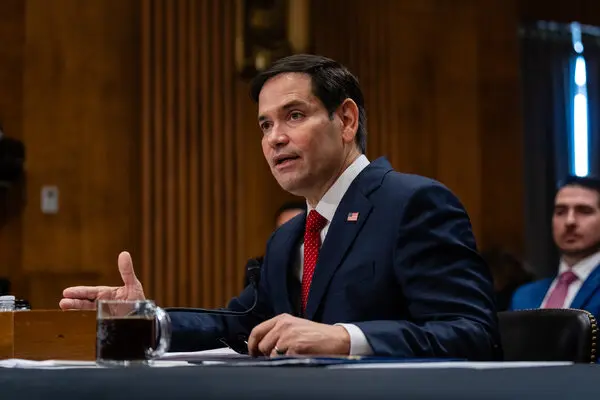
Rubio praised the collaborative efforts, stating, “This could not have happened without such close friends and partners in the African Union and in Qatar,” and acknowledged the State Department team, particularly Boulos, who “jumped all over this and really worked it hard.”
By Kazeem Ugbodaga
In a landmark moment for African diplomacy, the Democratic Republic of the Congo (DRC) and Rwanda have signed a comprehensive peace agreement in the United States, heralding an end to a 30-year conflict that has destabilized the Great Lakes region.
U.S. Secretary of State Marco Rubio, alongside DRC Foreign Minister Thérèse Kayikwamba Wagner and Rwandan Foreign Minister Olivier Nduhungirehe, formalized the accord, which Senior Advisor Massad Boulos described as “setting both countries and their people on a path towards peace and prosperity.”
The agreement, building on a Declaration of Principles signed on April 25, 2025, addresses longstanding grievances, including the neutralization of the Democratic Forces for the Liberation of Rwanda (FDLR), a militia linked to the 1994 genocide against the Tutsi.
“The heart of this peace agreement is the decision to establish a standing joint security coordination mechanism between DRC and Rwanda,” said Nduhungirehe, emphasizing its focus on “the neutralization of the FDLR” and the “irreversible and verifiable end to state support for FDLR and associated militias.”
The accord also commits to facilitating refugee returns, enhancing economic cooperation, and respecting territorial integrity.
Rubio underscored the significance of the moment, crediting President Donald Trump’s leadership.
“President Trump is a president of peace. He prioritizes it above all else,” Rubio said, referencing Trump’s interventions in conflicts like India-Pakistan and noting that peace is “not just about ending wars; it’s about allowing people to live… for prosperity, for economic opportunity, for family reunification.”
Rubio praised the collaborative efforts, stating, “This could not have happened without such close friends and partners in the African Union and in Qatar,” and acknowledged the State Department team, particularly Boulos, who “jumped all over this and really worked it hard.”
The DRC’s Wagner highlighted the agreement’s human toll, noting that it “will not erase the pain, but it can begin to restore what conflict has robbed many women, men, and children of: safety, dignity, and a sense of future.”
She invoked the voices of Congolese women, quoting a Kinshasa coalition: “We do not want a peace shaped by elites. We want a peace that is real, lived, shared, and built with us.”
Wagner emphasized the need for action, stating, “What we have signed is only as strong as our will to implement it… We, the DRC, will certainly and resolutely fight for this agreement to be respected, not with our words but with our deeds.”
Rwanda’s Nduhungirehe expressed gratitude to Trump and the U.S., saying, “Let me begin by expressing our sincere appreciation to President Donald Trump for his personal engagement in facilitating this historic agreement.”
He highlighted Qatar’s “absolutely central role” in initiating dialogue in Doha and the African Union’s leadership under Togolese President Faure Gnassingbé, adding, “Today’s agreement also builds on the African-led peace initiatives.”
The agreement, effective immediately upon signing, includes provisions for disarming non-state groups, establishing a joint security mechanism, and fostering regional economic integration.
Boulos detailed its scope, noting it encompasses “the disengagement, disarmament, and conditional integration of non-state armed groups; the facilitation of the return of refugees and internally displaced persons; as well as humanitarian access.”
A parallel Qatar-led mediation with the M23 armed group was also recognized, with Nduhungirehe pledging Rwanda’s support to “secure a peace agreement between the DRC Government and the AFC/M23.”
The signing, witnessed by African Union Chairperson Mahamoud Youssouf, Qatar’s Minister of State Mohammed Al Khulaifi, and Togolese Foreign Minister Robert Dussey, reflects a collaborative international effort.
Wagner thanked President Félix Tshisekedi for “choosing the harder path: a peace rooted in principle and in the dignity of our people,” and acknowledged Angola’s President João Lourenço for laying foundations through the Luanda Process.
As the DRC and Rwanda embark on implementing this accord, challenges remain, with Nduhungirehe cautioning,
Comments