


No going back: Lagos begins full enforcement of single use plastic ban

 Quick Read
Wahab stressed that the ban does not cover all plastic products, clarifying that pure water sachets and PET bottles are exempted.
The Lagos State Government has commenced immediate enforcement of the ban on certain categories of Single Use Plastics (SUPs), specifically those under 40 microns in thickness effective Tuesday, July 1, 2025.
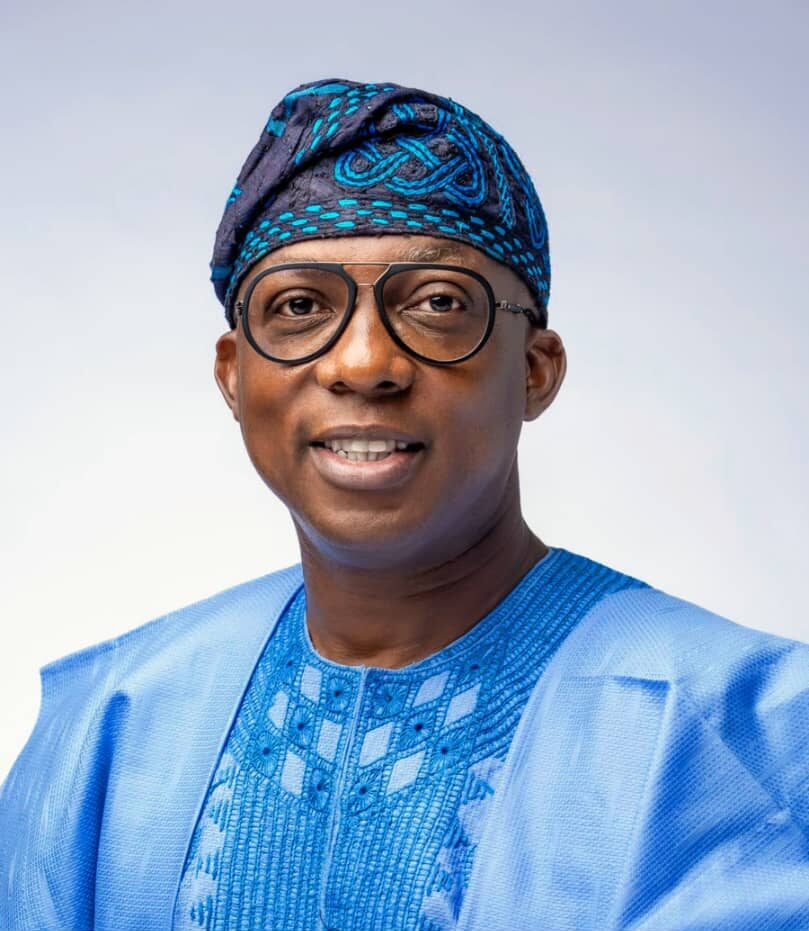
Announcing the enforcement at a press conference held at the Ministry of the Environment and Water Resources, the Commissioner, Tokunbo Wahab declared the State’s unwavering commitment to the ban, emphasising that there would be no reversal or further extensions.
“There will be no going back on the 1st of July 2025 set date for enforcement,” Wahab said firmly, reminding stakeholders that the State had previously made its position clear during the ban on styrofoam containers announced in January 2024.
Wahab stressed that the ban does not cover all plastic products, clarifying that pure water sachets and PET bottles are exempted.
However, he insisted that after an 18-month moratorium, failure by producers to adopt alternatives clearly indicates unwillingness to comply.
“If after 18 months moratorium, the producers have not been able to embrace alternatives to single-use plastics, it simply means they have no intention of complying with the ban,” he said.
He revealed that the State government had held extensive engagements with stakeholders, including the Manufacturers Association of Nigeria (MAN), the Restaurants and Food Services Proprietors Association of Nigeria (RFSPAN), and the Food and Beverage Recycling Alliance (FBRA), before granting a final six-month grace period which expired on June 30, 2025.
Reaffirming the rationale behind the policy, Wahab cited the health and environmental safety of Lagos residents as a top priority.
“The decision was majorly because of the safety and well-being of residents, which the government will never compromise,” he said.
“Lagos, as a coastal state, realises the enormous dangers that styrofoam packs and SUPs of less than 40 microns cause our drainage channels and ecosystem, causing blockades and compelling government to channel funds that should be deployed for provision of other social services to clearing of debris from our drains,” he added.
Wahab also pointed out that Lagos is aligning with global best practices. “The ban of single-use plastics was first effected in Bangladesh in 2002 and, as at 1st of August 2019, such bans have been introduced in over 70 countries of the world with varying degrees of enforcement, while 33 countries have imposed a charge per bag policy,” he stated.
“For avoidance of doubt, the affected items and reasons for the ban include styrofoam packs banned due to their harmful environmental impacts; plastic straws prohibited to reduce plastic waste and promote sustainability; disposable plastic cups and cutleries banned to minimise plastic pollution; and lightweight nylon bags, banned due to their non-reusable and non-biodegradable quality,” Wahab said.
The Commissioner made it clear that production of these items has not been entirely outlawed, but they must no longer be circulated or sold within Lagos State.
“Producers and distributors of the banned items in Lagos State have the option of selling them outside the state,” he said.
He also rejected any opposition motivated by profit, stating, “The state does not intend to join issues with any group or association who are only selfishly interested in profiteering.”
Addressing concerns over job losses, Wahab reassured the public that “no jobs will be lost during this transition,” adding, “More jobs will indeed be created when the producers decide to embrace safe options which will also ensure a sustainable environment.”
He warned that defaulters will face strict penalties under existing environmental laws.
“Any market or store that is found storing or engaging in the sale and distribution of the single-use plastics (less than 40 microns) will be sealed up, the items confiscated, while the offenders will be punished according to the environmental laws of Lagos State,” he declared.
“Let me state that Lagos State Government has put in place different enforcement strategies to effect this ban. However, these strategies will not be disclosed yet,” Wahab added.
Comments