


What transpired when Michael Archer visited TheNEWS

 Quick Read
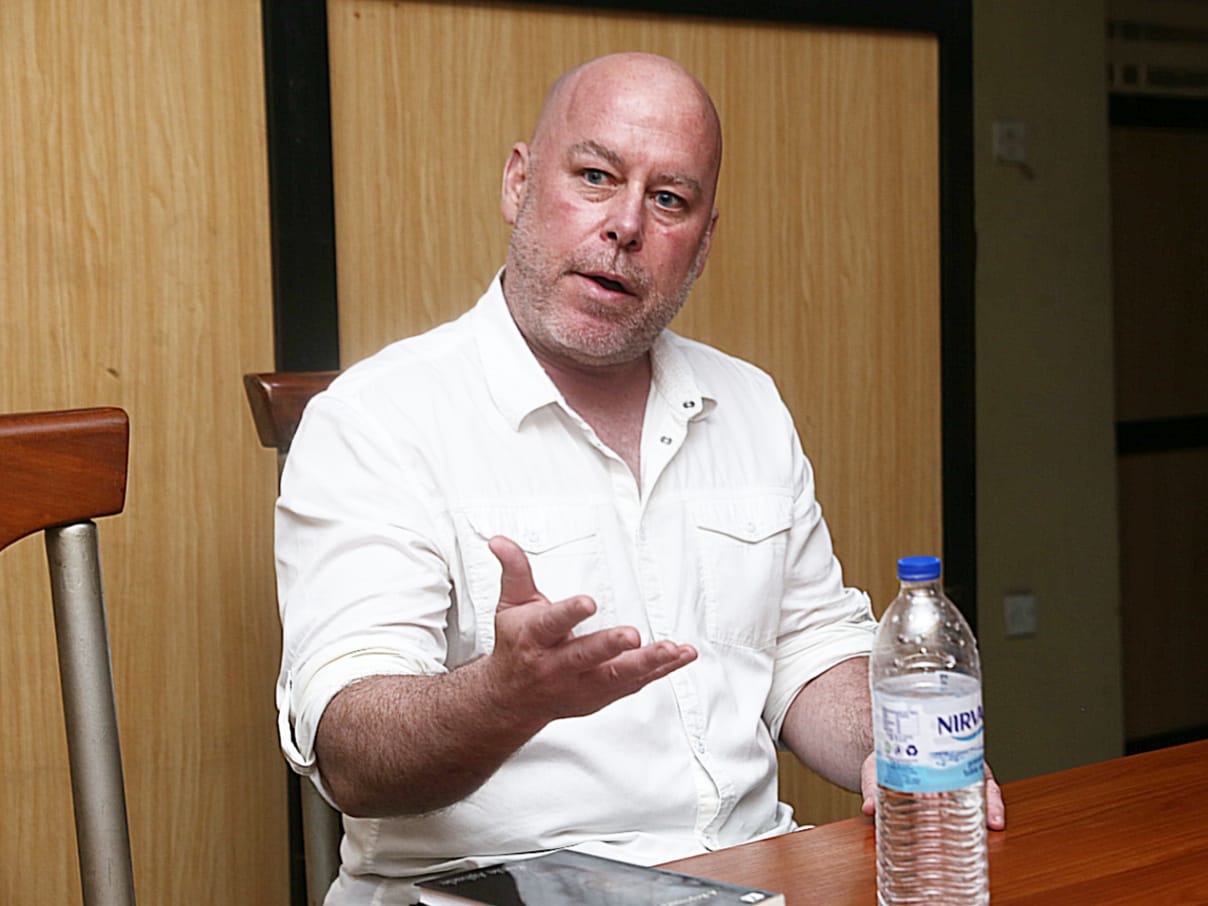
Archer, who was palpably excited and pleased to be there said Nigeria was the only country he had ever taken a deep dive into because of the numbers of creatives and writers it has produced. According to him, after every survey, Nigeria always had the fourth to fifth highest readership of Guernica magazine.
By Nehru Odeh
Michael Archer looks every inch the intellectual with a large heart. He is not just the publisher of Guernica, a magazine based in New York, United States; he has, through that platform, given a voice to many writers across the globe. Yet, his tall, imposing figure and intimidating credentials contrast sharply with his humility, humanity, altruism, and, of course, liberalism. And as his surname connotes, he rarely misses the mark or target.
So, when information reached TheNEWS office in Lagos that this multi-award-winning American — writer, academic, and global citizen — would, alongside Molara Wood, pay a courtesy visit on Friday, June 20, the staff waited with bated breath to meet the man whose height and vision touch the sky, and whose literary reach and influence cut across the globe, enriching all, irrespective of colour, creed, or political affiliation.
And indeed, Archer did not disappoint. After he and Molara were received by Mr Kunle Ajibade, Executive Editor of TheNEWS, in his office and exchanged pleasantries and brief conversations, they moved into the conference room of TheNEWS.
Waiting to receive the guests were Ademola Adegbamigbe, Editor of TheNEWS, and Nehru Odeh. Archer, who had already met with writers like Toyin Akinosho and Jahman Anikulapo, felt completely at home — as though he had been there before, or had already met the staff. This sense of familiarity indeed spoke volumes about his global citizenship.
It was a cool evening. The roads shimmered with silvery specks of rainwater. It had just finished raining in some parts of Lagos, the city of excellence, known not just for its aquatic splendour, but also for its cultural richness, rich political history, vibrant social life, and as an entertainment hub where writers, artists, and musicians actualise their dreams or “blow,” to use the local parlance.
It was also an evening rich with intellectual discourse, camaraderie, fun, and laughter. The conversation was eclectic, encompassing, and engrossing. Numerous issues were discussed, from media, arts, and literature to politics and international relations, especially as the world had just heaved a sigh of relief after Israel and Iran agreed to a ceasefire. There was also a passionate discussion about America.
Archer, visibly excited and pleased to be there, said Nigeria was the only country he had ever taken a deep dive into — because of the number of creatives and writers it has produced. According to him, after every survey, Nigeria consistently ranked fourth or fifth in Guernica’s readership.
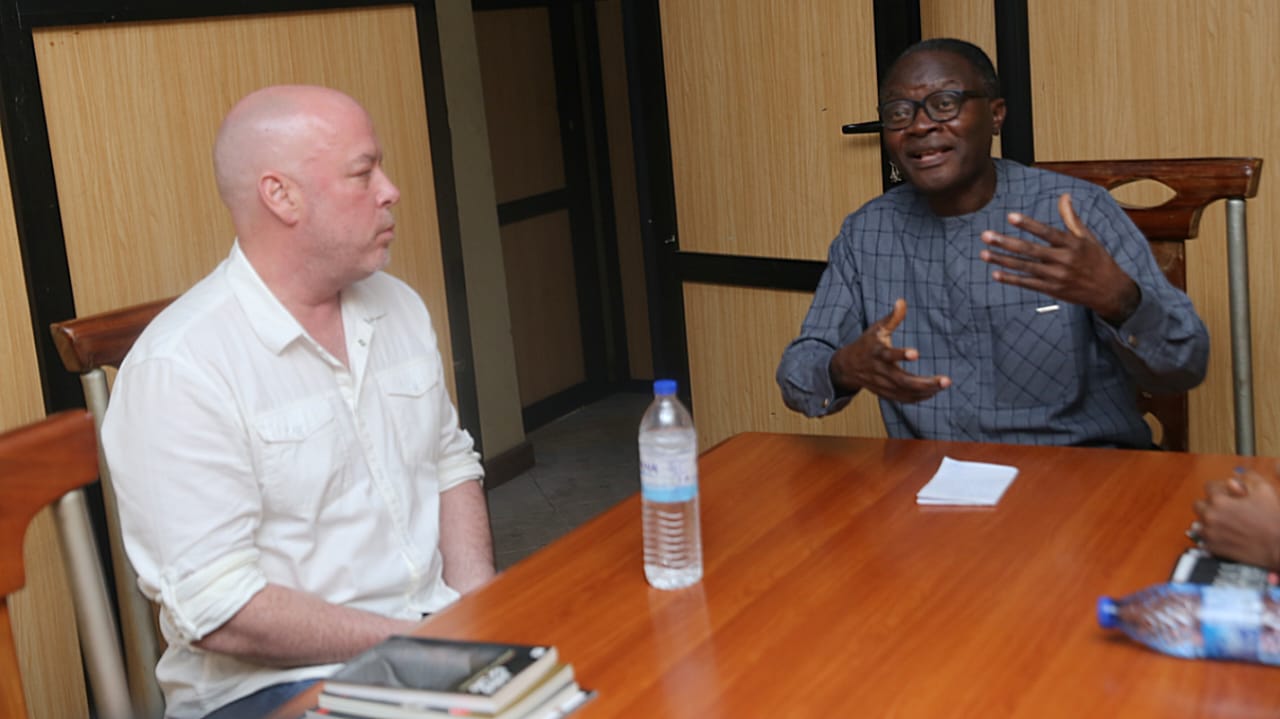
“I knew I would have some sort of connection, especially because of readership. Early on, you’d expect the US, Canada… but Nigeria was always the fourth to fifth highest readership,” Archer enthused.
Ajibade, for his part, said he had checked and seen many interesting people and writers featured in Guernica. “Great people, great writers,” he said succinctly. He also noted that the number of Nigerians featured in the magazine cut across genres — poetry, prose, essays, photography, and visual arts.
“It tells you so much about what keeps the country going. That spirit that you get in the arts is not necessarily from the politicians. It makes the country vibrant at all levels. You need to spend more time here — maybe come round more often for festivals — and you’ll feel hopeful for the country itself. Great writing. People are writing well, though they’re not getting published. You feel good sometimes when they send you a manuscript and you say, ‘There is hope!’” Ajibade said.
Molara added: “People are definitely writing more than they are getting published. In some publications, journals, and magazines, especially as some of the spaces have narrowed, maybe in the last 10 years or so, there has always been that sense that Guernica was one of those places Nigerian writers felt they might have a chance of being published in.”
Then Archer inquired about TheNEWS magazine and its sister publication, PMNEWS, to which Ajibade responded that the former is both a monthly and online journal, while the latter is now 100 per cent online. “PMNEWS used to be the only evening paper in Lagos until the internet took away our print edition,” Ajibade noted.
Ajibade went on to narrate the revolutionary stance he and his colleagues at the then African Concord took their refusal to apologise to military Head of State, President Ibrahim Babangida, following pressure from Chief MKO Abiola, which led to their resignation and, subsequently, the establishment of TheNEWS.
He also spoke about the guerrilla journalism they practised during the dictatorial regime of Gen. Sani Abacha, the clampdown on the media, the hanging of writer and activist Ken Saro-Wiwa, the frequent arrests and detentions of journalists, and how he and some of his colleagues were jailed for life. “It was a bad, bad time for Nigeria,” Ajibade said.
Archer was impressed to hear that TheNEWS magazine is still being printed despite global challenges facing the media. “Everywhere, no matter the country, keeping a print edition is so difficult,” he noted.
Molara used the opportunity to express appreciation to TheNEWS for not only keeping faith, but also for its consistent and detailed reportage of the arts.
“I want to say, in terms of cultural journalism, that is, writing about the arts, over the last 10 years I have grown more despondent about the space given in publications to literature reviews and critiques, which has shrunk. But TheNEWS is still keeping the faith when it comes to involved, rigorous, attentive, thoughtful writing about the arts.
“I am really impressed. You are doing a mighty thing on this front. I will continue to look to TheNEWS for encouragement in this desert of thought that we are in. It’s good that TheNEWS is still standing and delivering. We shall continue to look to this publication for that kind of focus,” Molara added.
When Archer asked what drew the team to Guernica, Nehru said it was the magazine’s unique blend of full coverage of the arts and politics, which is rare. He also referenced Guernica’s publication of EC Osondu’s Caine Prize-winning story, Waiting.
Ajibade also noted that what attracted him to the magazine was Okey Ndibe’s story, which not only won a prize for Guernica, but also ended up being published as part of his memoir Never Look an American in the Eye.
“But it’s also the polemical nature of the writing, particularly your own writing, just the texture of it, that makes you say, ‘He is a great writer; I’ve got to read it.’ And it seems that’s the kind of energy you bring to bear on editing other essays. It just makes for a very interesting read,” Ajibade remarked.
Still curious about Nigerian perspectives, Archer asked what the climate was like regarding reportage on the Middle East crisis, especially Israel’s war with Palestine and Iran.
Responding, Adegbamigbe said public opinion was mixed, depending on which side of the ethno-religious divide one belongs to. “You have the Muslims on one side and the Christians on the other. When you read someone’s submission on social media, look at the name, then you can conclude which side of the divide the person is on,” Adegbamigbe explained.
However, Ajibade noted that the divide is no longer strictly religious, adding that the sympathy people once had for Israel has waned considerably, regardless of faith.
The conversation continued, touching on many topics. Ajibade expressed his delight at realising Archer is friends with Nigerian writers such as Okey Ndibe, who is also a friend of the house.
Archer said one of the reasons he and Okey connected was that he was the first Nigerian to be published in Guernica. He went on to share an anecdote about how Okey once saved him and his colleagues from an embarrassing situation.
“Guernica was asked to do an event for the UN, among other organisations. The person we were supposed to have didn’t show up. Okey was there. There were many people from different countries in the audience, and no one was ready to go on stage.
“Okey just said, ‘I got this, Michael.’ He stood up and walked right in front of us. What are you going to do? I thought to myself. ‘I am a friend of Guernica. I am from Nigeria,’ he said and started telling a story about how he first came to America.” That sparked laughter all around the conference room.
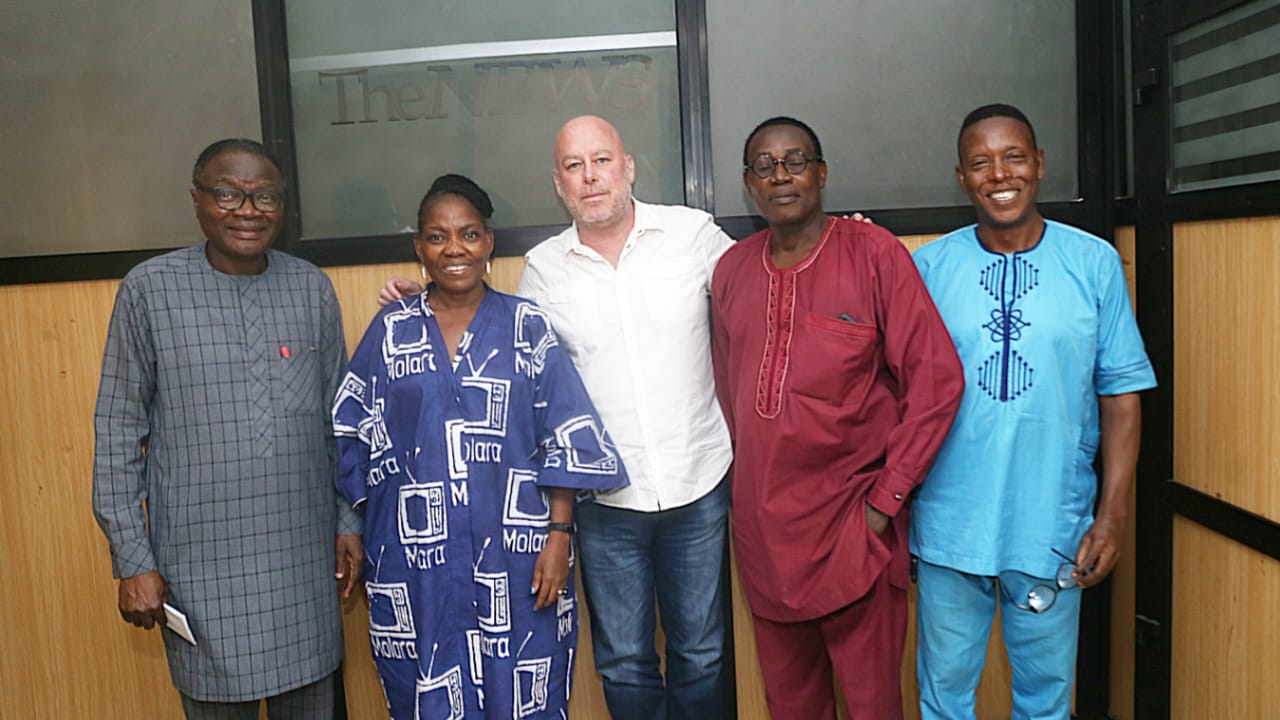
In accordance with TheNEWS tradition, Ajibade presented the latest edition of TheNEWS, Trials and Triumph: The Story of TheNEWS by Wale Adebamwi, and his prison memoir Jailed for Life to Archer. The photo session that followed signalled the end of an unforgettable evening.
And Archer, clearly pleased with the reception he received, promised to visit Nigeria again if given a reason.
Comments