


Sanwo-Olu unveils Women Economic Empowerment Policy to break systemic barriers

 Quick Read
The policy’s development involved a 12-month process of extensive stakeholder engagement, including government agencies, NGOs, private sector players, community leaders, and women’s groups, ensuring inclusivity across diverse groups, including women with disabilities.
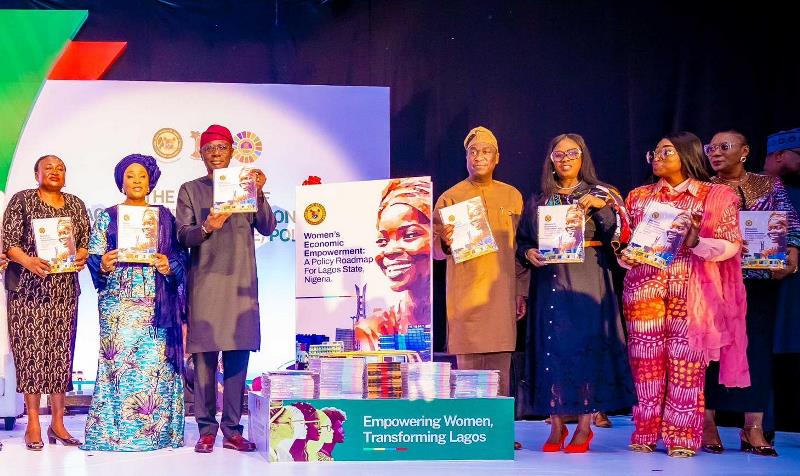
Governor Babajide Sanwo-Olu launched the Lagos State Women Economic Empowerment (WEE) Policy Roadmap at the Muson Centre, on Tuesday, a strategic initiative designed to dismantle barriers to women’s economic potential and foster inclusive growth across the state.
The policy, developed by the Ministry of Women Affairs and Poverty Alleviation, aims to address systemic challenges through a comprehensive, stakeholder-driven framework aligned with Lagos’ developmental goals, national policies, and the United Nations’ Sustainable Development Goals (SDGs).
Governor Sanwo-Olu emphasized that the WEE Policy Roadmap is more than a document—it is a transformative tool to unlock women’s potential and drive economic progress.
“This roadmap is a strategic framework to empower women economically, lifting households, strengthening communities, and securing a prosperous future for generations,” he said.
He pledged to collaborate with state ministries, private sector partners, and civil society to ensure the policy’s effective implementation, making it a “living instrument” that delivers tangible results.
The WEE Policy Roadmap targets key sectors to enhance women’s economic participation: Agriculture: Expanding access to digital tools, e-commerce platforms, and targeted financing to grow agribusinesses and connect women to broader markets.
Entrepreneurship: Introducing gender-friendly financial services, simplifying capital access, and strengthening mentorship networks.
Traditional Labor Market: Improving working conditions, enforcing labor laws, promoting family-friendly policies, and enhancing access to market information via digital tools.
Emerging Industries: Incentivizing STEM and digital technology companies to hire and train women, alongside skill-building programs to close the gender gap.
Education and Skill Acquisition: Offering scholarships, flexible learning, and vocational training in high-growth sectors like renewable energy, healthcare, and ICT.
The policy’s development involved a 12-month process of extensive stakeholder engagement, including government agencies, NGOs, private sector players, community leaders, and women’s groups, ensuring inclusivity across diverse groups, including women with disabilities.
“We ensured no voice was left unheard,” Sanwo-Olu noted, highlighting the policy’s contextual understanding of women’s social, cultural, and economic realities.
Lagos State First Lady, Dr. Ibijoke Sanwo-Olu, represented by Mrs. Oluremi Hamzat, described the roadmap as a bold step to address women’s challenges in Nigeria, urging full implementation and encouraging women to stay focused.
The Minister of Women Affairs, Iman Sulaiman-Ibrahim, represented by Mrs. Agnes Abraham, praised Lagos as a beacon of gender inclusivity and called for increased budget allocations for women’s empowerment.
Commissioner for Women Affairs and Poverty Alleviation, Mrs. Bolaji Dada, underscored the policy’s aim to break gender stereotypes and expand opportunities in high-growth and non-traditional industries.
“This roadmap offers a practical, people-driven strategy to address systemic barriers, from limited access to finance and skills to gender-based constraints,” she said.
Dr. Oreoluwa Finnih, Special Adviser on SDGs, commended the governor’s commitment to inclusion, while Hon. Omolara Oyekan-Olumegbon, Chairman of the Lagos State House of Assembly Committee on Women Affairs, pledged legislative support for the policy’s implementation.
UN Women Country Representative Beatrice Eyong emphasized that economic empowerment is the foundation for broader gender equality, calling the roadmap “a bold declaration of intent” for a Lagos where every woman and girl can thrive.
Comments