


Who are the real owners of Lagos?

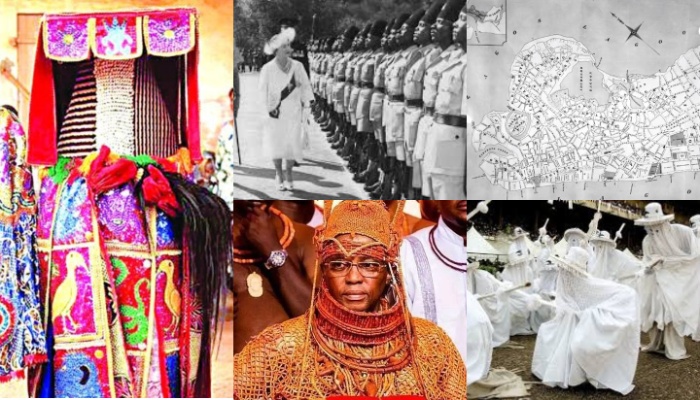
By the mid 1800s, Lagos had already made its way onto the maps of missionaries, colonialists, and explorers from around the world. But while the landmass was plotted, the people, the original custodians, were left invisible.
Today, ask the average Nigerian who owns Lagos and you’ll get deluded answers dissolved in political bias, hearsays, or naive myths. Some say the Benin Kingdom owns it. Others point fingers at the British, while a few say: “Lagos is no man’s land.” Kill the noise, and what you’ll find is an old city hiding in plain sight; a Lagos whose true origins were torn down by colonial ambitions and rewritten by post-independence propaganda.
Lagos Was Never a Blank Slate
Dr. Ademide Adelusi-Adeluyi, a Nigerian historian who has studied Lagos urbanism extensively, describes the precolonial city as a “culturally strategic and politically layered urban centre”, not the empty, archaic land British records claimed it was.
“Local urbanism had a more persuasive political than visual quality,” she writes.
That is, Lagos wasn’t built for spectacle. Its physical layout from open markets to palaces, farmlands and all mirrored local governance. The streets weren’t only roads, rather they were roadmaps of power. Public spaces were more or less instruments of control. It was a functioning city, structured by ancestral politics, tied to sacred beliefs, and landholding families long before Queen Victoria inked it into colonial jurisdiction in 1861.
But that truth was inconvenient for empire.
The Maps That Erased Lagosians
Colonial cartographers drew maps that was not for the best interest for the state, rather a strategy of redrawing power. The earliest British maps of Lagos show the city halved: European quarters labelled in detail, native settlements blanked out. There were no Iga, Olowogbowo, Ọffin, Ereko, Faji, Isale Eko amongst others. Just wide patches of “undeveloped” terrain, ripe for control.
Even W.T.G. Lawson’s 1885 “Plan of the Town of Lagos”, one of the most detailed, omitted the dense networks of shrines, markets, compounds, and local governance hubs that gave Eko its beating heart.
“There is an emphasis on the ‘natural’ environment that demonstrates the attention to detail in their composition,” writes Adelusi-Adeluyi, “proving that the omission of ‘native space’ is deliberate.”
Deliberate, because to claim Lagos as a British crown colony, they had to make it look ownerless!
What the British Couldn’t Erase
They couldn’t erase the Awori and Isheri footprints.
Long before the Benin military expeditions came, Awori-speaking people had settled across what is now Lagos State, establishing towns like Ijanikin, Oto-Awori, Agbado, Idoluwo, Itire, Igboshere, Otumara, and Agboyi. They built permanent settlements, crowned kings, held markets, and laid claim to the land through the Idejo chiefs, a hereditary class of landowners entrusted with keeping territory for residential and economic use.
When Benin influence reached the area in the 1600s, it did not displace the Awori, but simply integrated into existing structures. The appointment of Ashipa, a war captain from Benin, as an early ruler of Eko, gave political weight to the city but didn’t override the pre-existing land rights. Ashipa’s descendants became the Obas of Lagos, but the custodianship of land remained under the Idejo white cap chiefs and that never changed.
Oba Rilwan Akiolu, the current monarch, has hammered this on multiple occasions.
“Benin helped shape Lagos politically, but it never owned it. The land belongs to the Awori and Idejo families,” he once said.
Obas Who Spoke the Truth
In 1978, Oba Adeyinka Oyekan II publicly warned the Nigerian government about the displacement of native Lagosians for “development.” In his words, his people had “sacrificed more than any other group” in the making of modern Lagos, yet were being pushed out while foreigners flourished. He demanded resettlement before demolition, dignity before profit.
These weren’t empty word, but were calls for justice, rooted in centuries of belonging.
“Lagosians have sacrificed more than any other group… we demand resettlement before demolition.”
Earlier, in 1990, he shut down the “no man’s land” myth during his Silver Jubilee:
“Lagos is not a ‘no man’s land’… it belongs to some people, and they should be left alone to look after the place.”
He also explained that Lagos’s name came from Bini traders, but ownership always lay with the original settlers
Oba Rilwan Akiolu who caused controversy in 2017 by stating Lagos was founded by Prince Ado of Benin, but later clarified:
“I never said Bini owned Lagos… the influence of Benin cannot erase the fact that custodianship belongs to Awori and Idejo families”
Oba Sulaimon Bamgbade (Isheri Olofin, Awori King)
In December 2023, after Oba Ewuare II of Benin reignited the debate, he reaffirmed:
“Lagos was founded by Olofin Ogunfuminire… The Idejo chiefs hold ancestral land from Iddo to Eti‑Osa…”
He insisted custodianship lies with the Awori, not the Benin
So, Who are the real owners of Lagos?
Clearly, not the British. Also, not the Portuguese traders who passed through its waters. Not even the Benin Empire. And most assuredly, not the high-rise developers flattening communities for gated estates today.
The real owners of Lagos are the people whose names never made it onto the colonial maps: the Awori, Idejo, and other indigenes whose towns and villages formed the cultural structure of what we call Lagos today.
They are the ones who built Lagos before it was ever mapped. Before it was taxed. Before it was even renamed. They are the ones whose ancestors’ graves lie beneath the bus stops we now ignore.
Comments