


Why we’re chasing Nigerians out of our country – Ghanaian Businessman

 Quick Read
Keshi’s remarks follow recent protests in Accra and Kumasi, where Ghanaian traders demonstrated against what they described as the dominance of Nigerian-owned businesses in
Former Nigerian Ambassador to the United States, Ambassador Joe Keshi, has called on Nigerians living in Ghana to respect local laws and cultural norms, warning that the conduct of some individuals is worsening tensions between both countries.
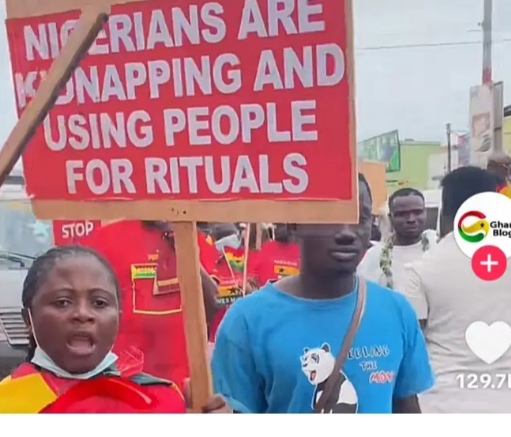
Keshi’s remarks follow recent protests in Accra and Kumasi, where Ghanaian traders demonstrated against what they described as the dominance of Nigerian-owned businesses in the retail sector. The protests, marked by placards reading “Nigeria Must Go,” reflect long-standing concerns about economic competition and social friction between the two West African nations.
In an interview, Keshi praised President Bola Tinubu’s administration for acting swiftly to defuse tensions but expressed concern over the behaviour of some Nigerians operating in Ghana. According to him, disrespect for local norms and ostentatious displays of wealth by a few individuals are fueling resentment.
“The issue is a bit complex because of the number of factors involved. The anti-Nigerian sentiment played out in Ghana, but the Federal Government has been working behind the scenes to manage it. Unfortunately, some Nigerians running businesses on the streets of Ghana behave badly,” he said.
“You have displaced Ghanaians running businesses on the streets, and yet you flaunt your wealth. If you are in Rome, you behave like a Roman. Nigerians should learn to conduct themselves wherever they find themselves,” he added.
He urged Nigerian leaders and diaspora associations to guide citizens on appropriate behaviour abroad, noting that economic displacement often leads to hostility from host communities. Keshi also appealed to Ghanaians to avoid overreacting, pointing out the strong cultural and historical ties between the two countries.
“Somebody should educate Ghanaians that they are overreacting, especially as their President has a cultural affiliation with Nigeria,” he noted.
The recent wave of protests was sparked in late July when members of the Ghana Union of Traders Association accused Nigerian traders of breaching investment laws and engaging in unregulated activities, including illicit street vending. Many claimed that Nigerian traders had access to more capital and stronger supply networks, which they argued created unfair competition.
Social media added fuel to the fire, with widespread — though unverified — claims of ritual killings, prostitution rings, and land grabbing by Nigerians. These narratives tapped into old grievances and inflamed public opinion.
Ghanaian President John Mahama quickly intervened, assuring citizens that there would be no room for xenophobia in Ghana. He acknowledged the need for adherence to trade laws but stressed that violence and discrimination would not be tolerated.
In response, Nigerian President Bola Tinubu dispatched a special envoy led by former ambassador Bianca Ojukwu to Ghana. Ojukwu reported a calming of tensions and lauded Ghanaian authorities for their handling of the situation. She called for renewed efforts to strengthen the Nigeria–Ghana Joint Commission as a mechanism for resolving disputes and countering misinformation.
Keshi recalled past hostilities, noting that tensions between both countries have a long history. In 1969, Ghana expelled thousands of Nigerians under the Aliens Compliance Order. Nigeria responded in 1983 and 1985 by expelling more than a million Ghanaians during economic downturns, a period that popularized the phrase “Ghana Must Go.”
Despite decades of cooperation through regional bodies and bilateral efforts, conflicts over migration and trade persist. In 2019, Ghanaian authorities closed hundreds of Nigerian-owned shops for alleged violations of investment laws, prompting another diplomatic standoff.
Nigerian community leaders in Ghana have urged calm and encouraged dialogue with Ghanaian authorities. The Nigerian Union of Traders Association Ghana issued a statement rejecting criminal accusations and highlighted their members’ economic contributions through taxes and employment.
Amnesty International Ghana also weighed in, urging authorities to prevent the protests from escalating into violence. The group called for impartial enforcement of laws and proper investigation of any allegations, regardless of nationality.
Observers say the latest incident is a reminder of how historical grievances, economic rivalry, and misinformation can disrupt regional harmony. Many are calling for renewed efforts to build trust and promote fair trade practices, urging both nations to demonstrate their commitment to unity, dialogue, and shared prosperity.
Comments