


Why my traditional dress is special to me – Exiled Agnes Tanoh

 Quick Read
"I had been a personal assistant for Simone Gbagbo, an MP and the First Lady of Côte d’Ivoire during the civil war in 2010. The rebel forces came to my house with a van and took everything. I was then arrested and imprisoned...
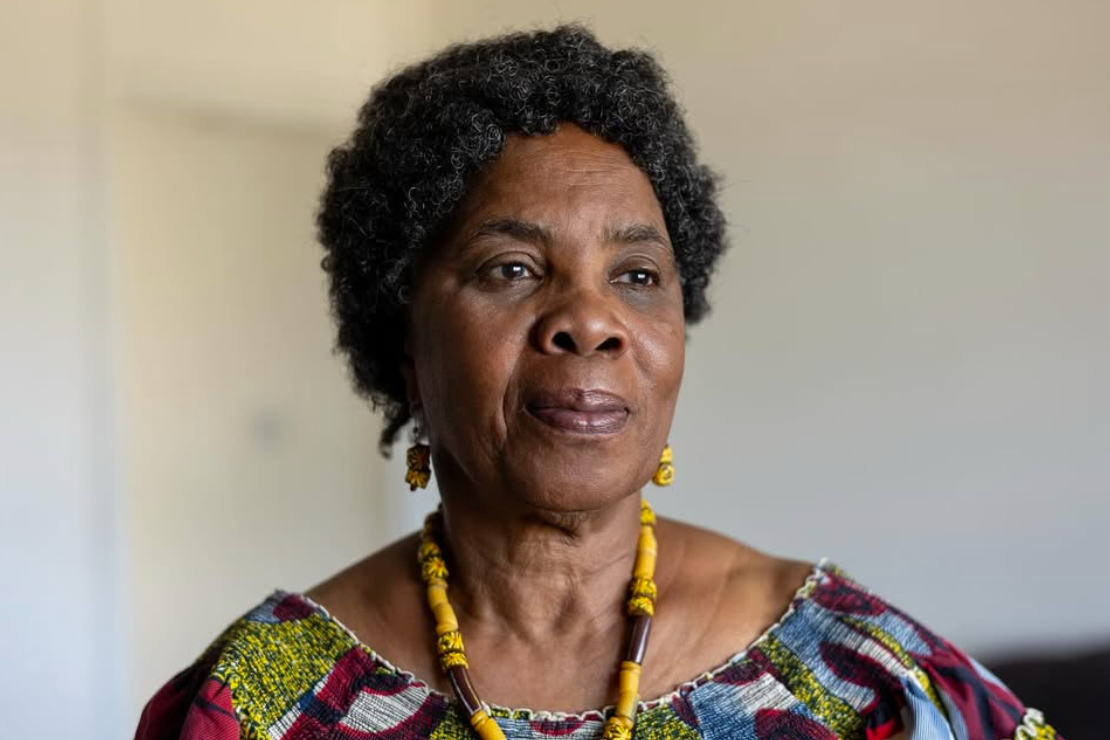
An exiled woman from Côte d’Ivoire, Agnes Tanoh, who has been living in the United Kingdom (UK) for many years has revealed the reason her traditional dress is special to her.
According to Agnes, the apparel was given to her by her sister upon her release from prison.
Her revelation was published in this week Mirror’s Instagram project, #PeopleMove, which highlights the stories of those seeking sanctuary in the UK.
The 70-year-old Agnes was arrested and imprisoned when she was working as a personal assistant for Simone Gbagbo, an MP and the First Lady of Côte d’Ivoire during the civil war in 2010.
Agnes fled to the UK in fear of political persecution.
“My younger sister gave me this dress when I was released from prison. It’s a souvenir, it reminds me of everything I went through – of a time when I had nothing.
“I had been a personal assistant for Simone Gbagbo, an MP and the First Lady of Côte d’Ivoire during the civil war in 2010. The rebel forces came to my house with a van and took everything. I was then arrested and imprisoned for 13 days.
“When I was released, I saw dead bodies on the road and bombs falling everywhere. It is always the simple people who just want to live, who pay the price.
“I had to flee the political persecution. I came to the UK with a diplomatic passport and a three-month visa. I planned on going back when things calmed down. The asylum process took seven years.
“I was placed in a detention centre for several months. It was like a prison with strict routines on times to eat, wake and sleep. I had no privacy; I was isolated in a shared room. It was traumatising and it affects your mental health.
“The atmosphere makes you feel sick. Those memories have stayed with me.
“When I came here, I was expecting sanctuary, not prison. Detention centres need to close.
“When I was released, I became homeless for several years until the Hope Project in Birmingham helped me. In 2018 I finally got my refugee status. Now I work for a charity called Women for Refugee Women, where I campaign against detention centres and support women seeking asylum.
“I feel like this country will never be my home. I am still homesick from my country – the place I lived for 55 years,” she recounted her sad experience.
Comments