


Lagos sounds alarm on illegal dredging ahead of Maiden Waterfront Summit

 Quick Read
On the issue of illegal dredging, the Commissioner sounded a stark warning: “Approximately 10,625 cubic metres of sand are dredged daily in Lagos. Unchecked, these activities could destabilize the ecosystem, damage aquatic habitats, and endanger waterfront settlements.”
By Anita Edeigba
The Lagos State Government has intensified preparations for the inaugural Waterfront Infrastructure Development Summit, set to hold on Thursday, 11th September 2025, at Eko Hotel and Suites, Victoria Island, Lagos.
The summit aims to address mounting environmental pressures on the Lagos Lagoon and explore sustainable solutions for waterfront development.
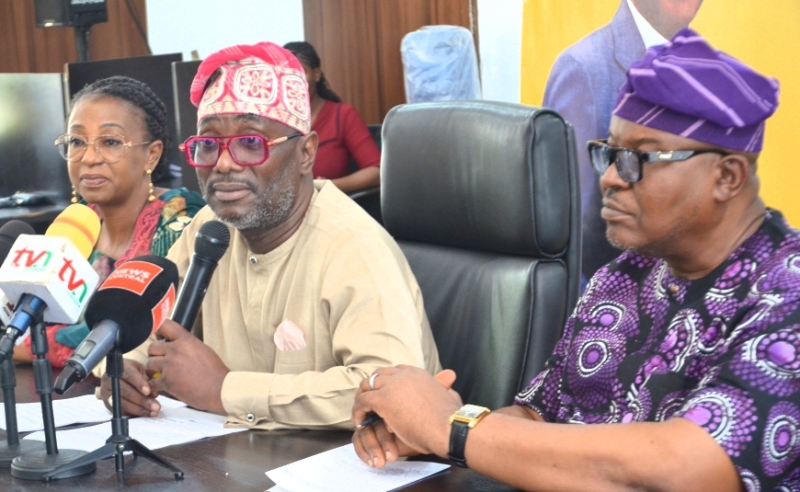
Speaking at a press briefing on Thursday, at the Bagauda Kaltho Press Centre, Alausa Secretariat, Ikeja,
Commissioner for Waterfront Infrastructure Development, Dayo Bush Alebiosu highlighted the urgency of protecting the state’s lagoons and waterfronts.
“The Lagos Lagoon is under intense pressure from both human-driven and climate-related factors,” Alebiosu said.
“Coastal erosion, illegal dredging, and pollution threaten not only our environment but the livelihoods and heritage of communities that depend on this ecosystem,” he added.
The Commissioner revealed that coastal erosion has already swept away some communities, including Idotun Village in Ibeju-Lekki, displacing families and destroying livelihoods.
“Coastal erosion is a regional problem with global implications. Lagos must take urgent steps to safeguard its communities, infrastructure, and economy,” Alebiosu stated, adding that the state has initiated collaboration with the Netherlands, a country renowned for expertise in coastal and water management, to find lasting solutions.
On the issue of illegal dredging, the Commissioner sounded a stark warning: “Approximately 10,625 cubic metres of sand are dredged daily in Lagos. Unchecked, these activities could destabilize the ecosystem, damage aquatic habitats, and endanger waterfront settlements.”
He noted that the Ministry is conducting a comprehensive bathymetric and hydrographic survey to identify over-dredged and under-dredged areas, citing Ibeshe as a location heavily affected by illegal dredging.
Beyond addressing threats, Alebiosu emphasised the lagoon’s vast economic and social potential.
“If properly managed, the lagoon can become a hub for transportation, tourism, fisheries, and trade, creating jobs and boosting livelihoods for Lagosians,” he said.
He explained that the summit would convene experts across multiple fields whose insights and recommendations would be instrumental in charting practical strategies to restore and sustainably manage the lagoon.
“The lagoon is not just a body of water; it is our heritage, our economy, and our future,” Alebiosu declared.
“This summit is a call to action for Lagosians, experts, and stakeholders, to work together in protecting it before it is too late.”
The summit, themed “Pressure on the Lagoon: The Lagos Experience”, is expected to attract over 500 international experts and stakeholders.
Alebiosu described the event as a groundbreaking initiative “poised to redefine the future of urban waterfronts globally, offering unparalleled opportunities for collaboration, innovation, and sustainable growth.”
He highlighted the summit’s objectives: showcasing global best practices in waterfront development, promoting sustainable development that balances economic growth with environmental stewardship, exploring technological innovations and smart infrastructure solutions, and creating investment opportunities for collaborative projects.
The Commissioner also stressed the importance of community engagement, noting that “projects must meet the needs and aspirations of local residents to succeed.”
“The summit is a call to action,” Alebiosu said, saying that “it brings together government officials, private sector leaders, urban planners, and community representatives to catalyse a new wave of collaborative and sustainable waterfront projects that can serve as models for cities around the world.”
Comments