


Lassa fever kills 162 amidst rising number of cases in Nigeria

 Quick Read
NCDC said Ondo, Bauchi, Edo, Taraba, and Ebonyi states remain the country’s hotspots, accounting for 91 per cent of all confirmed cases of Lassa fever
By Abujah Racheal
The Nigeria Centre for Disease Control and Prevention (NCDC) said the country has recorded 7,375 suspected cases of Lassa fever with 871 confirmed infections and 162 deaths across 21 states so far in 2025.
The Centre stated that Ondo, Bauchi, Edo, Taraba, and Ebonyi states remain the country’s hotspots, accounting for 91 per cent of all confirmed cases.
NCDC said in its report of epidemiological week 35 published on its website on Tuesday.
The Centre reported 10 new cases were confirmed in week 35 alone, up from three in the previous week. The new cases were detected in Edo, Ondo, Bauchi, and Taraba states.
Cumulatively, the agency said that the country has recorded Case Fatality Rate (CFR) of 18.6 per cent, higher than the 17.1 per cent recorded during the same period in 2024.
It stated that Ondo, Bauchi, Edo, Taraba, and Ebonyi states remain the country’s hotspots, accounting for 91 per cent of all confirmed cases.
The NCDC said that of these, Ondo contributed 33 per cent, Bauchi 23 per cent, Edo 18 per cent, Taraba 14 per cent, and Ebonyi three per cent.
The agency noted that most affected patients are aged between 21 and 30 years, with a male-to-female ratio of 1:0.8.
While it stated that the overall number of suspected and confirmed cases was lower compared to the same period last year, the NCDC warned of persistent risks.
It noted that late presentation of cases, poor health-seeking behaviour due to treatment costs, and poor sanitation in high-burden communities are contributing to the high death toll.
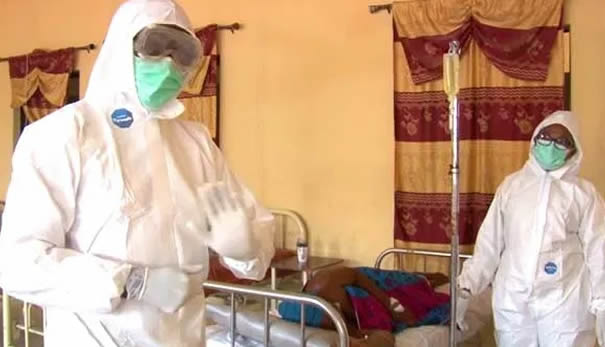
The Nigerian public health agency said that no new healthcare worker infection was reported in week 35, though 23 health workers have been affected since the beginning of the year.
The Centre said it has deployed 10 rapid response teams to support affected states, enhanced surveillance, and distributed medical countermeasures including ribavirin, PPEs, and sanitisers.
It also announced plans to launch a five-year strategic plan (2025–2029) for Lassa fever control.
The NCDC urged Nigerians, especially in hotspot states, to maintain proper hygiene, improve rodent control, and seek early medical care to reduce the spread and impact of the disease.
Lassa fever is a viral haemorrhagic disease endemic in Nigeria, spread mainly through contact with food or household items contaminated by infected rats.
It can also spread person-to-person, especially in hospitals without strict infection control.
The illness causes fever, weakness, vomiting, bleeding, and in severe cases, organ failure.
Nigeria records the highest global burden, with most cases from Ondo, Edo, Bauchi, Taraba, and Ebonyi states.
It peaks in the dry season “December–April” and has a high fatality rate, especially when patients present late.
Treatment with Ribavirin works best when started early, alongside supportive care.
Lassa fever remains one of Nigeria’s deadliest recurrent outbreaks, driven by rodent exposure, poor sanitation, and delayed health-seeking behaviour.
(NAN)
Comments