


PEM unveils ‘The Spirit Wears Red: Iri Ogrinia’ at London Fashion Week

 Quick Read
When the lights dimmed inside Ladbroke Hall and the first model appeared in a blaze of scarlet, the energy of the room changed. There was a collective intake of breath as Princess Mary Obeya’s The Spirit Wears Red: Iri Ogrinia began to unfold.
Dimeji Alara
When the lights dimmed inside Ladbroke Hall and the first model appeared in a blaze of scarlet, the energy of the room changed. There was a collective intake of breath as Princess Mary Obeya’s The Spirit Wears Red: Iri Ogrinia began to unfold. It was not simply a fashion presentation but a cultural and emotional performance. The collection carried weight, history, and presence. It felt alive with rhythm and memory, a visual hymn to womanhood, ceremony, and identity.
Obeya has long been known for her ability to balance craftsmanship with storytelling. For this SS26 collection under her label PEM, she turned to the Itsekiri cultural concept of Iri Ogrinia, a phrase that captures the idea of passage, lineage, and the spiritual continuity of womanhood. The title itself, The Spirit Wears Red, announced its intention clearly. Red was not only a color in this collection; it was a living language. Every shade of it, crimson, coral, oxblood, ruby, scarlet, carried symbolic purpose. The color represented emotion, vitality, ancestral bloodlines, and the strength of women who move through life with both grace and fire.
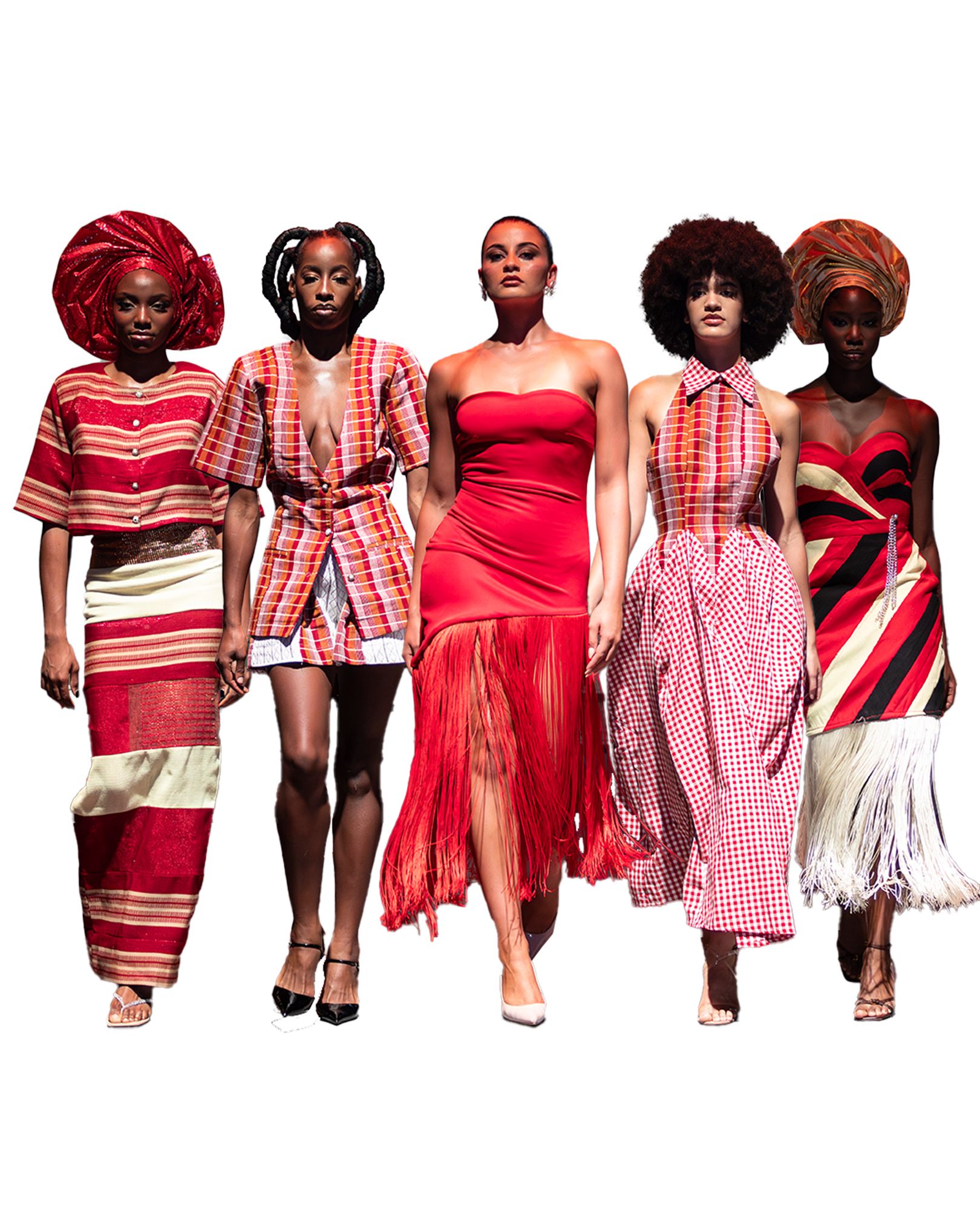
The first look introduced that narrative with sharp precision. A deep red and white plaid jacket, tailored to perfection, was cut to reveal structure and form. It cinched at the waist and opened in a flattering flare, paired with a minimal white underlayer that hinted at restraint beneath confidence. The silhouette was modern, the craftsmanship unmistakable. Yet within the geometry of the cut, one could sense echoes of traditional woven cloths from the Niger Delta. The model’s hair, parted into intricate braids, added a sculptural rhythm to the look, while the absence of heavy jewelry kept the focus on shape and fabric. This was a woman fully in command of her identity.
The second look deepened the story by introducing a more ceremonial energy. The model walked out wrapped in the warmth of red and cream stripes, a cropped top resting above a high-waisted wrap skirt that glided with measured elegance. The choice of fabric evoked traditional handloom weaves, the kind often seen in West African celebrations. A headwrap, sculpted into a magnificent arc, crowned the ensemble and carried the quiet majesty of a woman stepping into her own ritual power. The combination of form, texture, and color created an image that was both contemporary and deeply ancestral. It was not nostalgic, but reverent, a salute to heritage without imitation.
Then came the third look, which changed the mood completely. A model emerged in a strapless red dress that moved like flame. The bodice clung to the body in sleek simplicity, while the hem erupted into a fringe that shimmered and swayed with every step. The movement of the fringe, catching the light, became almost hypnotic, turning the runway into an extension of the dancer’s stage. It was a look that celebrated sensuality without surrendering to excess. The confidence of the wearer, the control of the fabric, and the precision of the cut made it clear that Obeya was choreographing emotion as much as design.
The fourth look offered perhaps the collection’s most commanding visual. Diagonal bands of red, gold, and black wrapped around the body in dynamic tension, creating a sculptural silhouette that exuded both strength and rhythm. The hem ended in long white fringe, moving like ritual tassels with each stride. A boldly tied headwrap completed the look, transforming the model into an emblem of feminine power. The diagonal lines emphasized motion and vitality, reminding the audience that red is not a static color but one that breathes, vibrates, and commands attention. This look felt like the center of the collection’s heartbeat, the moment where tradition met modernity in perfect harmony.
The fifth and final look softened the energy without losing its presence. A halter-neck dress in red gingham checks combined a structured bodice with a voluminous skirt that floated just above the ankle. It was both playful and elegant, carrying a nostalgic nod to village textiles while reinterpreting them for the global runway. The model’s natural curls framed her face with ease, contrasting beautifully against the linear precision of the fabric. This closing piece felt like release after ceremony, a celebration of the everyday woman, grounded yet radiant, ordinary yet divine.
Across the five looks, Obeya demonstrated an extraordinary understanding of how to tell a story through form. The collection progressed like a ritual itself, from initiation to celebration, from structure to liberation. The interplay of pattern and solid color, of handwoven textures against smooth finishes, created visual rhythm and emotional depth. There was an architectural quality to the tailoring but also a softness that allowed the garments to move and breathe with their wearers.
The choice of materials spoke to Obeya’s commitment to sustainability and cultural preservation. Each textile seemed to carry the imprint of human touch, reminding viewers that craft is not just aesthetic but spiritual. Red, the color that unified the entire collection, symbolized more than passion or beauty. It represented continuity, the bloodline that connects generations of women. Through it, Obeya told a story of the spirit that lives, endures, and transforms.
The setting of Ladbroke Hall gave the collection space to resonate. The light cast long shadows against the marble floor, catching the reds in soft gold reflections. The models’ walk was slow, deliberate, almost ceremonial. Every movement seemed choreographed to the heartbeat of ancestral drums that one could almost imagine playing in the distance. The atmosphere was reverent, the applause delayed, as though the audience understood that what they had witnessed was not only fashion but invocation.
Within the wider UDGN Cultural Threads showcase, The Spirit Wears Red: Iri Ogrinia stood out for its depth of storytelling. While many collections celebrated color and craft, this one went further, exploring emotion, lineage, and transformation. It asked the audience to remember that clothes are more than fabric; they are carriers of memory and energy. Obeya’s ability to merge heritage with modern sensuality positioned her as both designer and storyteller, an artist who translates spirit into form.
For PEM, this collection marked a defining moment. It proved that African craftsmanship and spirituality could coexist with global sophistication without compromise. Obeya’s mastery of structure, her eye for texture, and her sensitivity to cultural symbolism placed her among the most distinctive creative voices of the showcase. Her work reminded the audience that fashion can transcend aesthetics and become a vessel for shared identity.
As the models returned for the final walk, the reds glowed beneath the lights like embers refusing to fade. The hall filled with a sense of reverence rather than applause. The Spirit Wears Red: Iri Ogrinia was not only a fashion statement but a ritual of remembrance. It honored the women who came before, celebrated those who stand now, and prepared the way for those yet to come. Through the color red, Princess Mary Obeya wove the living pulse of heritage into a language of contemporary power and eternal grace.
Comments