


Lagos launches landmark HIV Survey to reach over 11,000 residents

 Quick Read
Speaking at the launch, the Permanent Secretary of the Lagos State Ministry of Health, Dr. Olusegun Ogboye, explained that the survey would provide HIV counselling and rapid testing to participants, with results delivered before teams leave each household.
The Lagos State Government has launched an ambitious HIV impact survey that will engage more than 11,000 residents across the state in a bid to strengthen testing, treatment, and prevention strategies.
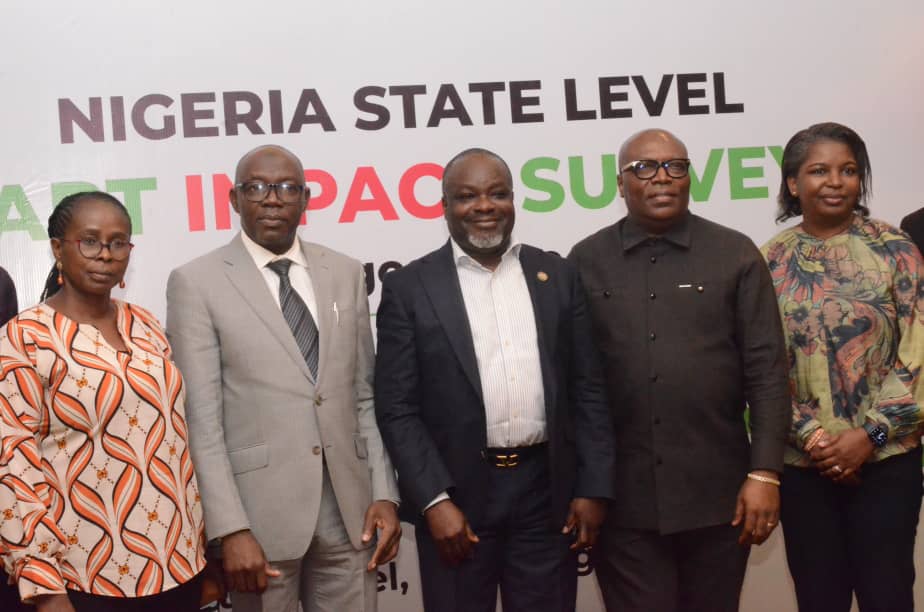
The initiative, tagged the Nigeria State-Level AIDS Impact Survey (AIS) and themed “Every Step Counts: Towards an HIV-Free Nigeria”, was formally launched in Ikeja on Wednesday.
Scheduled to run from October to December 2025, the exercise will cover approximately 6,150 households across all 20 Local Government Areas of Lagos State, targeting men and women between the ages of 15 and 64.
Speaking at the launch, the Permanent Secretary of the Lagos State Ministry of Health, Dr. Olusegun Ogboye, explained that the survey would provide HIV counselling and rapid testing to participants, with results delivered before teams leave each household.
He assured that all information gathered would be kept confidential, adding that anyone who tests positive for the first time would be immediately linked to care.
Ogboye said the Anti-Retroviral Impact Survey was designed to assess the effectiveness of the state’s HIV response.
The findings, he explained, will show how many people living with HIV have been identified, how many are currently on treatment, and the proportion of those on treatment who have achieved viral suppression, meaning their HIV levels are low enough that they cannot transmit the virus to others.
He noted that the survey would generate valuable data to shape policies, close treatment gaps, and strengthen Lagos State’s health system to better support people living with HIV.
The survey is being supported by the Federal Ministry of Health, the United States President’s Emergency Plan for AIDS Relief (PEPFAR), the U.S. Centers for Disease Control and Prevention (CDC), and other partners.
Dr. Ibrahim Dalhatu, Deputy Director of Epidemiology and Strategic Information at the CDC, described the initiative as a highly scientific exercise that would generate evidence to guide both Lagos State and the Federal Government.
He explained that Lagos was chosen as a priority location because of its large population and significant HIV burden, which makes targeted investments in the state critical.
Dalhatu added that the CDC’s involvement extends beyond funding, offering technical support, quality assurance, and international best practice standards to ensure credible results.
He stressed that while the process begins with data collection, its ultimate aim is to translate findings into healthier communities and stronger public health outcomes.
Giving further insight into Lagos’s HIV response, International Development Expert Osse Samuels, who represented health systems specialist Prosper Okonkwo, revealed that 135,225 people are currently receiving treatment in the state, with about 75 percent having already achieved viral suppression.
He said the survey would play a key role in bridging the remaining treatment gap while also addressing stigma through public sensitisation campaigns.
Awareness efforts are already underway, with flyers distributed and community mobilisation in progress to encourage participation.
Field teams made up of trained counsellors, laboratory experts, and guides have also been equipped to handle the process sensitively, particularly in managing stigma and family disclosure.
Dr. Ogboye expressed gratitude to Governor Babajide Sanwo-Olu for his unwavering support and consistent funding of the state’s HIV programme.
He reiterated that Lagos State remains committed to the global goal of ending HIV as a public health threat by 2030.
“The success of this survey depends on the cooperation of residents,” Ogboye said, adding that “Together, we can make Lagos a model for HIV control and move closer to an HIV-free future.”
Comments