


Tinubu to Nigerians: Let pension funds work for our oil and gas prosperity

 Quick Read
He added that the terminal will help reduce dependence on existing export facilities and overcome security and pipeline challenges.
Tinubu Calls for Pension Funds to Be Invested in Oil and Gas Sector
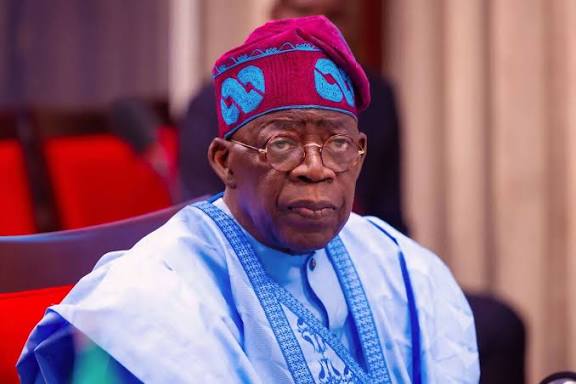
President Bola Ahmed Tinubu has suggested changing pension fund rules to allow part of the money to be invested in Nigeria’s oil and gas industry.
He said this could bring huge profits and help boost the nation’s economy.
Tinubu made the call while commissioning the $400 million Green Energy International Limited (GEIL) crude oil export terminal in Otakikpo, Rivers State.
The terminal is Nigeria’s first new crude oil export terminal in 50 years and has increased the country’s oil exports by more than one million barrels in just four months.
Speaking through the Minister of State for Petroleum Resources (Oil), Senator Heineken Lokpobiri, Tinubu said the government is already working with Ogoni leaders to resolve disputes so that oil production can start in the area.
He explained that investing pension funds in oil and gas could yield much higher returns than traditional investments, citing an example from Senegal where an $8 billion investment is expected to return $40 billion over 25 years.
Tinubu also praised Green Energy for its commitment and criticized some license holders who misuse funds.
“If you don’t have the capacity, look for something else to do instead of wasting your time in oil and gas,” he warned.
He stressed that oil and gas remain central to Nigeria’s economic recovery.
“The federal government will work with all stakeholders to unlock the full potential of this region,” he said.
On energy transition, Lokpobiri dismissed calls to abandon fossil fuels, saying,
“Oil and gas will never go away.” He quoted global projections showing that oil and gas will still provide more than half of the world’s energy needs for at least the next 50 years.
Lokpobiri also mentioned the African Energy Bank, which was created to provide funding for energy projects across the continent.
He confirmed that Nigeria has met all its financial obligations to the bank.
The chairman and CEO of Green Energy, Professor Anthony Adegbulugbe, said the Otakikpo terminal has already handled four successful export operations since June 2025, moving over one million barrels of crude oil.
The terminal has a storage capacity of 750,000 barrels, which can be expanded to three million barrels, and a pumping capacity of up to 360,000 barrels per day.
Adegbulugbe said the project, completed in less than two years by Nigerian engineers, is a sign of the nation’s technical strength.
He noted that it will open access to over 40 nearby oil fields with reserves of more than 3 billion barrels, which could add over 200,000 barrels per day to national output.
He credited the success of the project to the Tinubu administration’s Renewed Hope Agenda and reforms under the Petroleum Industry Act, which encourage local participation in the oil sector.
Adegbulugbe thanked government agencies, financial partners, and workers for their support and said this achievement marks “the beginning of a new era of indigenous excellence in Nigeria’s energy sector.”
The CEO of the Nigerian Upstream Petroleum Regulatory Commission (NUPRC), Engr. Gbenga Komolafe, said the Otakikpo terminal is historic because it expands Nigeria’s export capacity and shows that local operators can deliver major projects once thought possible only for international oil companies.
He added that the terminal will help reduce dependence on existing export facilities and overcome security and pipeline challenges.
Komolafe said indigenous companies now account for about 30 per cent of Nigeria’s oil production.
Comments