


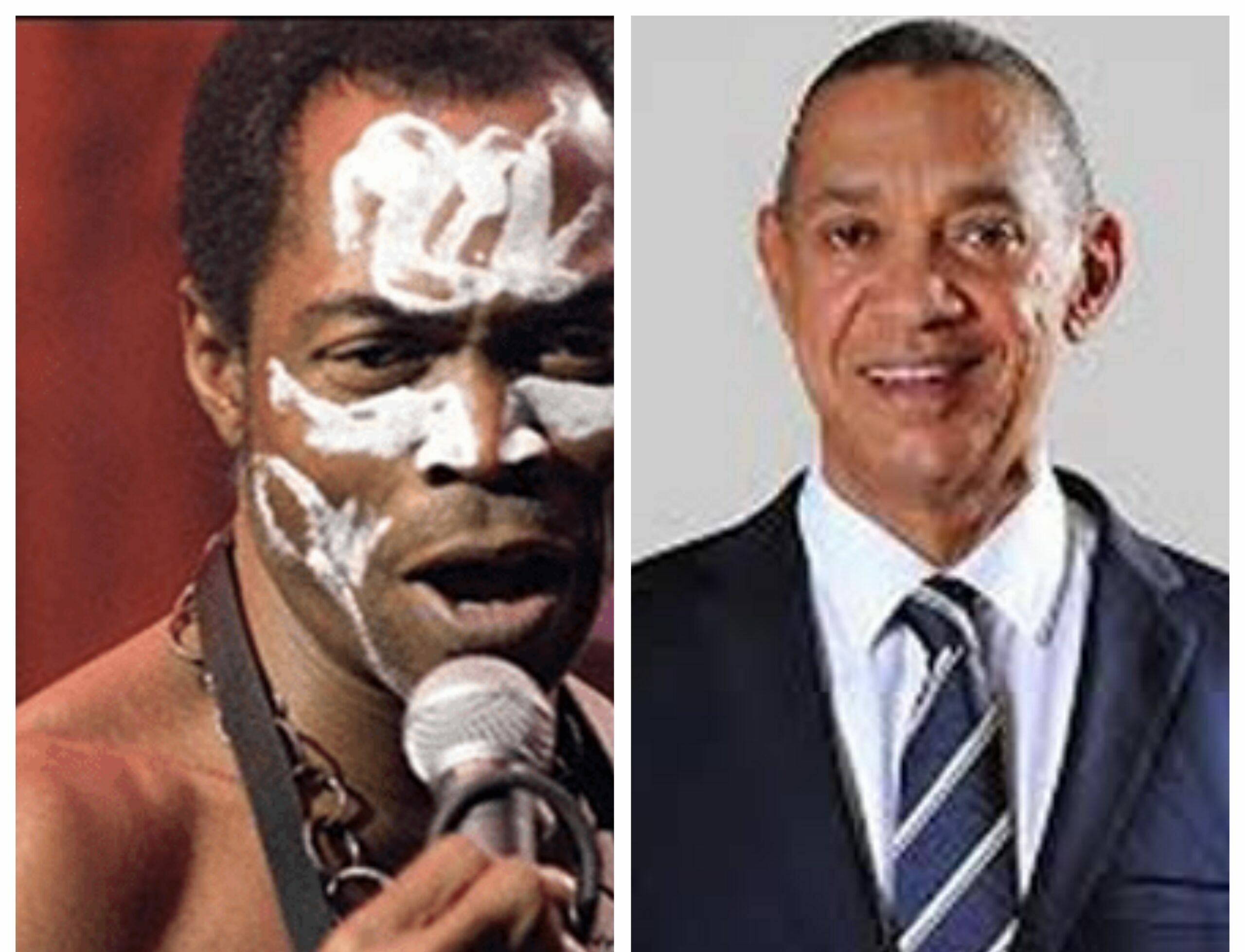
Why Fela was ahead of his time – Ben Murray Bruce

 Quick Read
"Water No Get Enemy" is the theme of this year's symposium, one of a string of events organized to kick-start this year’s ongoing Felabration Musical Concert, a week-long fiesta scheduled to run from 13 to 19 October at the New Africa Shrine, Ikeja, Lagos.
By Nehru Odeh
Senator Ben Murray-Bruce, Chairman of the Silverbird Group, has said Afrobeat legend Fela Anikulapo Kuti was not only ahead of his time but was also a genius. The entertainment mogul made this statement while speaking on the relevance and universality of Fela’s classic, Water No Get Enemy, at the Felabration Symposium on Monday, October 13, at NECA Hall, Ikeja, Lagos.
Water No Get Enemy is the theme of this year’s symposium, one of a series of events organized to kick-start the ongoing Felabration Musical Concert, a week-long fiesta scheduled to run from October 13 to 19 at the New Afrika Shrine, Ikeja, Lagos.
According to Bruce, who was the Chairman and Moderator of the event, Fela’s Water No Get Enemy is not only topical but also addresses environmental issues. He added that, given the climate-induced environmental challenges the world is currently facing, the Afrobeat legend indeed saw the future.

“This topic (Water No Get Enemy) is very important because it deals with the environment. When Fela wrote this song, I don’t know if he was thinking about the blue economy at the time. But I’ll tell you that Fela was the kind of guy who could see the future. He understood life. He understood the environment,” Bruce noted.
Bruce also spoke about the universality of Fela’s Water No Get Enemy, adding that its resonance cuts across social strata and that everybody—the rich and the poor, the educated and uneducated—can relate to it.
“He could see the future. He was very, very intelligent. A lot of people look at Fela and don’t see that. You have to understand, he was ahead of his time. He was very smart. He could take a complicated social problem, write a song in broken English, explain it, and a guy with a Ph.D. would say he’s right. And a guy who didn’t go to school would say, I can connect with him. And a guy in prison would say, I want to get out so I can be like him.

“That is how smart he was. He was so young and intelligent. I don’t think a lot of people, when you talk about Fela, understand how smart he was. Because it takes a genius to take a complicated social, political, and economic problem—several problems—write a song, and connect with the rich and poor, the educated and uneducated, Americans, Australians, Jamaicans, Nigerians, Africans—people from all over the world.
“Now, if you look at the world, how many musicians can connect the way he did? How many politicians can connect the way he did? It’s a rare talent. So here we are today, 50 years after he wrote a song about water not having an enemy. And he was right. And he is right,” Bruce maintained.
Bruce also spoke about how water, which Fela sang about in that classic song, is not only one of the biggest global challenges but also affects everyone. The media mogul then clamoured for a ban on plastic, describing it as a grave danger to the environment.

“Now, what is the biggest problem, if I may ask? Where I’m from, people die because of flooding. In Lagos, where I live, sometimes you can’t go to work because of the floods. And how many man-hours have we lost? But we’re also lucky to have a governor like Governor Sanwo-Olu, who is one of the best governors in this country today. He’s smart. He understands the issues.
“This cannot be a debate because everybody is on the same page. It’s not a debate about right and wrong. Everybody agrees that environmental pollution is dangerous. Everybody agrees that plastic ultimately must be banned. We must find alternatives to sell our drinks, to sell our water, because ultimately, plastic must be banned. There is no way around it. We have to find a way to make sure our gutters are clean. We—the government, federal, state, and local—must educate the public not to throw plastic and trash in the gutters. And the government must clean the environment daily,” Bruce said.
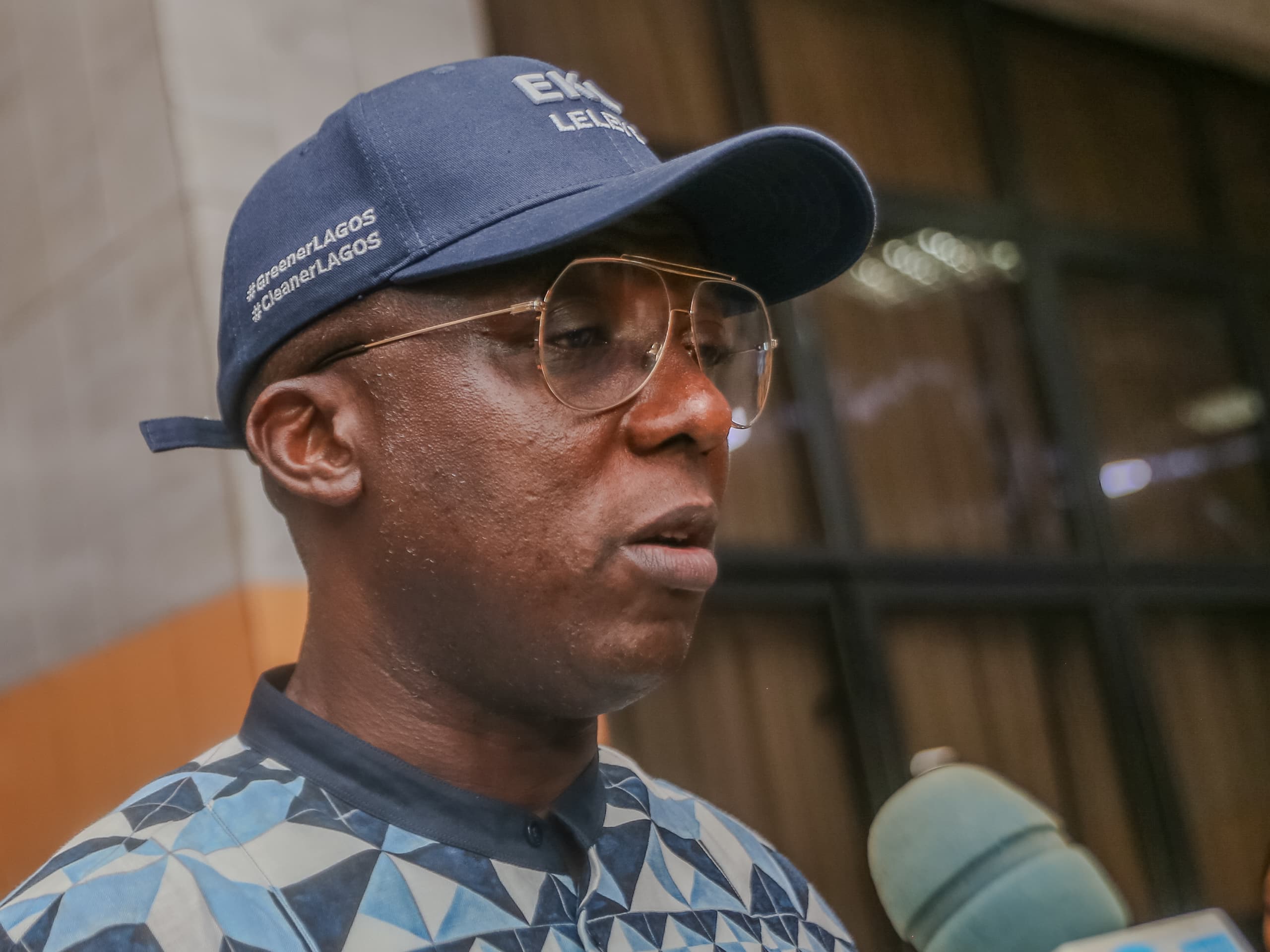
Other speakers at the event who did justice to the theme of the symposium were the keynote speaker, Mr. Tokunbo Philip Wahab, Commissioner for the Environment and Water Resources in Lagos State; Mr. Ekuma Eze, Head of Corporate Affairs and Sustainability, Rite Foods Ltd; and Mr. Akintunde Disu, environmentalist and founder of the Rite-On-The-Beach initiative.
Wahab also said the State Government understands the delicate relationship between human and water as not just a force but also an enabler.
He stated that the theme of the event “Water (No) Get Enemy” is very apt because for centuries, water has shaped Lagos’ economy, the trade, fishing, the transport, even the settlements, stressing that scientifically, water lies at the very heart of the United Nations Sustainable Development Goals (SDGs 6, 2, 11 and 13).
The Commissioner noted that as simple as the statement sounds, it carries wisdom as old as humanity itself.
Mr. Wahab: “Nobody can live without water, nobody can truly fight against it because Water is life itself,” the Commissioner stated.
He added the State faces unique climate challenges, “which include rising sea levels, extreme heat, and recurrent flooding, saying that this explains why the government designed a comprehensive Drainage Master Plan to safeguard the city and keep flooding at bay.”

Unfortunately, he noted, the reverse often plays out because “Lagosians continue to build on floodplains, block drainage channels, reclaim wetlands,” adding that these actions, which most times are driven by personal economic gain, “not only defy common sense but also directly violate the Lagos State Environmental Management and Protection Law of 2017.”
Wahab stressed that the aforementioned activities “have recently resulted in flooding in Parkview, Banana Island, Osborne, Ikoyi, Victoria Island, Lekki, Ajah and beyond, stressing that these disasters are not natural but are man-made and that the Ministry of the Environment and Water Resources “has resolved these anthropogenic activities from time to time, but residents still persistently and brazenly defy environmental laws, stressing that there will be no hiding place for defaulters and saboteurs.”
Comments