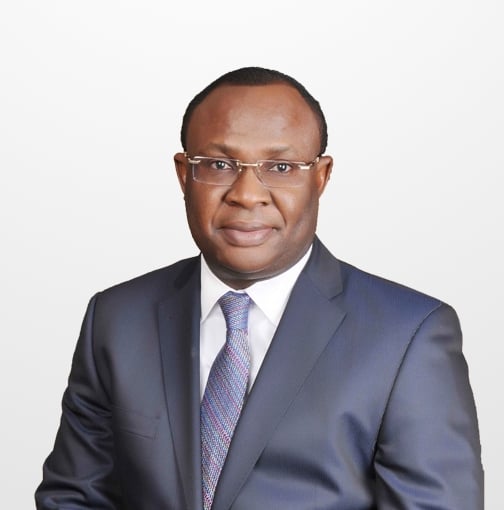
The Managing Director of the Nigeria Mortgage Refinance Company (NMRC) and Chairman of the African Union for Housing Finance (AUHF), Kehinde Ogundimu, has urged African governments to embrace blended finance as a strategic solution to bridge the continent’s widening housing deficit.
Ogundimu made the call at a roundtable event supported by UN-Habitat and the African Development Bank (AfDB), which brought together stakeholders from Nigeria, Kenya, Rwanda, South Africa, Botswana, and Zimbabwe to discuss innovative approaches to housing finance, urban policy, and capital mobilisation.
In a statement released on Wednesday, the NMRC boss said that stronger government leadership and creative financing mechanisms were essential to drive sustainable housing delivery and unlock large-scale investments across Africa.
“To address Africa’s deepening housing deficit sustainably, we need stronger government leadership and innovative financing mechanisms — particularly blended finance — to catalyse transformative, large-scale impact across the continent,” he said.
Ogundimu warned that the future of Africa’s urban centres depends on immediate action and collaboration between public and private sectors.
“This transformation presents a choice. Will our cities become engines of prosperity and human dignity, or sprawling informal settlements marked by lost opportunity and persistent inadequacy?” he asked.
He noted that mortgage penetration across Africa remains below 3 per cent, limiting access to affordable housing. According to him, blended finance, which combines public, philanthropic, and private capital, could be a game-changer for large-scale housing investment.
“We need blended finance — the strategic combination of public, philanthropic, and private capital to unlock investment at scale. It is not merely an option; it is a necessity,” Ogundimu added.
He further emphasized that African governments must evolve from being sole housing providers to market enablers, using public funds to attract and de-risk private investments.
“When structured effectively, blended finance can reduce investment risk, extend loan tenors, lower interest rates, and multiply the impact of limited public funds,” he explained.
Ogundimu highlighted successful models across the continent, such as guarantee schemes and employer-employee housing funds, which could be scaled through collaboration and policy reform. He also stressed that housing should be viewed not only as a social service but as an economic engine that drives inclusive growth.
“Housing is not just a social good; it is a powerful economic catalyst. Each home built creates jobs, stimulates local industries, deepens financial markets, and builds wealth,” he said.
Drawing from NMRC’s experience in Nigeria, Ogundimu said achieving lasting transformation requires an ecosystem approach that brings together regulators, investors, developers, and policymakers.
“No single institution, and no single country, can achieve this alone,” he asserted.
He reaffirmed AUHF’s commitment to documenting and promoting success stories to inspire evidence-based policy reforms, urging African leaders to take decisive steps on the resolutions reached at the conference.
“The families waiting for decent homes are counting on us,” he concluded. “History will judge whether we rose to meet this defining challenge — and I am confident that together, we will.”
According to the Federal Mortgage Bank of Nigeria, the country faces a housing deficit of over 28 million units, requiring more than $21 billion annually to bridge the gap. Despite several government interventions, access to affordable housing remains limited due to high construction costs, inadequate financing, and low mortgage penetration.


 Quick Read
Comments