


World-renowned physicist Chen-Ning Yang dies at 103

 Quick Read
He is also remembered for his role in developing the Yang-Mills theory in the early 1950s, in collaboration with American physicist Robert Mills.
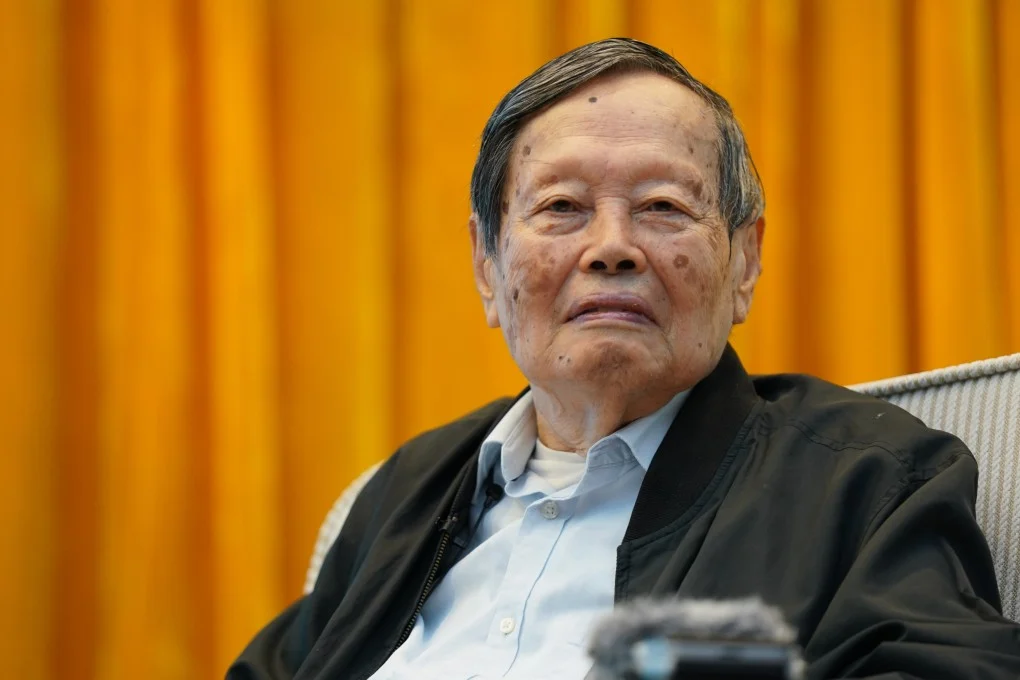
Chen-Ning Yang, a world-renowned physicist and recipient of the 1957 Nobel Prize, has died in Beijing at the age of 103, Chinese state media reported on Saturday.
The cause of death was cited simply as “illness” by state broadcaster CCTV.
Born in Hefei, in Anhui Province, eastern China, Yang moved to the United States in the 1940s to pursue higher education. He later held various academic positions across the US, eventually acquiring American citizenship—though he reportedly renounced it in 2015.
Yang earned global acclaim when he shared the 1957 Nobel Prize in Physics with colleague Tsung-Dao Lee for their groundbreaking work disproving the conservation of parity in weak nuclear interactions—an achievement that reshaped fundamental understanding in particle physics.
He is also remembered for his role in developing the Yang-Mills theory in the early 1950s, in collaboration with American physicist Robert Mills. The theory laid the mathematical foundation for modern quantum field theory and has since become central to the Standard Model of particle physics.
In his later years, Yang returned to China and taught at Tsinghua University, one of the country’s most prestigious institutions. According to China’s Xinhua News Agency, he made “important contributions to cultivating and recruiting talent and promoting international academic exchanges.”
Yang’s personal life also drew public attention. His first wife, Chih Li Tu, passed away in 2003. The following year, at the age of 82, he married Weng Fan, a then-28-year-old graduate student—a marriage that sparked wide public debate in China at the time.
Chen-Ning Yang leaves behind a towering scientific legacy and a life that bridged East and West, theory and discovery, tradition and change.
Comments