


500 years after church split, Pope and King reunite: What it means for global Christianity

 Quick Read
For the first time in nearly five centuries, the heads of the world’s two most prominent Christian traditions, the Pope and the King of England stood side by side in prayer. Inside the hallowed walls of the Sistine Chapel in Vatican City...
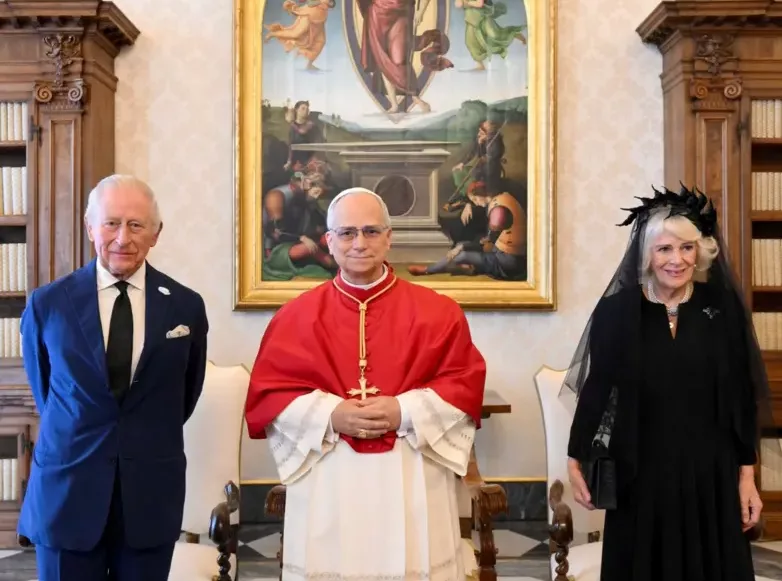
For the first time in nearly five centuries, the heads of the world’s two most prominent Christian traditions, the Pope and the King of England stood side by side in prayer. Inside the hallowed walls of the Sistine Chapel in Vatican City, Pope Leo XIV and King Charles III, Supreme Governor of the Church of England, joined voices to recite the Lord’s Prayer in English.
This is clearly a gesture loaded with history, symbolism, and hope.
It was not another royal visit or diplomatic courtesy. This was the first joint prayer between an Anglican monarch and a pope since the violent split of the 16th century, when King Henry VIII severed ties with Rome and established the Church of England.
The Split That Shook Christian World
According to historical reports, the divide traces back to King Henry VIII of England, who in the 1530s sought to annul his marriage to Catherine of Aragon, a Spanish princess and aunt to the powerful Holy Roman Emperor. When Pope Clement VII refused to grant the annulment, Henry defied Rome by declaring himself Supreme Head of the Church of England through the Act of Supremacy in 1534.
But beneath the surface, it was more than a royal marital dispute. Henry’s decision held a strong statement of national sovereignty over papal authority. He seized control of church property, appointed his own bishops, and established a new religious order that had cells of Catholic traditions with emerging Protestant ideals.
The break triggered decades of chaos, persecution, executions, and religious wars that tore through England and Europe. The newly formed Church of England, or Anglican Church, retained much of Catholic liturgy but rejected papal supremacy, leading to one of the most consequential schisms in Christian history.
For nearly 500 years, that split defined relations between London and the Vatican shaping theology, politics, and even colonial missions that spread both faiths across continents, including Africa.
The Gesture of Healing
Centuries later, the image of their successors, Pope Leo and King Charles praying together beneath Michelangelo’s ceiling carries profound weight. The service, attended by Queen Camilla, UK Foreign Secretary Yvette Cooper, and senior Vatican officials, included readings from the Book of Romans and music by the English composer Thomas Tallis, who himself lived through the Reformation’s turbulent years.
To many observers, the moment signified not the erasure of theological differences but a deliberate embrace of shared faith and reconciliation.
Why It Means for Global Christianity
For millions of Christians worldwide including in Nigeria, where both Catholicism and Anglicanism have strong foot holdings, the encounter presents a broader yearning for unity in faith.
Both churches now collaborate on humanitarian, climate, and peace efforts. The late Pope Francis and former Archbishop of Canterbury Justin Welby once travelled together to South Sudan, urging warring factions to embrace peace. This mission showcased how far relations between the two faiths had evolved from confrontation to cooperation.
King Charles, who has been vocal about his interest in interfaith dialogue, continues in that spirit. His presence in the Sistine Chapel leaves a strong message that faith should serve as a bridge, not a barrier.
Lessons for the Body of Christ
For Christian communities across the globe especially in countries like Nigeria, where denominational rivalries sometimes mirror political or ethnic divisions, the image of the King and Pope praying together offers a gentle rebuke and a timeless lesson: that unity need not mean uniformity.
Faith, at its best, transcends institutions. It is about shared devotion, compassion, and peace values that remain larger than the doctrines that divide
Comments