


Much Ado about demolitions in Nigeria and the way forward

 Quick Read
The attempt by some political leaders to ethnicise and incite the public against the Lagos State Government’s enforcement of the law is deplorable. Historically, Lagos has always been and remains the indisputable melting pot of religious and ethnic harmony among its inhabitants.
By Nelson Ekujumi
Demolition of houses, structures, and other forms of habitation has become one of the major topics of discussion lately because of its enormous impact on society. Though it has always been a topical issue with humanity for ages, this concern is not limited to Nigeria but is a global one.
Demolitions occur for various reasons — by individuals, organisations, and even the state. An individual can demolish an existing structure if they wish to erect a new one to suit their taste, or even part of a structure to align with new designs. However, all these must be subject to statutory approvals to avoid running foul of the law. The same applies to organisations. For the government, however, it is about enforcing the law.
When demolitions occur due to structural defects, violations of building and environmental laws, lack of approval, or dilapidation, they tend to inflame tensions and incite the public against government authorities whose constitutional duty is to enforce the law to ensure public safety and prevent loss of lives.
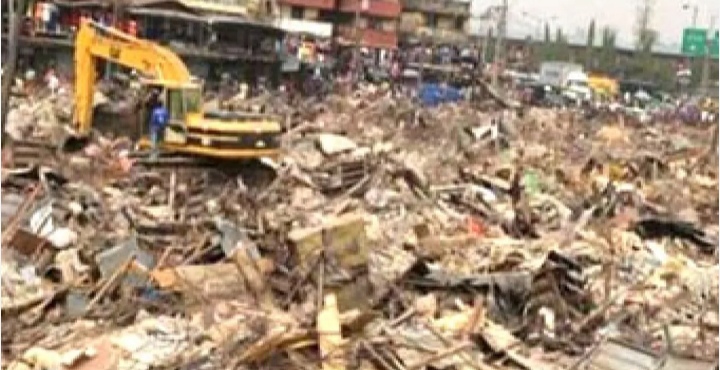
There are numerous instances of demolitions of illegal, dilapidated, and environmentally hazardous structures and shanties across the 36 states of the country. Recently in Lagos, demolitions have taken place in Oko Oba, Agege, Lekki, Ajah, Festac Town, and Oworonshoki, among others — including the recent demolition of illegal structures at the Trade Fair Complex by the duly empowered authorities. These actions were based on legal parameters relating to the affected buildings that posed risks to public safety. Regrettably, some individuals wielding political authority attempted to make ethnic and political capital out of these lawful and constitutional actions.
Sadly, in Nigeria today — as in other parts of the world — the issue of demolishing structures that violate statutory building laws and pose threats to life and safety has taken on dangerous ethnic and primordial dimensions. This is unfortunate, sad, and condemnable.
Section 1 of the Land Use Act vests land ownership in every state in the Governor. In addition, the Supreme Court judgment of 2003 (Attorney-General of Lagos State v. Attorney-General of the Federation) affirms that land use and physical planning fall under concurrent jurisdiction. States therefore retain the authority to regulate development control within their territories, including on federal lands, except for core areas like military formations or exclusive federal enclaves. Given this legal foundation, how do we reconcile the irresponsible utterances of those who should know better but instead seek political gain from a matter already settled by law?
The attempt by some political leaders to ethnicise and incite the public against the Lagos State Government’s enforcement of the law is deplorable. Historically, Lagos has always been and remains the indisputable melting pot of religious and ethnic harmony among its inhabitants.
It is natural for people to be emotionally distressed when demolitions affect buildings constructed at great cost, time, and effort. However, we must remember that we live in a society governed by law. It is the responsibility of all citizens, political leaders, and state institutions to uphold those laws for our collective good — not for political advantage.
As we examine this matter of urgent public interest, we must situate the facts clearly to guide future generations. Instead of acknowledging errors in erecting shanties unfit for human habitation, or building without approvals on setbacks, canals, and drainages, people often resort to emotional and ethnic sentiments to scapegoat state agencies merely performing their lawful duties.
Government exists not only for the security and welfare of the people but also to uphold and enforce the law for the collective good. Although we operate a capitalist economy, that privilege does not give us the right to act lawlessly.
When we buy land, what do we usually do in this part of the world? Sadly, many people, after purchasing land, fail to conduct a search to determine whether the land lies within government acquisition, setbacks, or drainages, or to seek expert advice. Instead, they rush to hire legal counsel to perfect documents, ensuring the title reflects ownership — even when the land violates planning laws.
The word conspiratorial is used deliberately here, because legal practitioners who perfect such documents without proper due diligence are also complicit in these violations.
Other accomplices include town planners and architects who prepare building plans without proper layout approval, in violation of professional ethics and legal standards. Unfortunately, they are emboldened by the absence of sanctions from their professional bodies and the state, which focuses only on demolitions rather than holding these professionals accountable. It is public knowledge that many structures are erected without approved plans or permits. Even when served notices to remove or regularise them, many property owners ignore such directives, hoping for leniency.
The key question is: what can be done to prevent the pain and trauma associated with demolitions? Both citizens and government bear losses — citizens through wasted resources, and government through enforcement costs.
First, we must be sincere with ourselves. Upon acquiring land, we should ask: Is this land legal, safe, and suitable for habitation? What kind of structure can be built here? To answer these, one must approach the appropriate government agencies for guidance before construction.
Secondly, government must deploy technology to enable citizens to verify the status of land and determine if it is free of encumbrance. It must also reduce human interaction in land administration to curb corruption, which often fuels illegal development.
Thirdly, government should embark on aggressive advocacy and public engagement on land rights and building regulations. Educating citizens will reduce violations committed out of ignorance or deceit and save society the trauma of demolitions.
Therefore, when news of demolitions emerges, we must remain calm, interrogate the facts dispassionately, and avoid agitation over illegality. In this matter, we are often the architects of our own fortune or misfortune.
Thank you.
Yours sincerely,
E-signed,
Comments