


Trump’s impulsive Nigeria warning and the politics of misplaced outrage

 Quick Read
The crux of his threat rests on the claim that Nigeria is failing to stop the killing of Christians by Islamic terrorist groups. Trump posted that he had ordered the U.S. Department of Defence to “prepare for possible action,” and simultaneously announced that all U.S. aid would cease if the Nigerian government did not act.
By Kazeem Ugbodaga
In a dramatic escalation of foreign policy rhetoric, U.S. President Donald Trump has publicly threatened military action in Nigeria over alleged killings of Christians, warning that his administration may deploy forces “guns-a-blazing” unless the Nigerian government acts swiftly.
While the protection of vulnerable religious communities is a legitimate international concern, the tone and framing of Trump’s decision spotlight serious risks, not least because the violence in Nigeria is neither solely one-sided nor neatly partisan.
The crux of his threat rests on the claim that Nigeria is failing to stop the killing of Christians by Islamic terrorist groups. Trump posted that he had ordered the U.S. Department of Defence to “prepare for possible action,” and simultaneously announced that all U.S. aid would cease if the Nigerian government did not act.
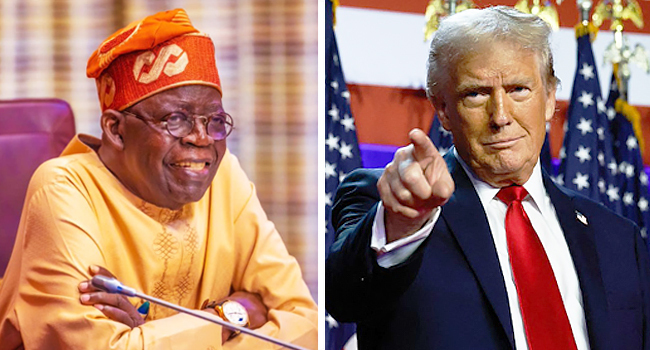
From the Nigerian side, President Bola Tinubu and his government have rejected the narrative of systematised Christian genocide, stressing that religious freedom is constitutionally guaranteed and that violence afflicts both Muslims and Christians.
Where the U.S. narrative risks going off-course is in its oversimplification of Nigeria’s tangled security terrain. The northeastern region, where Islamist insurgent groups such as Boko Haram and related factions have operated for years, is a Muslim-majority area, and multiple analyses show that Muslims in that sector account for the majority of casualties from insurgent attacks.
Meanwhile, in the Middle Belt and northwest, much of the violence stems from ethnicity, land disputes, herder-farmer conflict and criminal banditry, factors that cut across religion and victimise Christians and Muslims alike. To frame the situation purely as Christians being slaughtered is to ignore the broader reality and to risk misleading policy responses.
Moreover, Trump’s public warning appears to be driven more by bold signalling than by the hallmarks of considered diplomatic-military strategy. Effective responses to complex security problems typically hinge on vetted intelligence, close cooperation with state institutions, layered capacity building, and multilateral partnerships, not sudden ultimatums. The language of “guns-a-blazing,” immediate aid-cuts and implicit threats of unilateral intervention suggest a mode of action rooted in impulse rather than deliberation.
For Nigeria this external pressure carries acute dangers. If an intervention is framed as saving one religious community, it could exacerbate communal divisions, embolden identity-based reprisals, and fuel extremist recruitment on all sides. In a country already marked by fragile coexistence between Muslims and Christians, and between ethnic groups, a mis-framed foreign intervention could destabilise rather than stabilise.
The policy path that many local experts favour is markedly different. Transparency about actual victim numbers and perpetrators; multinational cooperation via institutions such as the African Union and Economic Community of West African States; strengthening of Nigeria’s civilian protection and rule of law mechanisms; discreet intelligence-sharing rather than public threats, these measures promise more sustainable progress. Spotlighting only the killing of Christians risks ignoring half the story and may undermine trust among religious and regional communities.
In short: the protection of civilians and religious minorities is an unmistakable priority. Yet bold threats of military action rooted in polarised narratives may do more harm than good. Nigeria deserves support that recognises the complexity of its conflicts, the plurality of its victims, and its own sovereign role in shaping solutions. External actors who leap to unilateral military options risk acting on moral impulse, not strategic reason and in so doing, may deepen the very divisions they claim to address.
Comments