


Markets in Turmoil: Trump’s ‘war’ remark sends naira, stocks crashing

 Quick Read
Experts say Nigeria’s market stability now depends on how the government and the Central Bank manage the situation and restore confidence among investors.
Femi Fabunmi
Nigeria’s financial markets started November 2025 on a rough note as both the naira and the stock market dropped sharply.
This happened after United States President Donald Trump threatened possible military action against Nigeria, accusing the country of religious persecution.
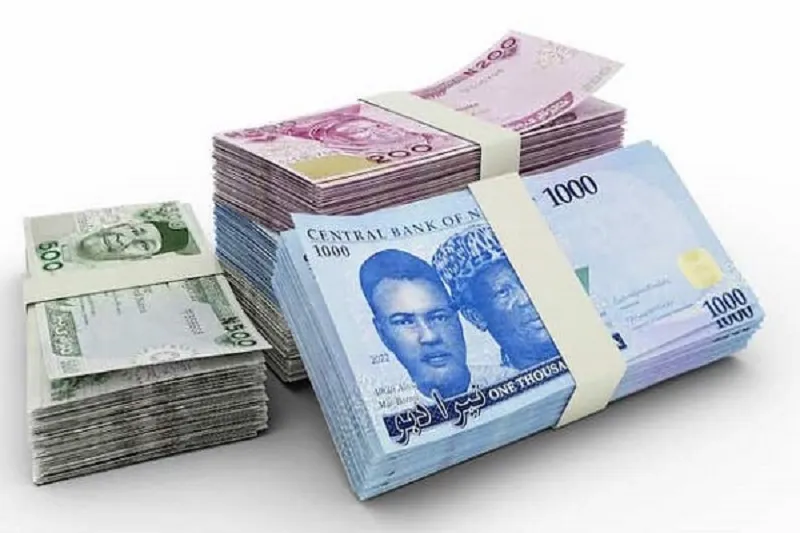
According to data from the Central Bank of Nigeria, the naira, which had recently traded at ₦1,421.73 to the dollar, fell to ₦1,436.34 on Monday — a loss of ₦14.61 or 1.03%. In the parallel market, it also weakened to ₦1,455 to the dollar as investors became more worried.
The drop came after Trump posted on his Truth Social platform, calling Nigeria a “country of particular concern.” He ordered the US Department of War to prepare for “possible action” if what he called “killings of Christians” continued.
His comments caused widespread concern and uncertainty about how this could affect Nigeria’s economy.
At the Nigerian Exchange Limited, trading was negative on Monday.
The All-Share Index fell by 0.25% to close at 153,739.11 points, cutting year-to-date gains to 49.37%. Market value dropped by ₦245.88 billion to ₦97.58 trillion.
The biggest losses came from Aradel Holdings (-9.21%) and Access Corporation (-3.07%). Out of the active stocks, 38 declined while 19 gained. Union Dicon was the top gainer (+9.93%), while Honeywell Flour Mills led the losers (-10%).
Trading activity also fell sharply. The total number of shares traded dropped by almost 88%, and the total value traded declined by 45% to ₦25 billion. United Bank for Africa led trading with 136.8 million units valued at ₦5.5 billion.
Sector performance was mixed:
Oil & Gas (-3.94%)
Commodities (-1.85%)
Insurance (-1.48%)
Banking (-0.22%)
Consumer Goods (+0.49%)
Industrial sector (flat)
In the bond market, Cowry Assets Management reported that interest in Nigeria’s Eurobonds declined, with average yields rising slightly to 7.70%. Bloomberg also reported that Nigeria’s dollar bonds were the worst-performing among emerging markets on Monday.
Bonds maturing in 2047 dropped the most, losing 0.6 cents on the dollar before recovering a bit later in the day.
Analysts had different views on the situation.
Tilewa Adebajo, CEO of CFG Advisory, said the market reaction was likely short-term.
“This looks like a temporary shock,” he said. “Nigeria’s recent removal from the FATF Grey List shows strong fundamentals for long-term investors.”
However, Dr. Musa Yusuf, CEO of the Centre for the Promotion of Private Enterprise, warned that Trump’s comments could harm investor confidence.
“The US President’s threat is unnecessary and dangerous,” Yusuf said. “It creates fear among investors and sends a bad signal about Nigeria’s economy.”
He added that while Nigeria should continue improving its security and governance, dealing with foreign nations should be based on cooperation, not threats.
“Any unilateral military action could destabilise Nigeria and the region,” he warned. “Diplomacy and mutual respect are the right way forward.”
Experts say Nigeria’s market stability now depends on how the government and the Central Bank manage the situation and restore confidence among investors.
Comments