


Agbakoba writes Edun, unveils plan to turn Nigeria into ₦1.5 Quadrillion powerhouse

 Quick Read
To strengthen the naira and build a truly productive economy, Agbakoba outlined three transformative reforms, land and real estate titling, expansion of credit access, and full agricultural mechanisation, which he said could “back the naira with real value and propel sustainable prosperity.”
By Kazeem Ugbodaga
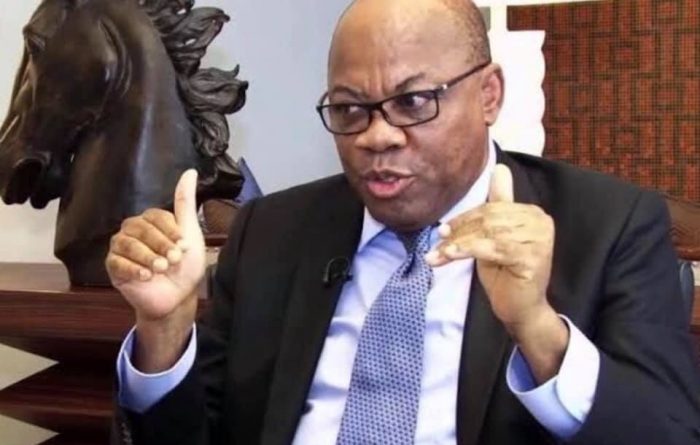
Former NBA President, Dr. Olisa Agbakoba, has presented a sweeping economic reform proposal to the Minister of Finance and Coordinating Minister of the Economy, Mr. Wale Edun, outlining how Nigeria could unlock over ₦1.5 quadrillion in new economic value within 10 to 15 years.
In a detailed letter dated November 7, 2025, titled “Ideas for a Quadrillion Naira Economy in 10 to 15 Years,” Agbakoba commended the Tinubu administration for its strides in stabilising key macroeconomic indicators but warned that “exchange rate volatility remains Nigeria’s most pressing challenge.”
“We currently have one of the highest currency volatilities in Africa,” Agbakoba wrote, saying “with the naira depreciating by over 40 percent in 2024 alone. The root cause is simple, the naira lacks fundamentals, tangible economic pillars that give people reason to hold and use it.”
To strengthen the naira and build a truly productive economy, Agbakoba outlined three transformative reforms, land and real estate titling, expansion of credit access, and full agricultural mechanisation, which he said could “back the naira with real value and propel sustainable prosperity.”
According to Agbakoba, an estimated 90 percent of Nigerian land and real estate remain untitled or defective, representing what economists call “dead capital.”
“Unlocking trapped property assets that are presently dead capital will encourage investors who currently prefer to buy properties abroad to buy in Nigeria,” he stated.
“At today’s exchange rate, the World Bank and PwC’s conservative estimates of $900 billion in dead capital amount to ₦1.5 quadrillion. Releasing that into productive use will transform Nigeria’s economy.”
He urged the government to accelerate the National Land Registration, Documentation and Titling Programme, saying that “by indexing property values to the financial system through digital integration and legal harmonisation, we can create an instant credit market worth thousands of times our GDP.”
On credit expansion, Agbakoba argued that Nigeria’s reliance on a cash-based system severely limits economic potential.
“A well-developed credit system allows people to buy what they cannot afford provided they manage their debt. Two hundred million Nigerians, each with ₦300,000 in credit facilities, would inject ₦60 trillion into the economy,” he wrote.
He added that expanding credit in naira would deepen domestic markets, stimulate production, and “make the naira more attractive as an asset,” thereby reducing dependence on the dollar and speculative pressure on the exchange rate.
Turning to agriculture, Agbakoba compared Nigeria’s largely subsistence sector with the United States’ highly mechanised system.
“Only 2 percent of the U.S. workforce generates $1.5 trillion annually from agriculture,” he observed, adding that “By contrast, 30 to 38 percent of Nigeria’s workforce produces barely $49 billion. Productivity, not manpower, drives success.”
He called for comprehensive mechanisation and the establishment of cold storage, processing plants, logistics networks, and agricultural finance services to unlock massive productivity gains.
“When a nation feeds itself and exports the surplus, its currency strengthens naturally,” he noted, arguing that “Agricultural transformation will provide lasting stability to the naira and shield it from volatility.”
Agbakoba stressed that these reforms must be pursued with “ambition matched with execution,” citing the ongoing tax reform as proof that such systemic change is achievable.
“This is not easy work. It is painstaking but doable. If these reforms are implemented, the naira will exchange at optimal rates because it will have a real fundamental backing. The difference between incremental improvement and transformative change is ambition matched with execution,” he stated.
The eminent lawyer attached an accompanying policy paper by his firm, Olisa Agbakoba Legal, titled “Devolution is the Solution: Foundational Reform Agenda for Nigeria’s Transformation,” urging the Finance Minister to consider the proposals as part of the administration’s long-term economic strategy.
Comments