


Nigerians rescued, dozens feared dead in Mediterranean shipwreck – IOM

 Quick Read
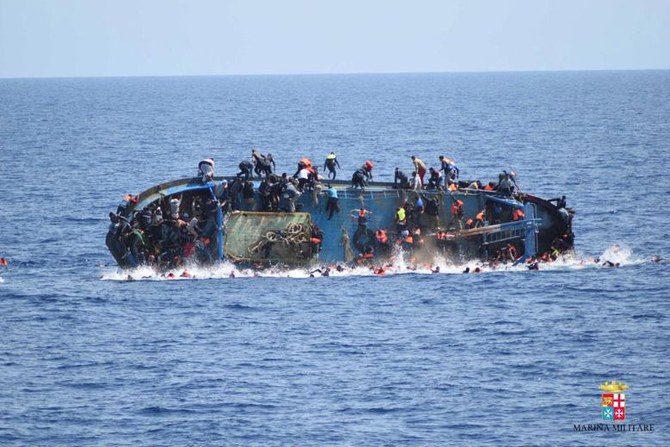
The International Organisation for Migration (IOM) has confirmed that two Nigerians are missing and two others dead following the latest shipwreck in the Central Mediterranean that claimed dozens of lives.
The International Organisation for Migration (IOM) has confirmed that two Nigerians are missing and two others dead following the latest shipwreck in the Central Mediterranean that claimed dozens of lives.
According to the IOM, a rubber boat carrying 49 migrants and refugees, including Nigerians, capsized off the Libyan coast after departing from Zuwara around 3 a.m. on November 3.
“The vessel capsized roughly six hours later after high waves caused the engine to fail,” the agency said.
All 49 passengers — 47 men and two women — were thrown into the sea. After drifting for six days, Libyan authorities rescued seven men on November 8: four from Sudan, two from Nigeria, and one from Cameroon.
The IOM said 42 people remain missing and are presumed dead, among them 29 Sudanese, eight Somalis, three Cameroonians, and two Nigerians.
“IOM’s team provided the survivors with emergency medical care, water, and food upon arrival at the disembarkation point in coordination with relevant authorities,” the agency stated.
The incident comes barely weeks after similar tragedies off Surman, Libya, and the Italian island of Lampedusa.
IOM’s latest data reveals that over 1,000 people have died in the Central Mediterranean so far in 2025, making it the world’s deadliest migration route. Since 2014, more than 25,600 migrants have died or gone missing in the region.
The agency renewed its call for stronger regional cooperation, safer migration routes, and more efficient search-and-rescue operations to prevent further loss of life.
“IOM upholds that humane and orderly migration benefits both people on the move and society as a whole,” the agency said.
Experts note that many of the boats used for these perilous crossings are unseaworthy and overcrowded, often launched in large numbers at once — a practice that complicates rescue efforts and leads to mass casualties.


Comments