


Five tasks for a reimagined Nigeria

 Quick Read
Our country can do much, much better. However, it is not going to happen by itself. We do not need people of extra-ordinary abilities or resolve to move the needle on governance in Nigeria.
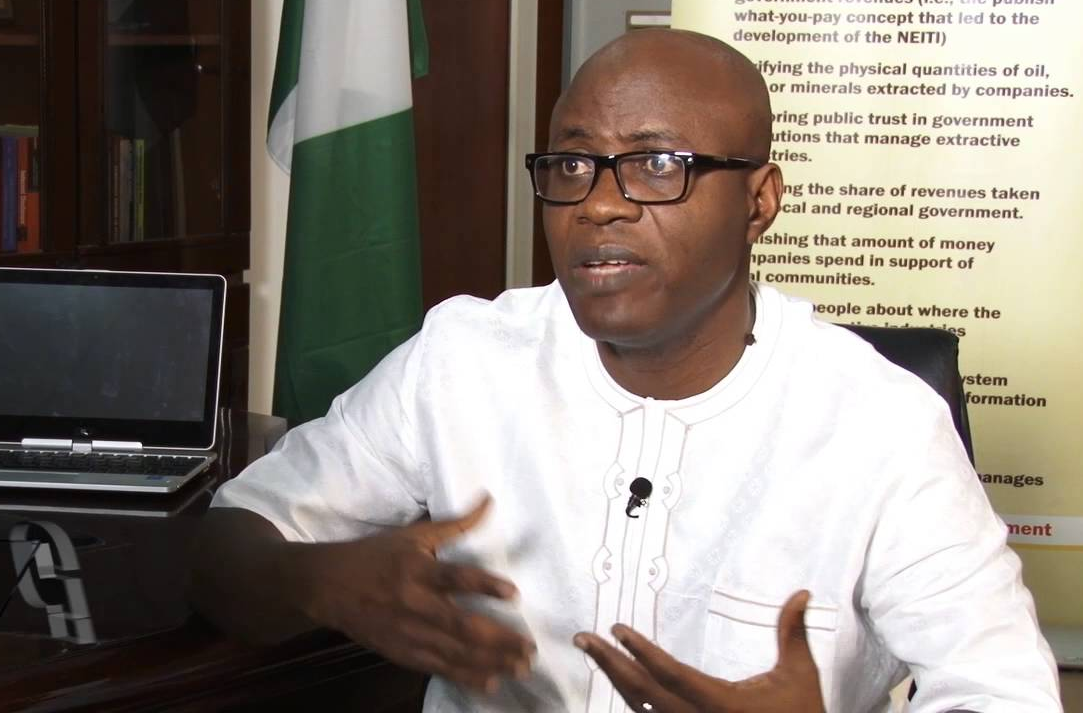
By Waziri Adio
First, honour where it is due. The conveners of the Lagos Book and Art Festival (LABAF) deserve our special commendation and gratitude for organising this event without fail since 1999. This is a no mean feat within our context. Beyond its cultural significance, LABAF is a testament to tenacity and ingenuity. Long may it continue. The two authors whose books will be discussed immediately after this address, Senator Babafemi Ojudu and Honourable Abdul Oroh, also deserve commendation for their sacrifice and service. Both of them paid their dues as journalists (including being detained under the military), and both of them have also had second acts in activism and in the rough and tumble of Nigerian politics. They are my bosses and elders (Senator Ojudu was my first editor at Tempo and Honourable Oroh was the neighbourhood egbon who became my in-law). I join others in looking forward to their session.
I’m extremely honoured to be called upon to deliver this keynote address. I have been asked to speak about how we (as a country and as a people) can build a better alternative to the present counter-productive ecosystem. I don’t think I know enough to speak about such a grand subject. But I can’t say no to Mr. Toyin Akinosho. He is my boss. I have deep respect for him. I like what he does. And in many ways, I am in his debt. So, if I fall short in the keynote endeavour, you know who or what to blame.
I will like to reframe the topic to the unfinished tasks for enduring change in Nigeria. And instead of offering definitive prescriptions, I will raise some questions and share a few ideas for us to further reflect on. I will draw on some of the issues that I have written about as a public commentator for a while and will lean on my five-year experience as the head of a federal agency, a slice of which I have documented in my memoir, “The Arc of the Possible.” And speaking about my book, let me set the stage with a quote from the preface: “… Our country can do much, much better. However, it is not going to happen by itself. We do not need people of extra-ordinary abilities or resolve to move the needle on governance in Nigeria. But we must be ready to put in the work at the technical and the normative levels. A lot of work.”
It is a bit corny to be quoting oneself. Please indulge me for this once. There are two key points that I want to underline from that quote: one, change, enduring social change, is not self-occurring or accidental—it is created; and two, we have a lot of work to do to bring about the desirable, enduring change in Nigeria. And that ‘we’ is not just a few or those we like referring to as the “leaders”. It is the collective. We, all of us, have a lot of work to do, whether we are leading or following or in between. And the work is not just simply going about the business of being good citizens or getting others to do their work. We need to do all that, but more: we need to work on our environment, on our thinking, on ourselves. I will identify and discuss a few of these critical areas of work.
The first aspect is that we need to have a consensus on the kind of society we want to live in. I do not mean this in terms of structure or ideology. We need to wrestle with what the “Good Society” means to us not merely at a philosophical level but in the most basic human term. What minimum basket of goods do we think should be afforded even the lowliest Nigerian in terms of education, health, nutrition, livelihood etc., the level we are ready to go to any length to ensure no Nigerian should ever fall below? For example, do we have an elite consensus or a shared position that we will do everything to ensure that no Nigerian will ever go to bed hungry or will ever be uneducated? Do we have a consensus that the state will spare no expense and no tool to protect any Nigerian citizen in distress, no matter where and irrespective of their station in life? Having such a broad agreement and commitment is not a mere academic or conceptual exercise. It serves as the subliminal anchor for the supply and the demand sides of policies and actions. And here I am not just talking about the list of rights that we have in Chapter 2 of the 1999 Constitution, which even the framers and the interpreters have defined as non-justiciable.
I am speaking about what, at our core as a people, we believe in and which guides our interpretations and actions on how we relate to one another, and which defines the value we place on the life and the dignity of fellow Nigerians, especially the lowly and the vulnerable. We may need to return to John Rawls’ hypothetical construct of the “Original Position” and put on a “Veil of Ignorance” to design a society that intentionally prioritises the weakest. We have had opportunities to discuss Nigeria in the many transitions and contestations pre-independence till date. But we focus, not necessarily wrongly, on structures and group relations. One of the critical tasks that we have not fully discharged is to resolve the basic minimum that should be available to all Nigerians, especially the weak and the vulnerable. Settling this original question on the basis of fairness and justice is not a charitable, but a practical, thing to do. We are all never far away from being vulnerable, and we are better served with a society primed to protect and dignify the helpless. Besides, a society that cannot protect the vulnerable is likely, ultimately, to fail even the privileged.
I think our second urgent task is to seriously interrogate our conception of the purpose of power in society. If you ask the question, most Nigerians are likely to give you the sanitised answer, which is that: the purpose of power to serve. But if you are looking for the real answer, observe an average Nigerian who has been given any form of control over others. It will not take you long to notice that our conception of power is that it is a liberty or the licence to oppress, not to protect, others; or at least to advantage the self. At our core, we hardly see power as a means for protecting others or pursuing the common good. For most of our people, power is for domination and predation.
I think this predatory conception of power has dual roots: the first in our largely monarchical past and the other in our colonial history. In one, the king owned everything above and beneath the land, including the humans, who were mere subjects. And the other was a thinly disguised mask for extraction and expropriation. While the colonial lords contained the kings, they ruled largely through them: thus, the rebalancing and reinterpretation of power between the kings and the subjects never really happened here. And in the fight for independence, our nationalists were mostly too eager to replace the colonial masters while fancying themselves as new royal lords too. So, the picture of the man or woman of power residing in the big mansion, being ministered to by a retinue of aides, protected by a gaggle of armed, stern-looking officials, driven around in long and decadent convoys while taxpayers are muscled out of the road has been a fixture of everyday encounter with power. As I argued elsewhere, we have also turned public offices to mini-shrines for worshipping their excellencies. Even when we claim to be religious, idolatry has become a permanent feature of public life.
On a related note, the third thing that I think we need to interrogate is our definition of public service. Clearly, we have remade the expression. We have turned public service into self-service. Most of our public officials, from the entry-level civil servant to the highest elected official, see public office principally as a rare opportunity to further their own interests. Not as a special privilege to serve the public, as the words imply. This is a well-documented malaise. Professor Richard Joseph, the eminent political scientist, wrote that Nigerians treat public office as a prebend, a position you seek or compete for and then utilise for your personal benefit as well as that of your reference or support groups.
The late Professor Peter Ekeh, renowned historian and sociologist, captured this pathology in another but related way. He identified our bifurcated sense of morality in the civic public and the primordial public and stated that “the unwritten law of the dialectics is that it is legitimate to rob the civic public in order to strengthen the primordial public.” In plain language, we live in a fractured moral universe where it is acceptable, and expected, to rob Peter to pay Paul. Taking from the public to help oneself and one’s community, whichever way that is defined, is actually seen as an obligation. Interestingly, we know the proper name to call such people or such acts in another context. This shows that we are not patently immoral people. We know what is good and we know what is bad. But we know how to neatly compartmentalise things. We have a totally different standard when it comes to public resources. We treat public office as conquered territory and public resources as spoils of war.
We congratulate those who have been lucky to have their time at the trough, and we always remind them not to forget us in their kingdom. We expect them to help us with cash, jobs and contracts etc. We make endless demands on them beyond what their legitimate incomes could carry. We celebrate and promote those who ‘democratise’ their loot. Those who refuse to play ball are described as stupid or useless or wicked. I am sure that Senator Ojudu and Hon. Oroh who ventured into political arena can say a lot about this. But from my limited experience, I can tell you that the incentive to walk the narrow path is very low. In fact, doing or trying to do the right thing has a cost. I, for one, cannot show up in my community today to ask for votes. I am likely to be told point-blank that I wasn’t useful to anyone the last time I had the opportunity. However, there is a cost to all of us when everyone who has the chance tries to take care of themselves and those close to them at the expense of the collective. Richard Joseph reminds us: “there is a fundamental contradiction between prebendalism and the provision of efficient public services.” If you are wondering why Nigeria is where it is, you don’t need to wonder further.
The fourth area of work is that I think we need to pay more attention to state capacity, which I will define loosely as the know-how to carry out basic functions that justify the existence of the state. We don’t speak enough about this. But the capacity of the state to deliver basic goods and services is very thin across the board in our country today. However, this lean capacity is profoundly magnified at the subnational level where, ironically, governance is needed the most and where it is most deficient. It doesn’t matter whether we prefer the big state or the small state—it is not really about the size. It is about competence, and having a competent state is non-negotiable. But the evidence of the incompetence (and not just malice) is all around us, from the inability to formulate and implement appropriate policies to the failure to provide basic services. There are a few exceptions. But that is what they are: exceptions.
State capacity is a cumulative thing: it grows and erodes over time. It is also a function of the significance you assign to building and nurturing it. Public administration is serious work that should be undertaken by the best of society, supported with appropriate resources and processes, primed to evolve with the challenges of the time. There is a marked difference in the quality of hands and brains in the public service and the supporting governance infrastructure of countries like India, Pakistan and Singapore on one hand and that of Nigeria on the other. In some of these countries, for example India and Pakistan, it is a major life achievement to be employed or promoted in their civil service. Actually, we don’t need to go too far: there is a major difference in the quality of our public service 50 years ago and now. Our public service no longer attracts the best and brightest of our society or those who are driven by a burning passion to serve. It has become a dumping ground for those who couldn’t find something else to do or for those looking for an easy way to earn a living. With due respect to the qualified and competent civil servants, and there are more than a few, I will submit that our public service today is more or less a welfare scheme. A country is as good and as strong as its public service. We need to invest in and also fix our public service, without which the state cannot run effectively and efficiently. The public service is the engine of the state. We also need to fix our leadership recruitment approach. A country where the least prepared, the least qualified and the most venal can easily float to the top of leadership and where everyone wants to start at the top cannot produce an outcome different from what we currently have.
The fifth area of work that I want to share is that we need to get over the fixation with individuals. Don’t get me wrong. I am a firm believer in individual agency and in the power of the tone from the top. I documented my belief and my experience and experiment in my book, and I don’t intend to bore you with details. On deep reflection, I have come to the conclusion that though individual example has its uses, but it has serious limitations. A few individuals, either at the very top or at lower or intermediate levels, can make a lot difference but not the level of difference that we need. A few individuals cannot be our sole redeemers. We cannot simply outsource the work of reimagining, rebuilding and reshaping Nigeria to a few individuals. That is classic work avoidance. Even when those we call leaders must do the heavy lifting and show the way, we need all of us to play our parts, big or small, in the reconstruction project.
In ending, I crave your indulgence to repeat that quote again:
“… Our country can do much, much better. However, it is not going to happen by itself. We do not need people of extra-ordinary abilities or resolve to move the needle on governance in Nigeria. But we must be ready to put in the work at the technical and the normative levels. A lot of work.”
There is so much work to be done at different levels: technical, conceptual, normative, individual, collective, etc, etc. The question is: are we ready to put in the work, a lot of work?
Thank you and God bless.
Being keynote address by Waziri Adio delivered at LABAF 2025 held at John Randle Museum, Lagos, 14th November 2025
Comments