


Who is Justice Omotosho? Three high-profile cases you need to know

 Quick Read
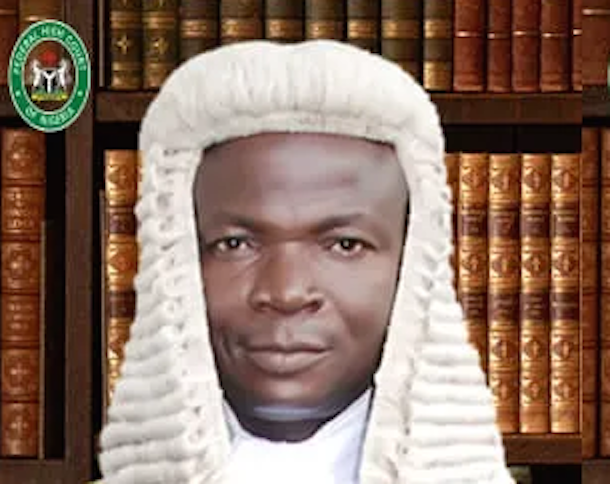
Justice James Kolawole Omotosho of the Federal High Court, Abuja, has in recent years emerged as one of the most visible watched judges... Over the years, several of his cases have drawn national attention. Below are three major matters that have placed him firmly in the spotlight:
Justice James Kolawole Omotosho of the Federal High Court, Abuja, has in recent years emerged as one of the most visible and closely watched judges in Nigeria’s judiciary. His name now features prominently in matters involving national security, political disputes and internal party battles.
Born on 21 July 1966, Justice Omotosho is originally from Ijemo-Abeokuta in Ogun State but grew up in Ajegunle, Lagos. He studied Economics and Business Management at the Lagos State College of Education before proceeding to Olabisi Onabanjo University, Ago-Iwoye, where he obtained his law degree. He was called to the Bar in 1997 and appointed to the Federal High Court in 2015.
He currently sits in the Abuja Division.
Over the years, several of his cases have drawn national attention. Below are three major matters that have placed him firmly in the spotlight:
1 Nnamdi Kanu’s Trial
Justice Omotosho is currently presiding over the federal government’s terrorism case against Nnamdi Kanu, the leader of the proscribed Indigenous People of Biafra (IPOB). This case is one of the longest-running and most politically sensitive matters before any Nigerian court. Fortunately, today he delivers judgement.
2 . Rivers State Emergency Rule Litigation
Following heightened political tension in Rivers State, over 40 suits were filed across Abuja, Port Harcourt and Yenagoa. Justice Omotosho handled some of the most consequential of these cases, where citizens and political groups sought to challenge aspects of the declared state of emergency.
His major actions in these cases include:
- Dismissal of multiple suits: He dismissed a number of challenges for lack of locus standi, ruling that the plaintiffs failed to demonstrate sufficient legal interest.
- Clarification of constitutional procedure: In one widely discussed judgment, he stated that Section 305 of the Constitution does not mandate a rigid or special voting method for the National Assembly when approving a state of emergency.
- Award of costs: In a notable ruling, he awarded ₦9 million against a plaintiff who brought one of the suits, stating that the case was frivolous and an abuse of court process.
- Handling of related suits: He presided over several interconnected matters tied to the political conflict in the state, particularly around the legality of actions taken by federal authorities and state officials before and during the emergency declaration.
3. APGA Leadership Crisis
Justice Omotosho also handled a high-stakes case involving the leadership tussle within the All Progressives Grand Alliance (APGA), one of Nigeria’s established political parties.
Factual highlights from the matter include:
- Intervention in party leadership: His ruling touched on who was legally recognised as the party’s authentic national leadership.
- Overlap with appellate matters: APGA claimed that aspects of the dispute were already before the Court of Appeal, and accused the judge of issuing orders capable of pre-empting higher court decisions.
- Petition to the NJC: The party subsequently petitioned the National Judicial Council (NJC), alleging judicial overreach. The petition became a major national conversation about judicial boundaries in party administration.
- Political fallout: The ruling influenced internal party operations and state-level structures, prompting intense reactions from APGA members and legal commentators.
Comments