


How Nigeria stepped up security efforts when the world looked away

 Quick Read
When the controversial “Country of Particular Concern” (CPC) tag hit Nigeria like a sudden thunderclap, many feared the label would define us.
Ayotola Olanrewaju
When the controversial “Country of Particular Concern” (CPC) tag hit Nigeria like a sudden thunderclap, many feared the label would define us. Instead, what followed was something Nigerians have seen quietly for months but rarely heard said out loud: a government rolling up its sleeves and working, sometimes in silence, to steady a shaken nation.
Take the scene in Niger State last month. Before sunrise, a joint police–military patrol moved through three vulnerable communities where kidnappers had previously struck. Residents watched uniformed officers—freshly deployed under the government’s emergency recruitment and redeployment directive—sweep footpaths, question informants, and guide anxious villagers back into their homes. For the first time in weeks, the village mosque’s early morning call to prayer rose unbroken by gunfire.
“Fear go reduce small,” a young trader said, smiling shyly. “At least we dey see government now.”
Since the CPC designation, Abuja has gone on the offensive—not against its own people, as critics claimed, but against the insecurity threatening them.
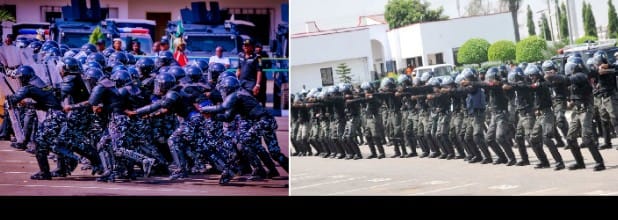
Additional police recruits, expanded army intake, redeployed VIP-protection officers, new rural patrol units, and emergency intelligence fusion meetings have become weekly realities.
In Kaduna, previously dormant forward operating bases came alive again, fueled by new logistics support and a refreshed timetable for coordinated air–ground responses. In Borno, military engineers rebuilt security trenches around villages recently freed from insurgent influence.
In Plateau, community peace officers trained under the Ministry of Information and the Office of the National Security Adviser began mediating long-standing disputes before they could explode.
And in Abuja, the government didn’t just defend its record internationally—it showcased it. Daily reports of rescues, arrests of kidnap kingpins, recovery of rifles, dismantling of bandit enclaves, and protection of vulnerable churches and mosques became evidence that Nigeria was not a passive observer of its own crisis.
Yet the sweetest part of the story has been the unexpected unity it sparked.
In several northern towns, Christian and Muslim leaders now sit together, verifying incidents before they circulate online.
Government-led truth-checking teams work with local stations to correct false alarms.
Communities that once lived in fear are slowly rediscovering confidence—not because danger has vanished, but because the state is visibly, steadily, and deliberately fighting back.
Nigeria still has a long way to go, but this season has shown one truth clearly: when pushed against the wall, the country does not crumble. It responds. It adapts. It rises.
And this time, the government rose with it.
Comments