


NEC approves ₦100bn overhaul to strengthen Nigeria’s Security Training system

 Quick Read
President Tinubu had earlier proposed a nationwide overhaul of security training institutions at the 152nd NEC meeting held in October.
The National Economic Council (NEC) has approved ₦100 billion for the rehabilitation of training centres belonging to the police and other security agencies, marking a major step in the federal government’s efforts to strengthen Nigeria’s security response capacity.
The approval, however, remains subject to final ratification by President Bola Ahmed Tinubu.
The decision followed a report presented by the NEC ad hoc committee on the state of security training facilities, chaired by Enugu State Governor Peter Mbah.
In his briefing, the governor described many of the institutions as dilapidated and unfit for modern security training, stressing that their rehabilitation had become urgent and unavoidable.
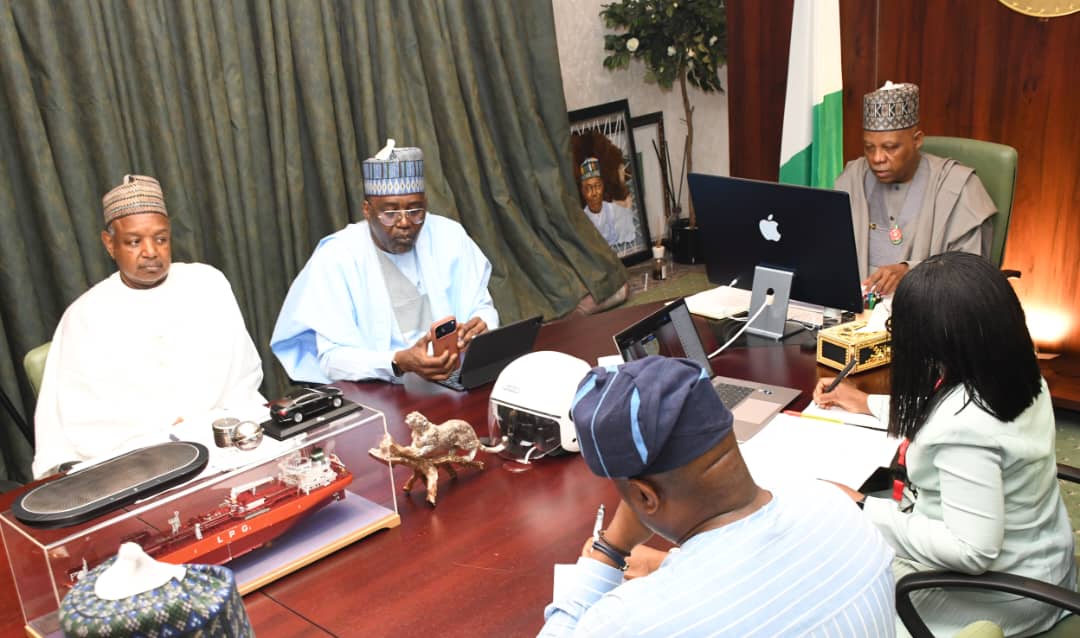
NEC, meeting virtually for the 154th time on Wednesday, also approved ₦2.6 billion for consultancy services tied to the rehabilitation programme.
President Tinubu had earlier proposed a nationwide overhaul of security training institutions at the 152nd NEC meeting held in October.
Vice President Kashim Shettima, who chairs NEC, reaffirmed the administration’s commitment to rebuilding the nation’s security framework.
He urged state governors to ensure that the economic reforms unfolding across the country translate into real, measurable improvements in people’s lives.
Shettima emphasised that Nigerian citizens must begin to feel the effects of policy changes, observing that governance becomes meaningful only when outcomes can be seen, not merely spoken about.
He explained that government must shift from explaining problems to solving them, noting that progress must be engineered deliberately and consistently. In his words, reforms must yield results that are visible in households, markets, schools, clinics and farms across the country.
During the meeting, the Accountant-General of the Federation provided an update on the nation’s financial accounts as of November 2025, confirming balances in the Excess Crude Account, the Stabilization Account and the Natural Resources Development Fund.
NEC also reviewed the latest developments in the national polio eradication campaign.
The ad hoc committee on polio, chaired by Gombe State Governor Muhammad Yahaya, reported notable progress, including a 39 percent decline in circulating variant poliovirus type 2 cases when compared to the previous year.
Kano and Katsina, historically among the most affected states, recorded dramatic drops of 94 percent and 88 percent respectively. Despite these gains, new detections in Gombe, Kebbi, Sokoto, Jigawa, Nasarawa and Zamfara signalled the need for sustained pressure.
The Council also considered updates from the recently concluded integrated Measles–Rubella, HPV and Polio vaccination campaign across 20 northern states and Oyo State.
With high vaccine reach and strong campaign performance in several areas, NEC acknowledged progress but insisted that gaps must be closed before the end of the year.
A fresh round of nOPV2 campaigns is scheduled for December across two blocks of northern states, making the coming weeks crucial for eliminating remaining immunity gaps.
NEC’s discussion also extended to domestic gas supply challenges. Minister of Petroleum (Gas), Ekperikpe Ekpo, briefed the Council on the significant debts owed to gas producers by the power sector, some dating as far back as 2011.
He explained that producers have claimed up to $1 billion in outstanding payments, with ₦185 billion of naira-denominated obligations already verified.
President Tinubu’s approval earlier in the year for the settlement of the verified ₦185 billion through future royalty deductions was highlighted as a key step to restoring confidence among producers and ensuring more stable domestic gas supply. NEC endorsed this position and commended the ongoing efforts to stabilise gas availability.
Closing the session, Vice President Shettima reminded the Council that each decision taken must contribute to solving Nigeria’s pressing problems.
He emphasised that reforms must stop being abstract commitments and instead become practical, measurable improvements in communities across the federation.
Comments