


U.S. takes another crucial decision on Nigeria: What you need to know

 Quick Read
According to him, the U.S. government is determined to confront individuals and networks responsible for orchestrating or enabling sectarian violence.
By Kazeem Ugbodaga
The United States has unveiled a sweeping policy aimed at curbing what it describes as “egregious anti-Christian violence” in Nigeria and other parts of the world, introducing new visa restrictions for individuals implicated in religiously motivated attacks.
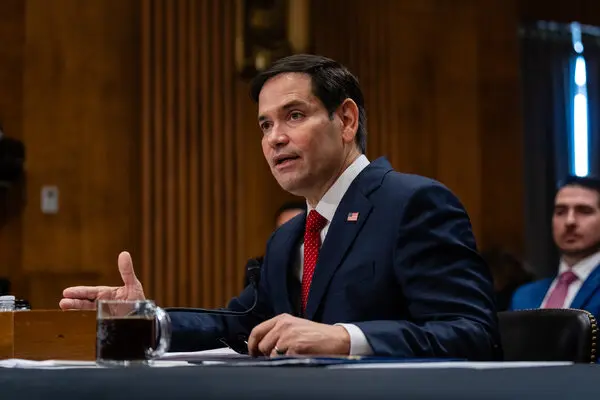
In a statement released on Wednesday, U.S. Secretary of State Marco Rubio said Washington would no longer permit individuals who direct, support, or participate in violent acts against Christians, including those carried out by radical Islamist groups, Fulani militias, and other armed actors, to enter the United States.
He said the policy extended, where appropriate, to certain immediate family members.
According to him, the restrictions would be imposed under Section 212(a)(3)(C) of the U.S. Immigration and Nationality Act, a clause that grants broad authority to deny visas on foreign policy grounds.
Rubio said the measure reflects a decisive shift in U.S. policy toward religious freedom violations, particularly in regions where attacks on Christian communities have escalated.
According to him, the U.S. government is determined to confront individuals and networks responsible for orchestrating or enabling sectarian violence.
He referenced President Donald Trump’s stance on the matter, noting that the President has repeatedly stated that the United States “cannot stand by while such atrocities are happening in Nigeria, and numerous other countries.”
Rubio added that the new visa restrictions would not be limited to Nigeria alone, saying the U.S. will apply them to “any governments or individuals engaged in violations of religious freedom,” signalling a broader global reach.
The announcement underscores Washington’s growing concern over mass killings, village attacks, targeted assassinations, and widespread displacement linked to extremist groups and militia factions in parts of Nigeria, particularly in the Middle Belt and northern regions where Christian communities have suffered recurrent violence.
The policy marks one of the strongest immigration-related actions yet taken in response to religious persecution in West Africa and situates Nigeria once again at the centre of U.S. diplomatic attention on human rights and security.
Comments