


Killings: U.S. disagrees with Tinubu’s govt as Obadare demands end to Sharia law

 Quick Read
The United States House Appropriations Committee, in a joint briefing with the House Foreign Affairs Committee, has raised fresh concerns over the claim of "escalating violence and religious persecution in Nigeria."
US Lawmakers Raise Concerns Over Nigeria’s Security Crisis as CFR Scholar Obadare Calls for Action Against Boko Haram
The United States House Appropriations Committee, in a joint briefing with the House Foreign Affairs Committee, has raised fresh concerns over the claim of “escalating violence and religious persecution in Nigeria.”
The US lawmakers described the situation as a growing humanitarian and security crisis that requires urgent intervention from both Abuja and the international community.
The lawmakers voiced their views at a roundtable, led by House Appropriations Vice Chair and Chairman of the National Security Subcommittee, Mario Díaz-Balart, on Tuesday.
The meeting brought together senior lawmakers, religious freedom advocates, and foreign policy experts to evaluate the worsening insecurity—”particularly attacks targeting Christian communities.”
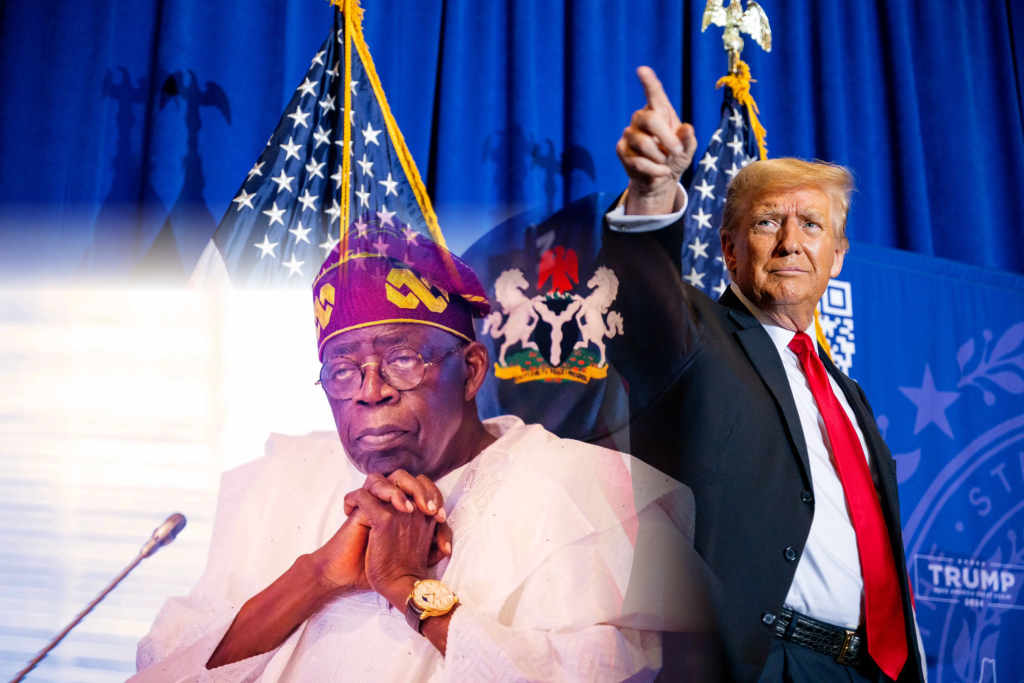
The meeting followed a directive issued on October 31 by U.S. President Donald Trump, instructing Congress to investigate the killings of Christians in Nigeria and provide recommendations to the White House.
US lawmakers reject Tinubu govt.’s position, classify Nigeria’s violence as more than communal or resource disputes
Speaking at the roundtable, Rep. Díaz-Balart said religious freedom remained a core American interest and accused violent groups in Nigeria of “terrorizing people because of how they worship.”
He said the FY26 national security funding bill includes provisions addressing global religious persecution and stressed his commitment to strengthening measures in support of vulnerable populations.
Rep. Robert Aderholt described the situation as “a crisis that can’t be ignored,” while Rep. Riley Moore said the international community “will no longer turn a blind eye to the persecution of Christians in Nigeria.”
House Foreign Affairs Committee Chairman, Rep. Brian Mast, argued that it was “misleading” for President Bola Tinubu-led government to frame the violence as mere communal clashes or resource disputes. According to him, groups such as Boko Haram, ISWAP, and radicalized militias were executing a “targeted campaign of religious cleansing.”
Rep. Chris Smith said moderate Muslims were also victims of extremist attacks and accused the Nigerian government of failing to protect citizens. He warned that perpetrators were operating “with complete impunity.”
USCIRF Chair Cites Worsening Attacks
Chair of the U.S. Commission on International Religious Freedom, Vicky Hartzler, said violations had worsened in 2025, citing the November 22 abduction of over 300 schoolchildren and teachers at St. Mary’s Catholic School in Niger State.
She said killings and abductions across Nigerian communities—Christian and Muslim—showed the government must “take decisive action” and improve accountability, response time, and protection for citizens.
ADF International: Government Not Doing Enough
Sean Nelson of the Alliance Defending Freedom International highlighted testimonies from Christian victims, detailing cases of blasphemy accusations, abductions, forced conversion, village raids, and mass displacement.
He accused officials of repeatedly ignoring warnings of impending attacks and failing to deploy security agencies on time.
Obadare: Boko Haram Remains Core Driver of Nigeria’s Crisis
Delivering a detailed response, Dr. Ebenezer Obadare, Douglas Dillon Senior Fellow for Africa Studies at the Council on Foreign Relations (CFR), told the lawmakers that Nigeria’s insecurity had a clear origin: jihadist terrorism led by Boko Haram.
He said Boko Haram’s goal remained the overthrow of the Nigerian state and the imposition of an Islamic caliphate, calling it the “deadliest and most serious threat confronting the Nigerian state today.”
Obadare also addressed what he described as four “popular myths” surrounding the crisis.
He argued that:
Religion is central to Boko Haram’s ideology, even though both Muslims and Christians are victims.
Victim demographics do not change the motive, which remains religious fundamentalism.
Climate change and banditry are not the primary causes, but consequences of Boko Haram’s long-term destabilization.
The group is not driven by economic grievances and cannot be appeased by reforms.
Obadare added that recent Nigerian government actions, including airstrikes on Boko Haram targets, recruitment of additional police personnel, and the declaration of a national security emergency—were evidence that Abuja responds to international pressure.
He urged the U.S. to maintain diplomatic leverage and proposed a two-point strategy:
Work with Nigerian forces to neutralise Boko Haram, noting that the military cannot succeed alone due to corruption and capacity challenges.
Pressure President Tinubu to reform internal legal frameworks, including:
Making Sharia law unconstitutional in the twelve northern states where it has been adopted.
Disbanding Hisbah groups enforcing religious codes.
He also warned about increasing blasphemy-related mob killings, noting that no perpetrator has ever been prosecuted.
Congress Prepares Report to the White House
The House Appropriations Committee said it is finalising a report to the Trump Administration detailing how Congress can support ongoing efforts to address religious persecution in Nigeria and strengthen U.S. engagement in the region.
The lawmakers reaffirmed their commitment to working with the White House “to save lives and ensure accountability” as the security situation continues to evolve.
Comments