


TY Logistics Park unveils bold plan to stop Nigeria’s $1.7bn Logistics drain

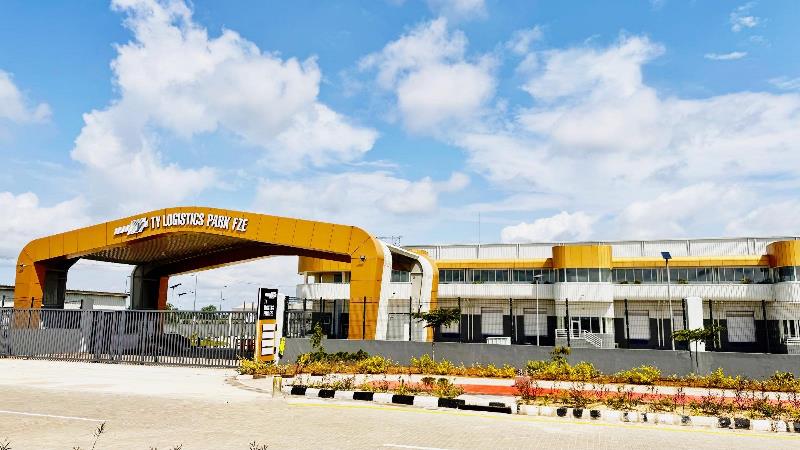
Nigeria’s logistics industry is buckling under the weight of poor infrastructure, fragmented systems, and chronic congestion, an inefficiency that analysts say drains more than $1.7 billion from the economy annually.
But inside the Lekki Free Trade Zone, a new player, TY Logistics Park, believes it has engineered a model capable of restoring order to one of the country’s most dysfunctional sectors.
At the heart of the challenge, according to CEO Arno van der Merwe, is a system that makes moving goods more expensive than the goods themselves.
He describes Nigeria’s bottlenecks as structural, not occasional: weak logistics infrastructure, unreliable warehousing, poor intermodal transport links, congested ports with clearance delays stretching up to 21 days, fragmented customs processes, and minimal technology integration.
TY Logistics Park’s proposed fix is deceptively simple: collapse the logistics chain into a predictable, interconnected ecosystem.
The facility integrates five operations that are typically handled by separate operators, clearing and forwarding, contract logistics, route-to-market planning, free zone operations, and full digital supply-chain visibility. The result is a controlled environment that eliminates delays caused by disjointed workflows.
One of its most attractive offerings is the ability for businesses to store goods within the free zone without paying duties upfront.
Companies pay only when goods are released on consignment, easing the capital pressures that often paralyse importers and manufacturers.
The park spans 100,000 square metres in its first phase and features racked warehouses, jointless floors capable of handling heavy machinery, automated inventory systems, and green-certified buildings engineered to reduce energy and water consumption by 30 per cent.
Free zone incentives, including zero corporate tax and full repatriation rights, add another layer of competitiveness rarely found in Nigeria’s traditional logistics hubs.
While built to serve large enterprises, TY Logistics Park is equally positioning itself as a lifeline for emerging exporters in food processing, beauty, crafts, and light manufacturing.
“A client with two pallets gets the same attention as a client with 10,000,” Van der Merwe said, underscoring a deliberate strategy to expand the logistics market rather than simply capture existing share.
Situated at what the company describes as the “orbital cusp” of the Lekki Free Trade Zone, the park offers rapid access to Lekki Port, Lagos, Apapa, and the new airport.
It expects to handle up to one million metric tonnes of cargo annually in its early phase, eventually scaling to two million as the site develops. Target sectors include pharmaceuticals, automotive, technology, oil and gas, chemicals, and consumer goods. Parts of the Dangote Refinery and Fertilizer complex are already being serviced—an early indicator of market confidence.
Though Van der Merwe has led logistics operations across Kenya and South Africa, he insists TY Logistics Park is intentionally grounded in Nigeria’s long-term potential.
“We want to make this a Nigerian story. We’ve invested in the assets. We’re here for the long run,” he said.
If the model succeeds, analysts believe it could dramatically reshape Nigeria’s industrial landscape by cutting logistics costs, improving export competitiveness, attracting manufacturing back into the country, and reducing cargo diversion to neighbouring ports. It could also drive employment in Lagos and strengthen regional integration under the AfCFTA.
Comments