


How Benin’s Foiled Coup Redefined Nigeria’s Regional Power

 Quick Read
Beyond geopolitics, the Benin episode exposes deeper governance and security problems that produced the mutiny’s rhetoric. The putschists cited long-standing grievances, alleged neglect of soldiers, insecurity in the north and socio-economic pressures, that are not unique to Benin.
By Kazeem Ugbodaga
Nigeria’s rapid intervention to help quash a short-lived coup in neighbouring Benin on 7–8 December 2025 has done more than preserve one president’s hold on power, it exposed fault lines in West African politics, law and regional security while underscoring how swiftly the balance between sovereignty and collective defence can shift in an age of rising coups.
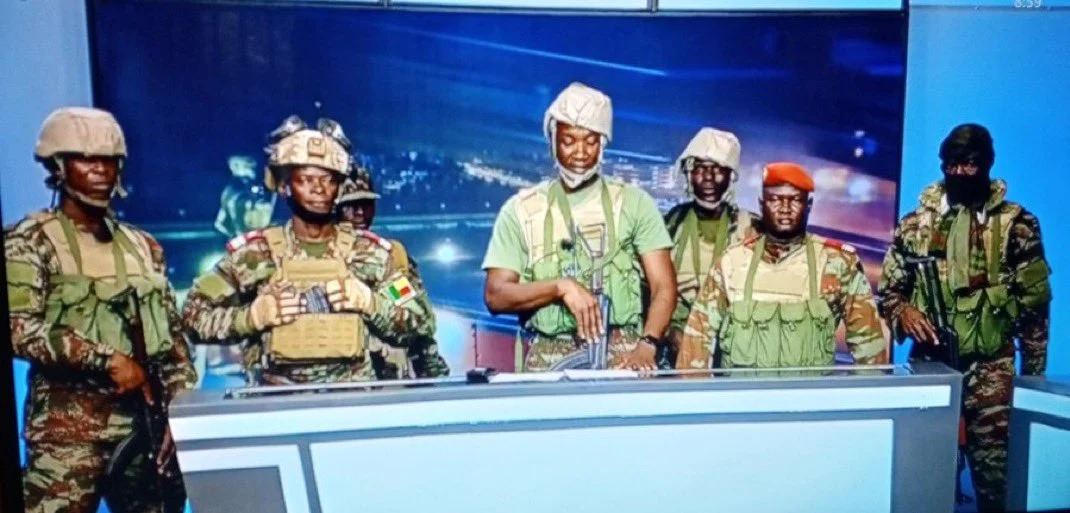
The immediate facts were stark and dramatic. In the pre-dawn hours soldiers briefly seized state television in Cotonou and announced the removal of President Patrice Talon; within hours Beninese authorities, supported by Nigerian air and ground assets and a rapid ECOWAS standby deployment, had pushed back the mutineers and declared the attempt foiled. Nigeria’s president, Bola Tinubu, publicly hailed the troops for “protecting democracy,” and state statements said Benin had requested assistance, a request that opened the door to one of the region’s most consequential cross-border security actions in years.
That rapid response matters because West Africa has been trapped in a pattern of contagion: a string of coups across the Sahel and coastal states over the last half-decade had created what analysts call a “coup belt.” Benin, until now, was an outlier among its neighbours for maintaining relative democratic stability for decades; the aborted takeover therefore marked both a shock and a warning. The willingness of Nigeria and ECOWAS to deploy force, including fighter jets and a coalition of standby troops from countries such as Ivory Coast, Ghana and Sierra Leone, signals a reinvigorated regional posture that rejects the passive acquiescence some feared after earlier coups elsewhere.
Yet the intervention also raises uncomfortable legal and political questions. Cross-border military action, even at a neighbour’s invitation, touches raw nerves about sovereignty and precedent. Critics will ask how requests for assistance are verified, who commands multinational contingents on the ground, and what legal frameworks bind an ECOWAS force once it operates inside a member state. Domestic critics in Nigeria and beyond are already debating whether the move might be perceived as heavy-handed or set worrying expectations that military force is an acceptable tool in politics even when used to restore constitutional order. The decision by Tinubu’s government to act quickly will be judged not only by its immediate success in protecting democratic institutions but also by how transparently it handles facts, arrests, and any accusations of excess.
Economically and electorally the coup’s failure and its fallout will ripple. Benin’s international bond prices fell on the news, reflecting investor unease, but the rapid restoration of order and the government’s insistence that elections will proceed have stabilised markets to some degree. With presidential and legislative contests on the calendar in the coming months, the episode could either harden public support behind the status quo (a rally-round-the-flag effect) or deepen grievances that mutineers cited about governance, military conditions and economic strains, that could fuel further unrest if left unaddressed. For neighbouring states, even a short disturbance can interrupt trade routes, unsettle cross-border communities and increase the logistical costs of commerce in an already fragile regional economy.
Strategically, the operation both reasserts Nigeria’s role as the region’s security heavyweight and exposes the limits of the status quo. Abuja’s swift action signals that it will not tolerate unstable regimes sprouting on its borders, a posture driven as much by national self-interest (border security, refugee flows, jihadist spread) as by principle. That stance may reassure partners alarmed by coup contagion, but it also imposes responsibilities: Nigeria may be expected to take the lead on future crises, straining its military and diplomatic capacities and provoking accusations of neo-regionalism from smaller neighbours wary of Nigerian dominance. ECOWAS’s visible involvement lends multilateral legitimacy, but the effectiveness and legality of ad-hoc deployments will be scrutinised by both courts and publics in the months ahead.
Beyond geopolitics, the Benin episode exposes deeper governance and security problems that produced the mutiny’s rhetoric. The putschists cited long-standing grievances, alleged neglect of soldiers, insecurity in the north and socio-economic pressures, that are not unique to Benin. Addressing these root causes requires more than emergency deployments; it demands reforms in civil-military relations, professionalisation of security services, better pay and support for rank-and-file troops, and political openness that reduces the incentives for factions to seize power. If those structural issues are ignored, the short-term success of military or regional responses will likely be followed by more violence. Analysts and civil-society groups are pushing precisely that argument: force may repel a putsch, but it cannot substitute for political solutions.
Finally, the optics of the intervention will shape international responses and alliances. Western capitals and multilateral lenders will watch whether Benin’s democratic calendar holds and whether human rights and due process are respected in the aftermath. Regional actors, meanwhile, will reassess their crisis-management playbooks: investments in intelligence sharing, rapid reaction forces, judicial cooperation and economic stabilisation mechanisms will likely accelerate. At the same time, the episode may harden narratives used by anti-democratic forces who argue that external powers manipulate outcomes; effective communication by governments and ECOWAS about motives, mandates and constraints will be crucial to blunt such claims.
The foiling of the Benin coup is therefore both reassurance and alarm. It reassures because a small junta could not, this time, seize power and rewrite the political order; it alarms because the causes of the attempt-governance deficits, military grievances and regional insecurity, remain largely unresolved. How Benin, Nigeria and ECOWAS turn this moment into durable stability will be the region’s next test: will they translate a tactical victory into a strategic overhaul that addresses political inclusion, military reform and economic resilience or will they allow the underlying tensions to fester until another crisis forces action under less palatable circumstances? The answer will tell us whether West Africa can finally bend the arc away from coups and toward consolidated, resilient democracies.
Comments