


The articles that freed Fela – Dele Olojede

 Quick Read
For Dele Olojede, the episode became a lasting testament to the power of journalism done properly. It reflected the values that would later define his career as an international correspondent, a media mentor, and
Femi Fabunmi
Dele Olojede is not just a journalist. He is a Pulitzer Prize winner, a careful investigator, and a storyteller who understands when patience can be more powerful than confrontation.
Long before global recognition came his way, Olojede was already proving that journalism, when done with intelligence and courage, could alter the course of history.
One of the most remarkable examples of this was his role in the events that led to the release of Fela Anikulapo-Kuti from prison in the mid 1980s.
In 1984, Fela, who was openly confrontational and relentlessly critical of authority, was jailed by the military government of Muhammadu Buhari following a currency smuggling trial.
After his conviction, he was quietly transferred to Maiduguri Prison, far from Lagos and public scrutiny.
While Fela was in Maiduguri, an unexpected moment occurred. Justice Gregory Okoro-Idogwu, the judge who sentenced him, was on a prison tour and was informed that Fela was being held there.
The judge asked to see him. According to Dele Olojede, when Justice Okoro-Idogwu met Fela, he apologised. He admitted that he had been pressured into jailing him and said that under normal circumstances he would not have done so.
Fela immediately understood the weight of that confession. He contacted his brother, Dr Beko Ransome-Kuti, a medical doctor and human rights activist, and informed him of what had happened. Beko, recognising the importance of the moment, reached out to Dele Olojede and urged him to take it up as an investigative story.
Olojede tried, but there was a problem. There was no evidence. No document. No record. From a journalist’s point of view, the story could not stand. It would collapse under scrutiny.
Then came the turning point.
Olojede advised Fela to write a letter to the judge, thanking him for his honesty and for speaking the truth. If the judge replied that reply could become proof. Fela followed the advice and wrote the letter. The judge responded.
With that reply in hand, Dele Olojede now had evidence. He wrote a powerful story and titled it simply but explosively, “The Judge Begged Me.”
The story struck at the heart of the military system. By then, General Ibrahim Babangida had taken over from Buhari, and the new government was keen to shed the image of repression associated with the previous regime. Olojede’s piece reopened the Fela case, exposed the moral weakness of the original conviction, and placed the issue squarely before the new authorities.
Not long after, the Babangida government released Fela from prison.
For Dele Olojede, the episode became a lasting testament to the power of journalism done properly. It reflected the values that would later define his career as an international correspondent, a media mentor, and a Pulitzer Prize winning reporter committed to truth and accountability.
For Fela, it was another moment where resistance, truth, and courage aligned.
And for Nigeria, it was a reminder that even under military rule, a well told, well evidenced story could still change the course of events.
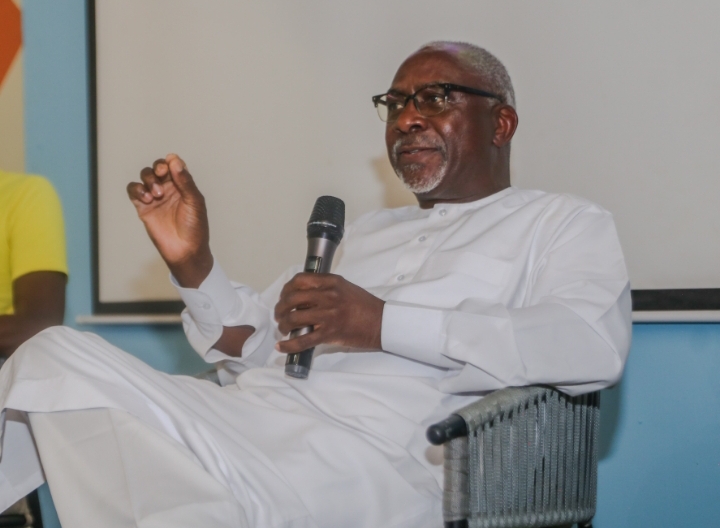
Olojede told this story at the ongoing Fela exhibition event at the EcoBank Headquarters at Ozumba Mbadiwe Avenue, Victoria Island, Lagos on Saturday.
Comments