


CPPE hails conservative 2026 budget assumptions

 Quick Read
The N58.18 trillion 2026 Appropriation Bill tagged ‘Budget of Consolidation, Renewed Resilience and Shared Prosperity’, outlines the Federal Government’s fiscal framework for 2026.
By Grace Alegba
The Centre for the Promotion of Private Enterprise (CPPE) has described the assumptions underpinning the 2026 budget presented by President Bola Tinubu to a joint session of National Assembly on Friday as “more conservative and good”.
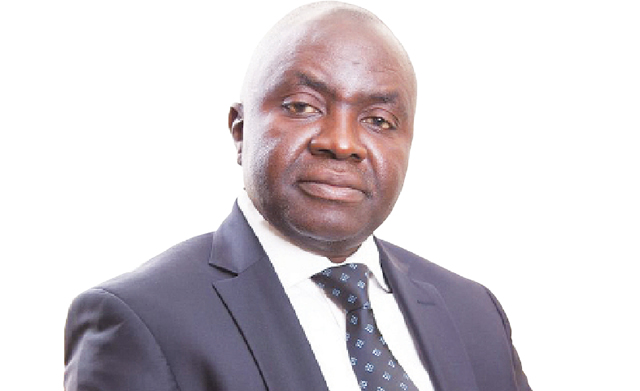
Dr Muda Yusuf, CPPE Director and Chief Executive Officer said oil price and output assumptions were largely appropriate.
The N58.18 trillion 2026 Appropriation Bill tagged ‘Budget of Consolidation, Renewed Resilience and Shared Prosperity’, outlines the Federal Government’s fiscal framework for 2026.
Yusuf said the assumptions could be more conservative by lowering oil benchmarks to reflect prevailing market and production realities.
He suggested reducing oil price to 60 dollars from 64, and cutting output to about 1.6 or 1.5 million barrels daily.
“One problem with previous budgets has been unrealistic assumptions; as much as possible, projections should be realistic,” he said.
He urged the National Assembly not to inflate the budget, warning that increases without assured revenue undermine effective implementation.
Yusuf also cautioned on rising debt service costs, noting they crowd out spending on productivity-enhancing sectors and complicate budget execution.
President Bola Tinubu had during the budget presentation promised that all multiple budget implementations would end in March 2026 and from April, Nigeria would operate on a single budget, backed by a single revenue cycle.
The president who was upfront said: “This is research, a very hard one.
“Avoiding abandoned projects, unpaid contractual obligations and running a multiple budget, both inherited and of fulfilled mandates, is a problem staring the nation.
“So we are terminating the habit of running through a budget on one inflow.
“By March 31, 2026, all capital liabilities from previous years will be fully funded and closed. From April, Nigeria operates on a single budget, backed by a single revenue cycle.
“No overlaps, no excuses and no rollover cultures,” he said.
He said that the budget presented a defining moment in our national journey of reform and transformation.
“Over the last two and a half years, my government has methodically confronted long-standing structural weaknesses.
“Stabilise our economy, rebuild communities and lay a durable foundation for the construction of a more resilient, inclusive and dynamic Nigeria.
“Though necessary, the reforms that have been implemented in the last two and a half years have not been painless.
“Families and businesses have faced pressure. Established systems have been disrupted and tested.
“The budget execution has been tested as well. I acknowledge these difficulties plainly.
“Yes, I’m here today to assure Nigerians that their sacrifices are not in vain. We are already out of that dark tunnel of uncertainty, economic volatility, and lack of inclusiveness”.
He added that the economy had “turned the corner” saying that though the path of reform was seldom smooth, it is the surest route to lasting stability and shared prosperity.
“Today, I present a budget that consolidates our gains, strengthens our resilience, and takes this country out of the dark tunnel of hopelessness, from the survivor to growth.
“The budget reflects our determination to lock in microeconomic stability, deepen competitiveness, and ensure that growth translates into decent jobs, rising incomes, and a better quality of life across everyone.
“While the global outlook continues to improve, this budget aims to further strengthen our Nigerian economy to benefit all our citizens.
“I am encouraged that our reform efforts are already yielding historical results. One, our economy grew by 3.98 per cent in the third quarter of 2025, up from 3.86 per cent in the third quarter of 2024, year in, year out”.
(NAN)
Comments