



Why cultism and cult-related killings persist in spite of public sensitisation

 Quick Read
Naija Confra, a platform that tracks cult-related violence, reported that 581 people were killed in cult wars in 2024 alone. Of these, 490 were cult members, while 91 were non-cultists caught in the crossfire.
By Deborah Akpede
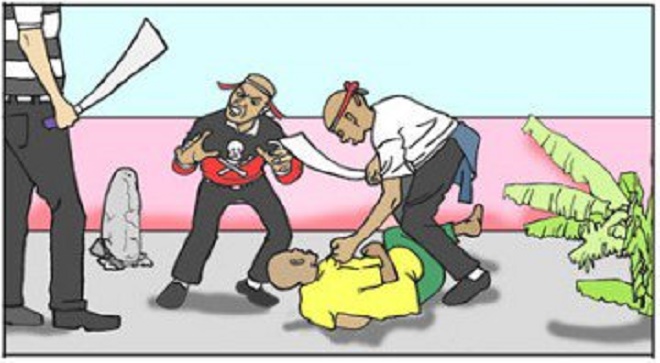
Cultism and cult-related killings remain a persistent security and social challenge in many parts of Nigeria in spite of sustained public sensitisation efforts by government agencies, educational institutions, religious bodies, and civil society organisations.
Two researchers, Yabagi Umar and Prof. Ada Okau in their research paper” dissected the words cultism and cult-related killings.
Umar and Okau, both social scientists, had their paper published in the Journal of Human, Social and Political Science Research, 2025.
According to the researchers, cultism, which began as campus fraternities in the 1950s, has evolved into violent criminal networks involved in armed robbery, political thuggery, assassinations, and community terror.
They said the factors influencing cultism included poverty, unemployment, peer group pressure, weak parental supervision, poor campus security, political patronage, the rise of ethnic militias, and the glorification of violence in media and popular culture.
Over the years, campaigns highlighting the dangers of cult activities—such as violence, loss of life, disruption of academic environments, and long-term social instability—have been widely disseminated through the media, schools, and community outreach programmes.
However, in spite of these efforts, cult-related crimes continue to occur, often with increasing sophistication and brutality, leaving devastating consequences not only for cult members but also for innocent citizens caught in the violence.
What were once deadly clashes largely confined to tertiary institutions have now spread into residential communities.
A report by SBM Intelligence revealed that no fewer than 1,686 people were killed in 909 incidents of gang-related violence across Nigeria between January 2020 and March 2025.
The South-South and South-West regions were the most affected, largely due to long-standing cult rivalries.
According to the report, Rivers recorded the highest number of fatalities with 215 deaths, followed by Lagos with 197 and Edo with 192.
Cult groups frequently involved include Black Axe, Icelanders, Eiye, Aiye, Greenlanders, Vikings, and others, with intense clashes reported in Rivers, Lagos, Delta, Edo, Bayelsa, and Ogun states.
Similarly, Naija Confra, a platform that tracks cult-related violence, reported that 581 people were killed in cult wars in 2024 alone. Of these, 490 were cult members, while 91 were non-cultists caught in the crossfire.
In recent weeks, several cult-related killings and arrests have been recorded in Lagos State.
It was reported that suspected cultists killed a hairstylist identified as the brother of a rival cult member in the Satellite Town area. Two people were also killed in a reprisal attack in Sangotedo, Ibeju-Lekki axis of Lagos State.
In Baiyeku, Ikorodu, a man was killed by suspected cultists, while less than 24 hours later, five persons were reportedly killed and their bodies dumped at the Oreta riverbank in Igbogbo, Ikorodu.
In another incident, two people were killed along the LASU–Igando Road in the Iba area of the state.
Similarly, a suspected rival cult member was chased into his family home, dragged out, and killed in the presence of his relatives in the Meiran area of Lagos.
In Mushin, a 12-year-old boy was killed by a stray bullet during a cult shootout. In another incident, suspected cultists killed a police officer and fled with his severed hand.
On how to curb this growing monster, a security expert, Mr Seyi Babaeko, described public sensitisation as necessary but insufficient, calling for a more holistic approach to addressing cultism.
Babaeko, the Managing Director and Chief Executive Officer of Absolute Security and Advance Protocol Ltd., said the menace required stronger law enforcement, youth empowerment, and community engagement.
He recommended the deployment of specialised anti-cultism units, swift prosecution of offenders, and stricter laws to deter violent groups.
He also urged schools and communities to intensify youth education, while vocational training and employment opportunities could help reduce idleness that fuelled cult recruitment.
According to Babaeko, counselling and rehabilitation programmes for former cult members, as well as the involvement of traditional and religious leaders, are vital to restoring peace.
He noted that youth unemployment, peer pressure, the search for protection and identity, weak law enforcement, political manipulation, and the glamorisation of violence continue to undermine awareness campaigns.
Meanwhile, the Commissioner of Police, Lagos State, Command, Mr Olohundare Jimoh, said the command was confronting cultism head-on as part of efforts to restore peace and security.
Speaking in December while displaying recovered firearms and other exhibits, Jimoh said several cultists had been apprehended, including a notorious figure known as “Olori Esho,” who was found in possession of nine AK-47 rifles.
He said more than 10 families had identified the suspect as responsible for the killing of their relatives and that he was facing prosecution.
To strengthen the fight against cult violence, Jimoh announced the establishment of special anti-cultism squads across all 14 Area Commands in the state, with the full support of the Inspector-General of Police, Mr Kayode Egbetokun.
“These teams are actively tracking and apprehending individuals involved in killings, acid attacks, and assaults that have disrupted peace in communities and schools,” he said.
Jimoh reaffirmed the command’s commitment to dismantling cult networks, adding that violent crimes had reduced significantly due to improved policing strategies, prompt response systems, and logistical support from Gov. Babajide Sanwo-Olu of Lagos State.
At the national level, President Bola Tinubu, while presenting the 2026 Appropriation Bill to the National Assembly on Dec. 19, declared that under Nigeria’s new security framework, any armed group operating outside state authority would be treated as terrorists.
He said such groups include cult organisations and individuals who deployed violence for political, ethnic, financial, or sectarian purposes.
According to him, anyone who supports, finances, or protects them—including politicians and community, traditional, or religious leaders—will also be classified accordingly.
However, both social scientists advocated a holistic, multi-sectoral approach involving law enforcement reforms, improvements in the education sector, youth employment initiatives, community engagement programmes, stronger legislation, and an end to political patronage of cult groups.
They concluded that unless urgent, coordinated, and sustained interventions are implemented, cultism will continue to undermine Nigeria’s security, democratic processes, and human development potential.
(NANFeatures)
Comments