



Lagos Traffic Radio and the Future of Smart Mobility

 Quick Read
Reduced congestion translates into lower fuel consumption, fewer emissions, and improved air quality—outcomes aligned with global sustainability goals. Even marginal improvements in traffic flow yield significant environmental benefits for Lagos.
By Olukunle Fashina
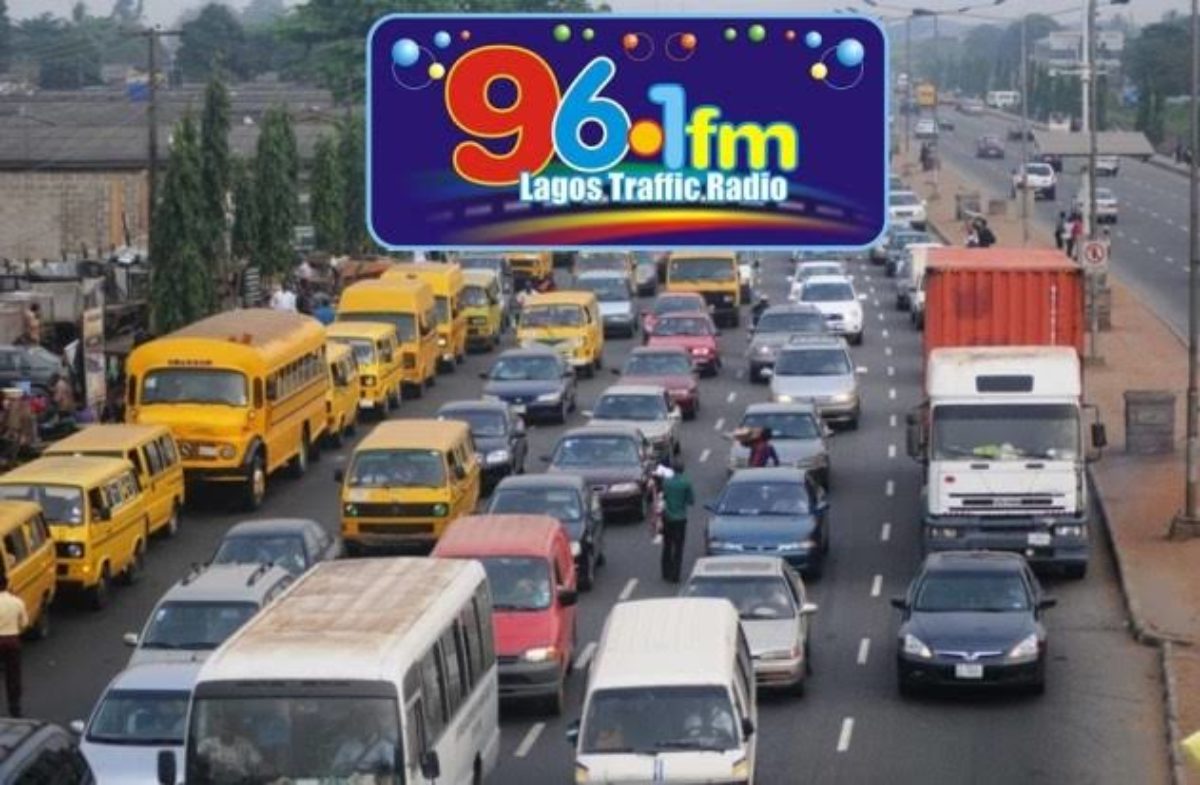
In a city where an estimated 20 million daily trips compete for limited road space, even a brief delay can ripple into hours of lost productivity. Urban mobility analysts estimate that congestion costs fast-growing megacities up to 5 percent of annual GDP, placing Lagos alongside São Paulo, Mumbai, and Jakarta. Yet amid this gridlock, one of Lagos’ most effective smart mobility tools operates quietly but consistently: Lagos Traffic Radio 96.1FM.
While cities worldwide invest heavily in AI-powered traffic systems and smart infrastructure, Lagos State Government has sustained a human-centered, broadcast-driven mobility platform that continues to influence commuter behavior, support policy execution, and deliver real-time traffic intelligence at scale. Lagos Traffic Radio demonstrates that smart mobility is not only about sensors and software, but about how information flows between government, operators, and citizens.
Why Lagos Traffic Radio Matters in the Global Smart Mobility Conversation
Successful smart cities combine technology, institutional coordination, and public trust. From Transport for London’s live alerts to New York City’s 511 service, the common denominator is timely, credible, and accessible mobility information. Lagos Traffic Radio fits squarely within this global framework, serving as a real-time traffic intelligence system adapted to the realities of Africa’s largest city.
Unlike app-only solutions that depend on smartphones, data access, and digital literacy, Lagos Traffic Radio reaches drivers, commercial transport operators, pedestrians, and even waterway users simultaneously. This inclusivity aligns with global smart city principles promoted by institutions such as the World Bank and UN-Habitat, particularly around accessibility and equity. Its sustained listenership reflects a rare combination of trust, utility, and scale in a fragmented media environment.
Inside the Operational Model
Lagos Traffic Radio’s effectiveness lies in its deep integration with frontline transport agencies. The station maintains direct coordination with the Lagos State Traffic Management Authority (LASTMA) and the Lagos Metropolitan Area Transport Authority (LAMATA), enabling live updates from traffic officers, incident response teams, and control rooms.
Broadcasters are trained not merely as presenters, but as mobility communicators with working knowledge of traffic flow patterns, incident escalation, and enforcement dynamics. This transforms routine updates into a form of soft traffic control, influencing route choices, departure times, and modal decisions in real time. International mobility experts increasingly recognize such human-in-the-loop systems as essential complements to automated traffic technologies.
Supporting Lagos State Government’s Smart City Vision
Lagos State Government’s ambition to build a technology-enabled megacity depends as much on behavioral change as on infrastructure expansion. Investments in BRT corridors, rail projects, and traffic reforms achieve limited impact without effective public communication.
Lagos Traffic Radio fills this gap by translating policy intent into everyday commuter decisions. When diversions are introduced, enforcement strategies adjusted, or projects rolled out, the station becomes the primary channel for explanation and reassurance. This reduces resistance, misinformation, and non-compliance—challenges that routinely undermine smart mobility initiatives globally.
Trust as Critical Urban Infrastructure
One of the station’s greatest strengths is consistency. Broadcasting reliable traffic intelligence day after day has created habitual reliance among commuters. Drivers plan journeys around bulletin schedules, while commercial operators adjust routes based on live reports. Transport economists describe this phenomenon as informational reliability, a key determinant of travel behavior.
Public testimonials aired on national media consistently credit Lagos Traffic Radio with helping commuters avoid accidents, navigate closures, and reduce stress. This credibility reinforces the station’s authority and illustrates why trusted public communication assets often outperform private alternatives in complex urban systems.
Where Traditional Media Meets Smart Technology
Far from becoming obsolete, Lagos Traffic Radio shows how legacy media can evolve within smart city frameworks. On-air broadcasts are increasingly complemented by digital touchpoints through platforms such as Connect Lagos Traffic, creating a hybrid communication model similar to those used in Singapore and Barcelona.
For cities exploring cost-effective smart mobility solutions, Lagos Traffic Radio offers a compelling case study. It proves that impactful urban innovation does not always require heavy capital expenditure, but rather institutional discipline, skilled personnel, and deep local knowledge.
From Traffic Updates to Urban Mobility Intelligence
What increasingly sets Lagos Traffic Radio apart is its transition from reactive reporting to proactive mobility intelligence. Each incident—whether a breakdown on Third Mainland Bridge or a signal failure along Ikorodu Road—feeds into a broader situational awareness loop connecting field officers, dispatch teams, and studio analysts.
This human-curated intelligence fills gaps that sensor-based systems often miss, particularly in cities where informal transport behavior, road encroachment, and weather disruptions complicate algorithmic predictions. For policymakers, it supports faster response times and more adaptive traffic management strategies aligned with global best practices.
Extending Smart Mobility Beyond Roads
While best known for road traffic, Lagos Traffic Radio increasingly reflects Lagos’ multimodal reality. Collaboration with the Lagos State Waterways Authority (LASWA) and coordination with NIWA have expanded coverage to water transport advisories, improving safety and predictability for ferry users.
The station also acknowledges air transport’s role in urban connectivity through periodic coordination with NAMA, NCAA, and FAAN. Globally, airports are treated as intermodal hubs rather than isolated facilities, and Lagos Traffic Radio’s holistic outlook reinforces Lagos’ alignment with international mobility standards.
Why Human Communication Still Outperforms Apps
During major disruptions—tanker accidents, flooding, or sudden diversions—navigation apps often lag behind reality. Lagos Traffic Radio fills this gap. Commuters interviewed on Channels Television and TVC News frequently describe the station as more reliable than maps during emergencies.
This reliability explains why listenership remains strong despite rising smartphone penetration. For global cities studying resilient mobility communication, Lagos Traffic Radio demonstrates the enduring value of verified, human-led information in complex environments.
Economic, Environmental, and Commercial Value
Reduced congestion translates into lower fuel consumption, fewer emissions, and improved air quality—outcomes aligned with global sustainability goals. Even marginal improvements in traffic flow yield significant environmental benefits for Lagos.
From a media economics perspective, Lagos Traffic Radio operates in a high-intent environment. Listeners actively seek solutions, making the platform attractive to advertisers in automotive services, insurance, fintech, logistics, real estate, and mobility technology. This mirrors patterns seen in transport-focused media in the UK and North America.
The Road Ahead
As Lagos deploys adaptive traffic lights, centralized control systems, and digital ticketing, Lagos Traffic Radio is well positioned to act as the public-facing interface of these technologies. By explaining new systems, demystifying policy changes, and translating data into plain language, the station can accelerate public adoption and reduce resistance.
Ultimately, Lagos Traffic Radio’s greatest contribution is trust. In an era of fragmented information and algorithmic opacity, a credible public voice guiding daily mobility decisions is infrastructure as vital as roads and bridges.
As Lagos advances toward a smarter, more sustainable megacity, Lagos Traffic Radio stands as proof that people-centered communication can coexist with advanced technology—empowering citizens to make safer, smarter, and more informed mobility choices every day.
-Olukunle Fashina, Urban Mobility and Smart City Solutions analyst.
Comments