


Why I don’t belong to any country – Olufemi Terry

 Quick Read
Terry, who is widely traveled, was recently in Lagos, Nigeria as a guest at the 13th Ake Arts and Book Festival.
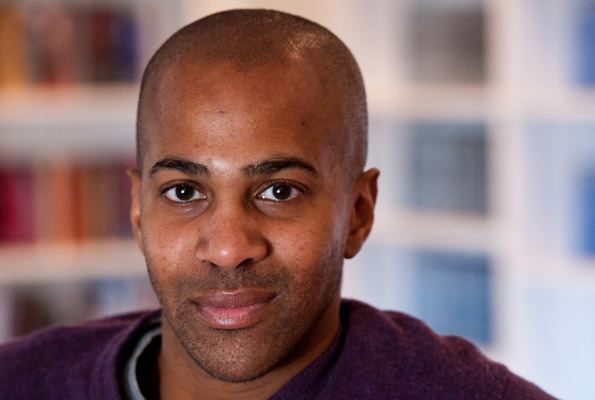
Olufemi Terry is a Sierra Leone- born writer who won the Caine Prize for African Writing in 2010 for his short story, “Stickfighting Days”. Fiammetta Rocco, Chair of the judges, described it as “ambitious, brave and hugely imaginative.” Terry, who is widely traveled, was recently in Lagos, Nigeria as a guest at the 13th Ake Arts and Book Festival. In this interview with Nehru Odeh, he speaks about winning the Caine Prize, his award-winning story and why he does not belong to any country.
When did you decide to become a writer?
Excellent question. I actually began writing seriously when I was living in Nairobi in 2004 and 2005. I wrote a short story that I reworked several times and which became my Caine Prize-winning story, “Stickfighting Days.” And it was the very first story I ever wrote. It was inspired by my experiences living in Nairobi as well as the books I had read. Then in 2007, I left Nairobi for Cape Town to study creative writing. And so from that point, there was no way back in some sense. I gave up my old life, and I went to study Creative Writing, and that set me on the path.
Before you entered the Caine Prize did you have any idea the award-winning story could win it?
Of course not, one never thinks. I also did not enter the Caine Prize competition. It was the publisher who entered it. But I did not have any idea that it could win a prize. Since it was my first short story, I did not think of it too highly. But it came as a pleasant surprise that I had been shortlisted.
You’re widely travelled. Could you tell me about your travel experiences?
I have never considered myself an immigrant. I’m a transient. And that frees me of the pressure of trying to ingratiate myself with those societies. I have never wanted to ingratiate myself with any society. I’m happy to live there, to explore the place and to try and get a sense of the life there. I have never moved to any place. The only place I have ever moved and I thought I wanted to live here is Cape Town. And I ended up leaving after three and a half years. So, I’m a transient.
What was your experience in Cape Town like?
In any ways it was excellent. And I will premise that by saying that in South Africa they perceive me as an American. I lived in America for a long time.
For how long?
At least 15 years. So, I lived in America for a long time. But I also don’t look to them like what the average person from Africa looks like. My accent also is a bit hard to place. And they treat you differently in South Africa if they think you are black American. They don’t like Nigerians and Kenyans in South Africa. So, my experience was coloured in part by that. But at the same it doesn’t mean that I was bothered by the Xenophobia in South Africa towards black Africans, particularly those countries that helped them during the anti-Apartheid struggle. So, it was the best of all worlds; it was the worst of all worlds. The quality of life there is also very good at the same time. The climate is perfect. The lifestyle used to be quite affordable. Good wine, good food, but it is also a small place. And you cannot ignore the injustices forever. After a while they become too much to bear.
You mentioned Nairobi, Sierra Leone, Nigeria and the United States. How do you place your nationality?
Let’s just say that I have several passports, one of which is a Sierra Leonean passport, and I use them as I see fit. But for me, they are just passports; they open doors to places. I haven’t been back in Sierra Leone since the 1980s. So I’m never going to claim that I am a Sierra Leonean.
You mean you don’t belong to any country?
I don’t feel that I belong to any country.
What continent do you belong to?
I belong to this continent.
So you’re an African.
I’m an African. But I don’t want to tie myself to any country.
How did you come about this unique idea of not belonging to any particular country?
My experiences. I have lived in Sierra Leone. I have lived in Cote d’ivoire. I grew up in Nigeria. I have lived in Kenya. I have lived in South Africa. So I feel extremely comfortable across the continent.
What languages do you speak?
I speak very good Kiswahili, having lived in Kenya. I speak English and French. My wife is from Germany, so I understand some German. It’s a mix, as I said.
What did winning the Caine Prize do for you?
It gave me validation.
What books did you read in Nairobi that inspired you to write the Caine Prize winning story?
I’m not sure there was any book. The first short story that I wrote was inspired primarily by my experiences in Nairobi. So, for instance, let me give you one quick anecdote. The climate in Kenya is different from here. It’s much colder. They have a rainy season that is quite cold. And so you know, street children there – and they probably do it here, but not to the extent – they sniff glue to stay warm. They buy cheap glue and inhale it because it warms them. And so you see these street children, they sniff cheap glue. It was a real shock for me because I had never seen it in the West African countries I lived in. And it inspired me to incorporate that particular element into the street children who make up the story, “Stickfighting Days.”
Where does your name, Olufemi, come from?
My sister has a Yoruba name. My father had a Yoruba name. It’s common in the group in Sierra Leone that I belong to. They have Yoruba first names and English last names.
Given your name, how do you feel when people ask you whether you are Yoruba?
Sierra Leone is a small country, but it still strikes me as strange that people here don’t know a fairly sizable minority community in Sierra Leone that has Yoruba names. No one here seems to know. And it has ties to people here in Lagos, who also have English names like Peterside, Coker, etc. Many people here have Yoruba first names and English last names. The history is the same, too.
Having travelled round the world, how do you see African literature globally?
African literature is having a moment. And I hope that moment is going to make us better. I think we can still strengthen our writing. We’re too sentimental when writing about Africa. In some way, we always lament the colonial past; we lament all the injustices that have been done to us. Writers should be able to take a good, hard look at the subject. And I think that we’re not there yet. We’re still very sentimental.
Comments