


Starmer denounces Trump’s shocking Tariff attack on Britain, Allies

 Quick Read
Recent joint NATO activities in Greenland, including reconnaissance and training involving troops from multiple countries, were intended to demonstrate commitment to Arctic defense amid rising Russian activity, not to challenge U.S. interests.
By Kazeem Ugbodaga
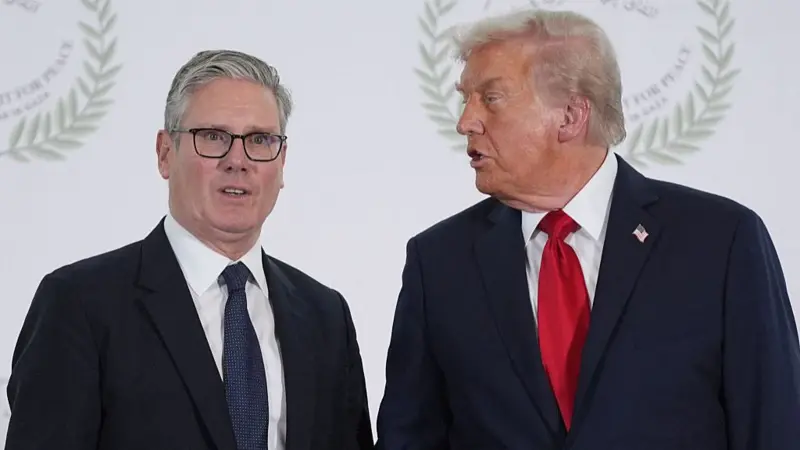
British Prime Minister Sir Keir Starmer has sharply criticized U.S. President Donald Trump’s threat to impose escalating tariffs on several NATO allies, including the United Kingdom, labeling the move “completely wrong” and pledging direct engagement with the U.S. administration to resolve the crisis.
In a formal statement issued this evening, Starmer reaffirmed the UK’s unwavering position on Greenland, a semi-autonomous territory of Denmark.
“Our position on Greenland is very clear, it is part of the Kingdom of Denmark and its future is a matter for the Greenlanders and the Danes.”
He emphasized that Arctic security is a shared NATO responsibility, urging allies to collaborate more effectively against Russian threats in the region rather than resort to punitive economic measures.
Starmer’s rebuke comes in direct response to Trump’s announcement on Truth Social earlier today, where the U.S. president declared that Denmark, Norway, Sweden, France, Germany, the United Kingdom, the Netherlands, and Finland would face an initial 10% tariff on all goods exported to the United States starting February 1, 2026.
The levy would rise to 25% on June 1 unless a deal is reached for the “Complete and Total purchase of Greenland” by the U.S. Trump framed the tariffs as retaliation for these nations’ opposition to American acquisition of the strategically vital Arctic island and their recent deployment of military personnel there for joint exercises.
The prime minister’s statement highlighted the broader implications: “Applying tariffs on allies for pursuing the collective security of NATO allies is completely wrong. We will of course be pursuing this directly with the US administration.”
This measured yet firm language reflects Starmer’s approach of private diplomacy with Trump—built on prior engagements—while publicly defending transatlantic unity and NATO cohesion.
The Greenland controversy has intensified since Trump’s return to office, with the U.S. leader repeatedly asserting the island’s critical importance for national security, citing potential threats from Russia and China.
European allies, including Denmark, have consistently rejected any sale, insisting Greenland’s status is non-negotiable and determined by its people and Denmark.
Recent joint NATO activities in Greenland, including reconnaissance and training involving troops from multiple countries, were intended to demonstrate commitment to Arctic defense amid rising Russian activity, not to challenge U.S. interests.
The tariff proposal has drawn widespread condemnation across Europe, with protests in Greenland’s capital Nuuk and statements from leaders in Denmark, Sweden, and elsewhere warning of damage to businesses, higher costs for consumers, and risks to the 75-year-old NATO alliance.
In the UK, opposition figures such as Conservative leader Kemi Badenoch called the plan a “terrible idea,” while Liberal Democrat leader Ed Davey accused Trump of punishing allies “just for doing the right thing” and described Starmer’s U.S. policy as “in tatters.”
Comments