


What we are doing to clean up, reorganise Apapa, bring back Investors – Senbanjo

 Quick Read
“Historically, Apapa was known as the Golden Council. In those days, the goose truly laid golden eggs here. However, following the prolonged gridlock, a lot has changed,” she said, adding that the new logo now reflects port activities, traditional institutions, infrastructure, public works, fish farming and digital communication.
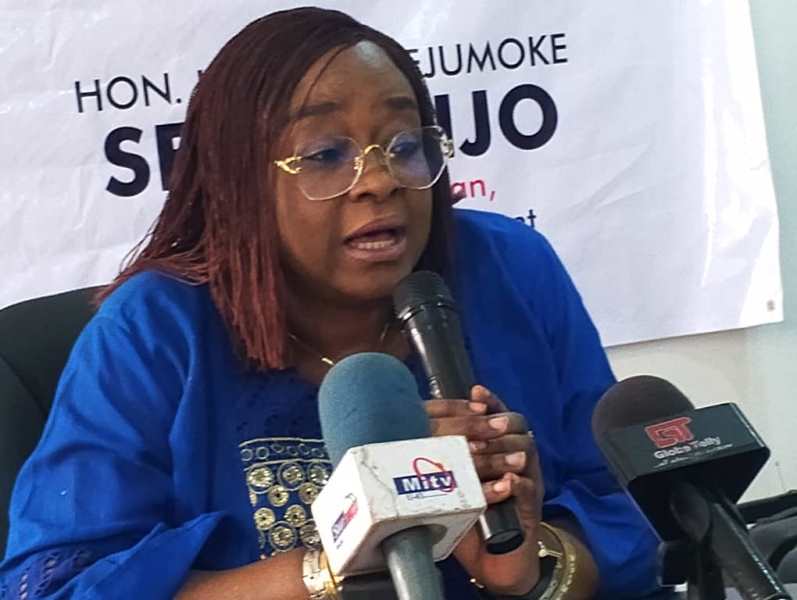
The Chairman of Apapa Local Government, Hon. Idowu Adejumoke Senbanjo, has declared that Apapa is firmly on a path of recovery after years of decline caused by gridlock, environmental disorder and economic flight, insisting that her administration is rebuilding the council “from housekeeping to prosperity.”
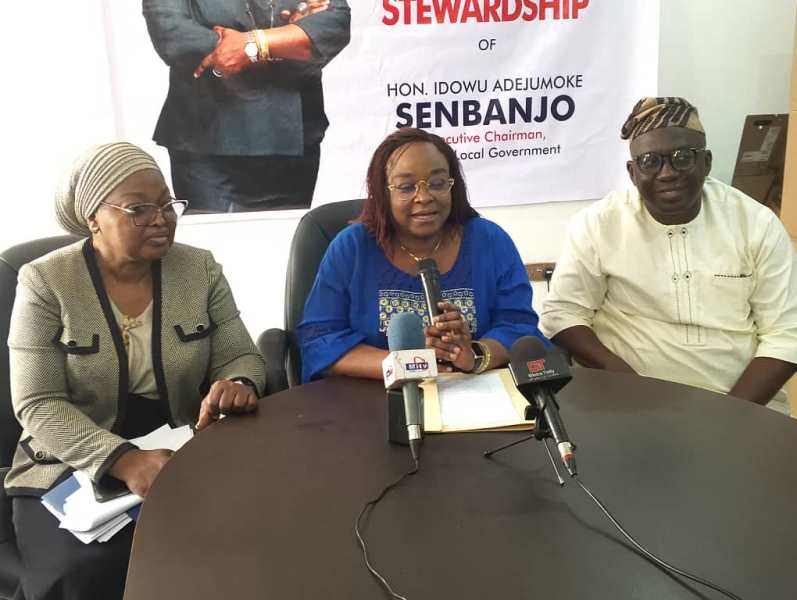
Speaking at a news conference on Wednesday to present her scorecard in office, Senbanjo said her leadership approach was driven by the urgent need to restore order, dignity and confidence in Apapa, once regarded as Lagos State’s “Golden Council.”
“When I came into office, I did not set out with a grand agenda to overhaul everything. But as a woman, the first instinct is always housekeeping. I felt strongly that Apapa needed to be cleaned up and properly organised,” she said.
She explained that the renewal process began with redefining Apapa’s identity, including a redesign of the council’s logo to reflect its realities and aspirations as a port city.
“Our logo speaks volumes about who we are and what we represent. We decided to clean it up and redefine it to better reflect our values and aspirations as a local government. It now captures the virtues we want to be recognised for in Apapa, as well as the key features around us as a port city council,” Senbanjo said.
Recalling Apapa’s past glory, she noted that the area’s fortunes declined sharply after years of crippling traffic gridlock.
“Historically, Apapa was known as the Golden Council. In those days, the goose truly laid golden eggs here. However, following the prolonged gridlock, a lot has changed,” she said, adding that the new logo now reflects port activities, traditional institutions, infrastructure, public works, fish farming and digital communication.
Senbanjo said traffic conditions have improved significantly, reopening Apapa for business and daily life.
“Today, Apapa is a place you can drive into and out of without spending days trapped in traffic, unlike the past. In fact, it is now easier to access Apapa than some parts of Victoria Island and the Lekki axis,” she said.
Despite the improvement, she acknowledged the damage already done, with many companies, factories and residents relocating.
“Creek Road, once bustling, now has many empty warehouses, and several residential areas also remain largely vacant,” she said, calling on investors to return.
“This is why we are calling on business owners and investors to return and see the progress we have made towards creating a more enabling environment for businesses and residents alike,” she added.
On sanitation and street trading, Senbanjo admitted that Apapa has not yet achieved full cleanliness but insisted enforcement was unavoidable.
“Apapa is a densely built-up area, and finding space for street traders is extremely challenging. If we had sufficient land, we would create designated spaces for them, especially because many of these traders are women and primary breadwinners,” she said.
“However, the law remains the law. Street trading is prohibited, and the governor has placed significant pressure on all local governments to clean up Lagos,” she added.
She announced a new regulatory regime requiring traders to register and obtain permits, with food vendors undergoing mandatory screening tests.
“We hope to return to those standards,” she said.
On social support, Senbanjo revealed a shift from food handouts to direct cash assistance.
“I do not strongly support food distribution. After consulting women in the local government, they made it clear that cash support is more effective,” she said.
Her administration plans to support about 4,000 residents with ₦100,000 each, targeting market women, traders and residents, with strict registration to prevent abuse.
On healthcare, she said Apapa currently operates three fully equipped primary healthcare centres, with plans to expand 24-hour services.
“We have supported over 500 vulnerable residents under the health insurance scheme, including the elderly,” she said, adding that schoolchildren with visual impairments have received corrective glasses.
Education, according to the council chairman, has seen extensive upgrades.
“All six schools have been renovated, with roofs replaced, toilets rebuilt and functional water systems installed,” she said.
She added that every pupil in Apapa now has a complete set of textbooks.
“Unlike in some areas where books are shared, each child has individual access,” she said.
On digitalisation, Senbanjo disclosed that Wi-Fi has been installed for staff use, while the council’s website is nearing full deployment.
Staff welfare, she said, remains a priority.
“During the last festive period, staff received ₦50,000 each, in addition to food items,” she said, noting that free staff buses, overseas training and medical assistance are in place.
Turning to tourism and private sector collaboration, Senbanjo said the local government is pressing for stronger coordination with port authorities and trailer operators.
“When trailers are parked indiscriminately or sanitation issues arise, it is the local government and the state that bear the consequences,” she said.
She disclosed growing private sector interest, citing Flour Mills’ plan to support local women through commercial initiatives.
On tourism, she said Apapa has untapped assets, saying “We have an amusement park that has been rehabilitated, a historic palace-the second oldest in Lagos State and heritage docking sites linked to early colonial history.”
Plans, she added, are underway to develop these assets with state support. “Apapa’s progress goes beyond trailers and port operations. Conditions have improved across several sectors,” Senbanjo said, expressing optimism that Apapa is reclaiming its place as a functional, livable and investable hub.
Comments