


Rhaychaelle_cut at Africa Fashion Week Nigeria: Tailoring, Restraint, and an Emerging Design Voice

 Quick Read
Africa Fashion Week Nigeria is often defined by scale and spectacle. Each season, Lagos’s most visible fashion platform brings together designers eager to make bold statements through colour, concept, or volume.
Seun Emmanuel
Africa Fashion Week Nigeria is often defined by scale and spectacle. Each season, Lagos’s most visible fashion platform brings together designers eager to make bold statements through colour, concept, or volume.
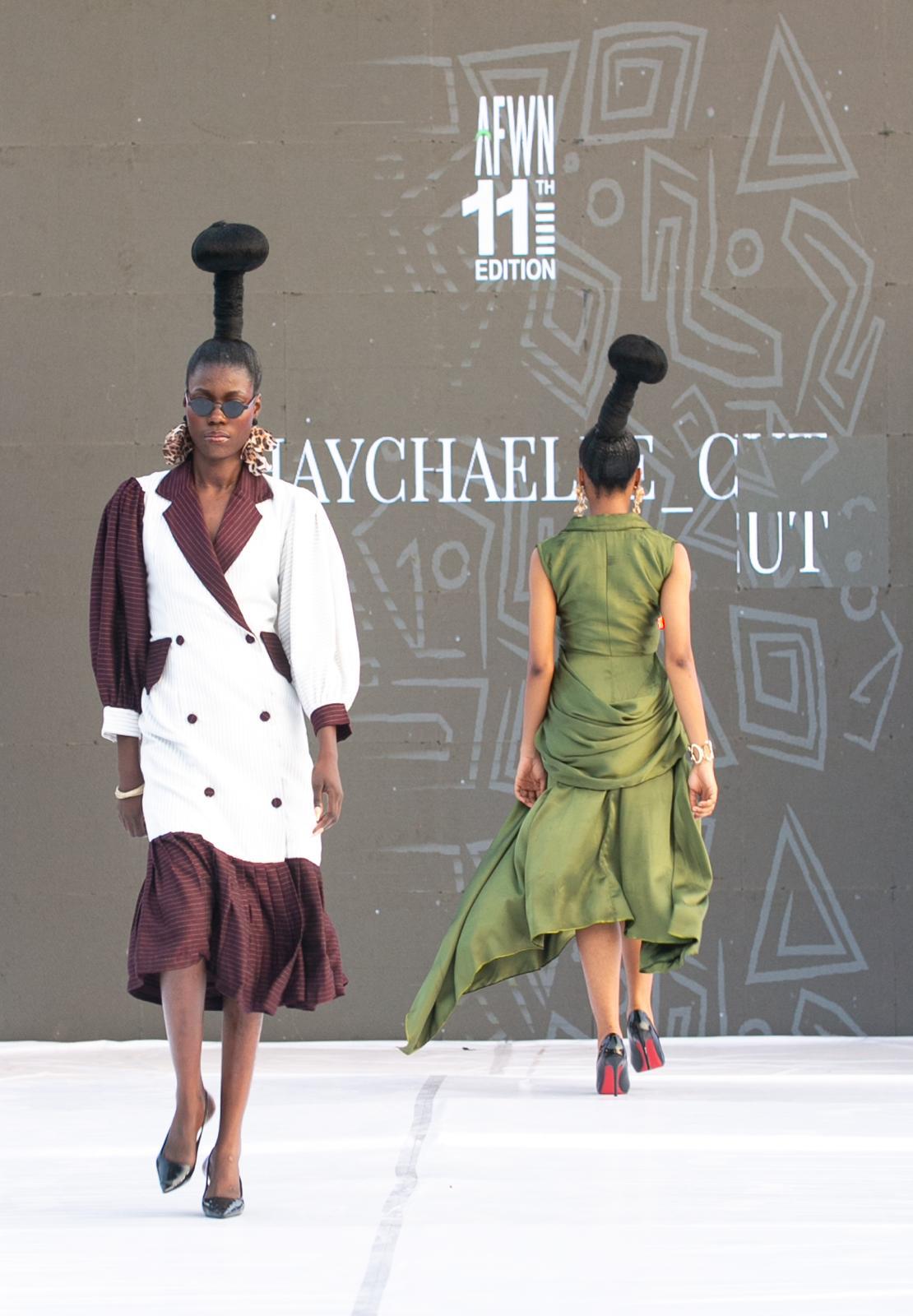
Against this backdrop, Rhaychaelle_cut delivered a runway presentation that stood out for a different reason: it was controlled, deliberate, and firmly anchored in tailoring.
Presented in Lagos in December as part of Africa Fashion Week Nigeria’s official programme, the collection reflected a brand increasingly confident in structure and proportion. With six years of professional experience, Rhaychaelle_cut did not attempt to overwhelm. Instead, the collection suggested a careful consolidation of ideas and an effort to refine rather than expand.
The collection relied on a narrow but disciplined palette and silhouettes that prioritised shape over decoration. Double-breasted constructions, defined lapels, and mid-length proportions appeared repeatedly, reinforcing a consistent design language. The garments sat close to the body without restricting it, allowing movement while maintaining form.
Tailoring, Identity, and a Measured Approach
Tailoring functioned as the foundation of the collection. Jackets and dresses were cut with precision, creating clean lines that framed the body rather than reshaping it. This emphasis on construction placed Rhaychaelle_cut within a tradition of formal garment-making, even as the styling leaned contemporary.
The approach to gender was similarly restrained. Rather than framing gender expression as a central theme, Rhaychaelle_cut allowed it to emerge through design choices. Traditional distinctions between masculine and feminine silhouettes were softened. Structured garments were styled in ways that resisted fixed categorisation.
The effect was subtle but intentional, presenting clothing as adaptable and wearable without rigid identity cues. This restraint was one of the collection’s strengths, though it carried some risk. At moments, the consistency of silhouette bordered on repetition. In a fast-paced runway setting, subtle variations can be missed.
However, the clarity of execution suggested that this was a conscious decision rather than a limitation and emphasis on cohesion over novelty. Cultural references were present but understated. Instead of explicit motifs or historic quotations, Nigerian heritage appeared through proportion, fabric handling, and styling.
This choice avoided the visual shorthand often used to signal cultural identity on the runway. The collection did not attempt to explain itself, assuming a viewer willing to read between the lines. Casting reinforced the collection’s underlying logic. Models of varied body types and gender presentations were styled consistently, allowing the garments to remain the focus.
Diversity was not framed as spectacle; it functioned as part of the design process, reinforcing the idea that the clothes were meant to adapt rather than dictate. The presentation drew attention from fashion media and industry professionals in attendance at Africa Fashion Week Nigeria.
Buyers, stylists, and editors were seen engaging closely with the collection after the show, indicating interest beyond the runway moment. Subsequent collaborations and industry recognition suggest that Rhaychaelle_cut resonated within professional circles, even as the brand continues to develop its voice.
What the collection ultimately revealed was a label thinking in terms of longevity. There was little reliance on trend-driven elements or seasonal exaggeration. Instead, the garments appeared designed to exist beyond the runway to be worn, revisited, and reinterpreted.
This measured approach may not produce immediate spectacle, but it signals something more durable: a commitment to process. In an industry often driven by urgency, Rhaychaelle_cut suggested patience. The focus was not on claiming space, but on defining it.
As Nigeria’s fashion industry continues to gain international attention, labels that prioritise clarity and construction are likely to play an important role in shaping its global perception. Rhaychaelle_cut did not attempt to summarise that future, but it offered a clear indication of where the brand is headed attentive to detail, aware of context, and increasingly confident in its direction.
Comments