


Orji Uzor Kalu: Building Abia, Strengthening Nigeria

 Quick Read
Professor Ojo Emmanuel Ademola writes not as an “Ndi Abia” insider but as a mobiliser of great national‑interest value chains. He reflects on how Orji Uzor Kalu’s tenure as Governor of Abia State between 1999 and 2003 transformed Umuahia from a glorified village into a functioning capital, secured communities, and fostered unity — offering lessons that extend far beyond Abia to the wider Nigerian democratic journey.
By Professor Ojo Emmanuel Ademola
Professor Ojo Emmanuel Ademola writes not as an “Ndi Abia” insider but as a mobiliser of great national‑interest value chains. He reflects on how Orji Uzor Kalu’s tenure as Governor of Abia State between 1999 and 2003 transformed Umuahia from a glorified village into a functioning capital, secured communities, and fostered unity — offering lessons that extend far beyond Abia to the wider Nigerian democratic journey.
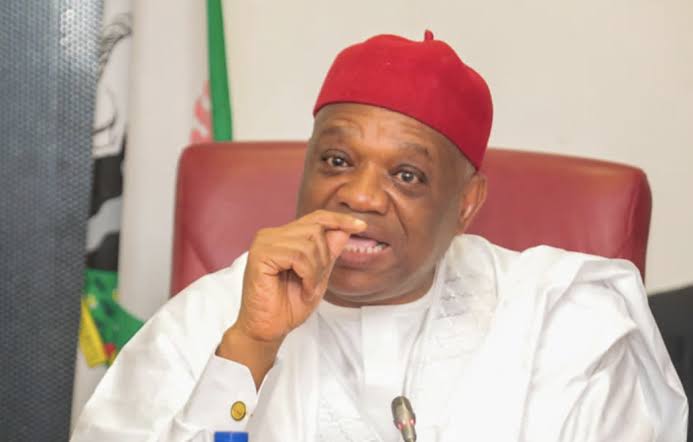
When a Nigerian state, such as Abia, is fortunate enough to have an individual imbued with a passion for excellence, unity, and fairness, one can only conclude that such a state is indeed blessed. Senator Orji Uzor Kalu, who served as Governor of Abia State between 1999 and 2003, exemplifies this truth.
I write not as an “Ndi Abia” insider but as a mobiliser of great national‑interest value chains. My concern is not confined to one state or one people; it is about how leadership at the state level contributes to Nigeria’s collective progress. Abia’s story under Kalu is therefore not merely local history—it is a case study in how visionary governance strengthens the national fabric. By examining his tenure, we see lessons in infrastructure, security, and unity that resonate far beyond Abia’s borders.
Before 1999, Umuahia, the state capital, resembled more a glorified village than a functioning capital. The major roads—Okigwe Road, Niger Road, Enugu Road, Aba Road, and Azikiwe Road—were legacies of Dee Sam Mbakwe’s era. While Mbakwe’s administration had commendably introduced canals and drainage systems to combat erosion, much of the city remained underdeveloped. Residential areas and inner streets were neglected, leaving the capital with an air of incompleteness. For a state capital, this was a reality that undermined both pride and functionality.
Kalu’s arrival marked a turning point. He embarked on genuine urban renewal. Streets in Umuahia, particularly in the Over Rail and New Layout districts, were either muddy or dusty depending on the season. Red soil dominated the landscape. In the dry season, dust infiltrated homes, creating discomfort and health hazards. In the rainy season, the same roads became impassable, disrupting daily life, commerce, and social interaction.
Kalu changed this reality. Streets such as Ekwuruke, Obowo, Cameroon, Oboro, Oji River, Afara, Ogbulafor, Uwalaka, Orlu, and Igbere were properly constructed and tarred. These were not cosmetic projects designed for political applause; they were functional roads serving communities where families lived, businesses thrived, and children grew. By tarring these streets, Kalu reduced dust, improved sanitation, and enhanced the livability of neighbourhoods. The relief among residents was palpable, and Umuahia began to assume the appearance of a genuine state capital.
The durability of these roads speaks volumes. Many remain serviceable today, more than two decades after their construction. This longevity demonstrates that the work was executed with foresight and quality, not merely for short‑term acclaim. Beyond Umuahia, Kalu extended road construction to Aba and opened up rural roads across Abia State. These rural connections facilitated farming, trade, and mobility, thereby stimulating the local economy and integrating previously isolated communities into the broader state framework. His infrastructural vision was not parochial but expansive, linking Abia’s development to Nigeria’s wider economic value chain.
Infrastructure was not Kalu’s only achievement. One of his most significant yet often overlooked contributions was in the realm of security. At a time when many Nigerian states grappled with rising crime and instability, Abia under Kalu enjoyed relative peace. He worked closely with security agencies and traditional institutions to maintain law and order. His administration provided support to the police and other security outfits, ensuring they had the resources and backing necessary to operate effectively. This created an environment in which businesses could flourish, citizens could move freely, and investors felt confident about engaging with the state. Security, in this sense, was not merely about policing but about creating a climate of trust and stability that fed into national confidence.
Kalu’s approach to leadership was marked by accessibility. He did not insulate himself from the realities of the people. Unlike many leaders who cocoon themselves in bulletproof vehicles, Kalu often travelled in a simple coaster bus, accompanied by aides, friends, and associates. This lifestyle projected confidence and trust, while also enabling him to grasp the grassroots concerns of his constituents. His accessibility reinforced the bond between government and governed, making security a shared responsibility rather than a distant imposition.
It was this style that earned him admiration both within and beyond Abia. During President Olusegun Obasanjo’s first official visit to the state, he publicly referred to Kalu as the “Action Governor.” This was not a perfunctory compliment but a recognition of the visible pace of development and the dynamism of his administration. Abia was no longer stagnant; it was moving forward, and the people could feel it in their daily lives.
Markets were vibrant, roads were expanding, and there was a renewed sense of pride in the state. Importantly, Kalu did not claim sole credit for Abia’s progress. He acknowledged the foundations laid by his predecessors and added his own contributions. This humility reflected an understanding that governance is a continuum, where each administration builds upon the work of those before it. It is unhealthy for any government to dismiss the efforts of its predecessors. No administration begins from nothing, and none completes everything. Each plant’s seeds, some of which are harvested by successors, while others lay the groundwork for future planting. To deny the contributions of previous governments is to insult the intelligence and memory of the people who lived through those times.
Examples from other states illustrate the value of continuity. In Akwa Ibom, successive governors have handed over to one another without publicly discrediting past administrations. This culture fosters unity, stability, and respect. Abia deserves similar maturity in leadership and public discourse.
Today, Abia is deeply divided by political narratives that often prioritise propaganda over facts. Such division undermines development and security. Governance should be assessed by tangible results, not rhetorical battles. Every government that has served Abia has contributed in its own way, and the current administration is also playing its part. These contributions should be acknowledged with fairness and honesty.
As Nigerians, our loyalty must first be to the nation and its collective progress, even as we cherish our states. Orji Uzor Kalu’s role in building Abia—through infrastructure, security, and inclusive leadership—remains undeniable. His tenure gave the people a sense of belonging and confidence in government, and it offered Nigeria an example of how state leadership can feed into national strength.
Governments will come and go, but Nigeria will endure. Our political debates must be conducted with civility, our truths spoken without malice, and our development pursued in an atmosphere of love, respect, and unity. Only then can Abia, and indeed Nigeria, realise their full potential as entities blessed with leaders who embody excellence, fairness, and unity.
Comments