


Dir. En’man: Rewriting the Rules of Gospel Live Production

 Quick Read
In this conversation, Dir. En’man opens up about the creative vision behind the project, the hurdles faced along the way, and the process that shaped Restoring The Order from concept to reality.
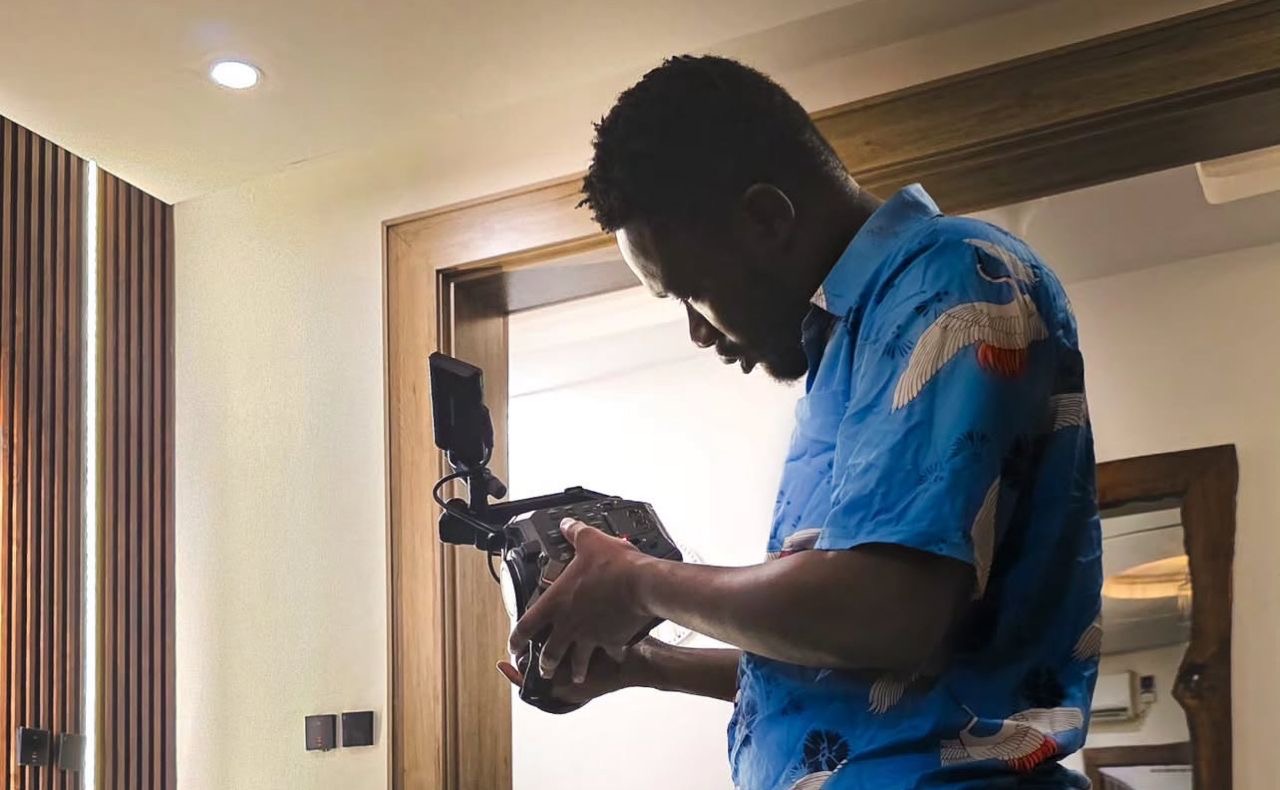
For seven days, Restoring The Order, Minister Dunsin Oyekan’s recent gospel gathering, became more than a worship experience; it evolved into a visual moment that held audiences across Nigeria and beyond spellbound. Captured through the lens of Dir. En’man (Akhabue Evans Ebalu), the live production challenged long-standing expectations of how gospel events are presented online. With its intimate sitting-room atmosphere and seamless high-definition livestream, the program ignited fresh conversations around innovation, storytelling, and the evolving future of gospel media.
In this conversation, Dir. En’man opens up about the creative vision behind the project, the hurdles faced along the way, and the process that shaped Restoring The Order from concept to reality.
What made Restoring The Order feel different from other gospel events?
For me, the biggest difference was the sitting-room-style arrangement. We intentionally moved away from the traditional elevated stage to create something more intimate and immersive. I wanted viewers to feel like they were part of the moment, not just watching from a distance. The goal was to blur that line between minister and audience and allow the atmosphere to translate naturally on screen.
Why did the livestream draw so much attention?
Honestly, I think people were surprised because the livestream ran without interruptions for days. Many assumed it had been edited afterward because of how clean it looked. But it was fully live. We focused heavily on preparation, structure, and technical discipline to make sure viewers experienced excellence in real time.
What technical feat set this production apart?
We streamed the entire program in 4K at 60 frames per second for seven days straight. That level of consistency required planning, reliable systems, and a committed team. I wanted to push beyond the usual expectations and prove that gospel productions in Nigeria can meet global technical standards.
How did you experience the audience response online?
The reaction was overwhelming. Social media lit up, especially TikTok; with people analyzing the camera work, lighting, and transitions. Seeing viewers fascinated by the technical side of worship production was encouraging because it showed that people value excellence behind the scenes too.
What does this mean for the gospel media industry?
I believe it signals a shift. Gospel production is evolving, and there’s a growing expectation for global-quality livestreaming. Directors and creatives now understand that investing in technology and proper planning isn’t optional anymore; it’s essential.
Who deserves credit for the innovation?
First, God deserves the glory for the creativity and strength. Beyond that, my Carel Films team played a huge role. This wasn’t a one-man effort. Everyone involved sacrificed time and energy to ensure the production ran smoothly from start to finish.
Why does this matter beyond the event itself?
Because it shows that production is part of ministry too. When excellence meets spiritual depth, the message travels further and touches more lives. For me, Restoring The Order wasn’t just a project; it was proof that faith and technology can work together to redefine gospel media in Nigeria.
Comments