


Building Africa from Within: How Moneda Is Rewriting SME Financing – Rahul Sawlani

 Quick Read
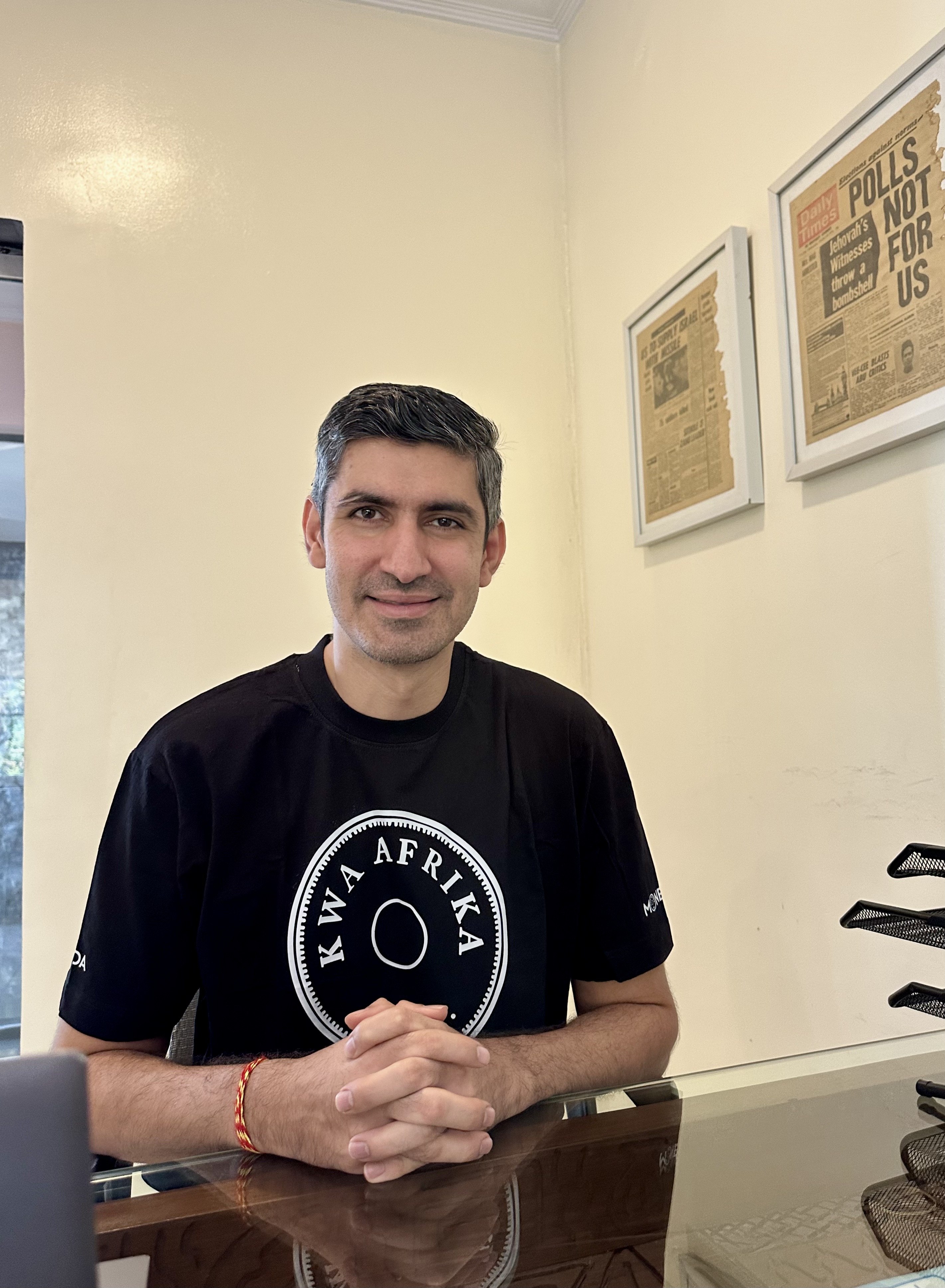
In this interview, the Group Chief Commercial Officer Rahul Sawlani reflects on a journey defined by resilience, adaptation, and the belief that African-led capital, when structured for local realities, can fuel sustainable growth.
At its core, Moneda is built on a clear conviction: Africa’s critical SMEs can scale and drive growth when supported by capital designed for volatility, not retreat. Through its three-pillar model capital, execution support, and digital infrastructure, the firm finances critical SMEs across energy, agriculture, minerals and infrastructure, managing risk through operational visibility rather than traditional collateral.
Over the past decade, Moneda’s evolution has reflected a broader shift toward mobilising African and diaspora capital. From early global partnerships to the launch of Moneda Capital and the Africa Funds Africa initiative, the company has positioned itself as a builder of African-owned financial systems. Its impact also extends beyond finance through 1952 Africa, a creative platform investing in the continent’s cultural ecosystem.
In this interview, the Group Chief Commercial Officer Rahul Sawlani reflects on a journey defined by resilience, adaptation, and the belief that African-led capital, when structured for local realities, can fuel sustainable growth.
Moneda was founded in 2015 during a major FX crisis. What birthed the idea of Moneda?
Moneda emerged from a defining moment in Nigeria’s economic history. During the 2015 foreign exchange crisis—triggered by a global collapse in commodity prices, many of Africa’s most promising SMEs in sectors such as energy, agriculture, and infrastructure found themselves constrained not by capability or opportunity, but by access to capital.
These businesses were operating in volatile, high-risk environments, yet the financing available to them was rigid, collateral-heavy, and poorly suited to local realities. The challenge was not execution; it was a mismatch between traditional funding models and the needs of critical African enterprises.
Moneda was created to close this gap. Its approach centered on providing flexible, locally structured capital with embedded risk-sharing and execution support—capital designed to work in challenging markets rather than retreat from them.
What started as a response to an economic crisis evolved into a long-term conviction: Africa’s critical SMEs form the backbone of the real economy. When supported with financing tailored to local conditions, these businesses do more than survive volatility—they are able to grow through it.
What gap convinced you that a zero-interest, collateral-free, execution-backed model could work in Africa?
We saw capable African entrepreneurs executing real contracts with credible clients yet being denied capital because traditional finance focused on collateral, not performance.
The real gap wasn’t a lack of security; it was a lack of understanding of how value is created in Africa’s real economy. Cash flows, contracts, and execution capacity were ignored, even though they were the true mitigants of risk.
Moneda’s model marries financing and hands-on execution support. By structuring contracts and staying close to operations, we reduce risk without relying on collateral or high interest. Smart capital, not expensive money, is what African businesses needed, and it works.
Looking back over the last 10 years, what would you say has been the defining moment that proved Moneda’s vision was achievable?
Several moments have defined Moneda’s journey over the past decade. One of the earliest was helping a Nigerian SME become the largest supplier of gasoil to Total Upstream Nigeria. This showed that African-led financing, when structured and executed well, could scale even in tough and volatile industries. It was proof that disciplined, locally driven capital could create real impact.
Another key moment came in 2023, when the collapse of Silicon Valley Bank cut off our main funding source. This was a wake-up call, showing us the importance of diversifying revenue and mobilizing African capital. It pushed us to strengthen our subsidiaries and build long-term resilience.
Finally, obtaining our Global Fund Management License from the Financial Services Commission of Mauritius and launching Moneda Capital marked a major shift. We moved from being just a financier to becoming a creator of African-owned financial systems, building investment vehicles that channel capital back into Africa for sustainable growth.
How has your philosophy “Africa’s future must be built from within” shaped the organisation’s decisions, partnerships, and direction over the decade?
Moneda didn’t start with a fixed philosophy. Our approach evolved deliberately over time, shaped by experience, learning, and consistent choices.
In the early years, we partnered with global institutions to prove a simple truth: African critical SMEs can operate at scale when capital is structured correctly. These partnerships gave us credibility, operational depth, and confidence to refine our model.
As that proof accumulated, our conviction deepened: Africa’s long-term success relies on homegrown solutions and capital, both from within the continent and the diaspora. This thinking now guides our decisions, partnerships, and strategy, pushing us to build African-owned systems, strengthen local execution, and ensure value stays within Africa’s real economy.
This philosophy is reflected in ventures like Domena Commodities and Afrisand Logistics, which were created for long-term impact, not short-term gains. Recognizing that Africa cannot rely indefinitely on external capital, we secured a Global Fund Management License in Mauritius, enabling us to raise and deploy African capital back into local businesses. Moneda Capital, our latest initiative, is structured to accelerate this vision, with a $100 million target for our first fund.
For us, “Africa’s future must be built from within” is a trajectory, and this will be done with African capital.
What was the reason behind launching the “Africa Funds Africa” Initiative?
“Africa Funds Africa” was launched to correct a persistent misconception: that Africa lacks capital. Domestic institutional capital across pension funds, sovereign wealth funds, insurance assets, and public development banks exceed $1.1 trillion. Pension funds alone manage around $455 billion, yet less than 3% are allocated to SMEs. In Nigeria, over 62% of pension assets are in government securities, with just 0.66% in private equity. At the same time, Africa’s diaspora remitted approximately $56 billion in 2024, now the continent’s largest external source of non-debt capital.
Yet, the African Development Bank estimates the SME financing gap at $421 billion, the largest globally. This shows a structural failure not of capital availability, but of mobilizingAfrican-linked capital into execution-backed systems that fund SMEs, strengthen value chains, and create jobs.
Africa Funds Africa seeks to close this gap. The initiative demonstrates that when capital is structured and deployed for Africa’s realities, it is sufficient, capable, and investable. Our decade of experience at Moneda proves that African private credit, correctly applied, can drive real economic transformation.
How does “Africa Funds Africa” differ from other Africa-focused investment narratives?
Most narratives focus on potential. Africa Funds Africa focuses on execution. We’re not talking about abstract opportunities; we fund businesses that already move goods, generate cash flows, and sustain jobs in energy, agriculture, minerals, and infrastructure. It’s less storytelling, more delivery.
The initiative asks a simple question: what if a fraction of Africa’s offshore wealth were redirected into systems that are proven to work? Doing so could unlock significant economic growth, boosting GDP up to 12% in key markets by funding infrastructure, expanding energy capacity, strengthening supply chains, and creating jobs. Africa Funds Africa is about Africa funding itself, sustainably and at scale.
How has Moneda adapted to global challenges such as currency volatility, oil price dynamics, and geopolitical shifts?
Global challenges like currency volatility, oil price fluctuations, and geopolitical shifts are realities we face every day while doing business in Africa. However, 2023 proved to be a year like no other. The collapse of Silicon Valley Bank disrupted the global financial landscape, and in an instant, we lost our sole funding partner—a blow that almost brought us to our knees.
That experience was a wake-up call. It made us realize how vulnerable we were to external market forces and foreign capital dependence. We knew that to thrive in this environment, we had to adapt. So, we took a bold step forward: we started actively mobilizing African capital.
We also looked internally to create more financial resilience. By investing in our subsidiaries, we started building parallel revenue streams, ensuring that we weren’t just reliant on one source of funding. Additionally, we took a monumental step in securing a global fund management license in Mauritius. This move empowered us to become our own source of funding, giving us the autonomy to continue our mission without external interruptions.
The challenge forced us to pivot from external dependency to self-sufficiency, while keeping our eyes firmly on mobilizing African-led capital to fund Africa’s growth. We’re now better positioned than ever to weather these global storms and continue driving impactful change across the continent.
Why is Moneda’s three-pillar model — capital, execution, and digital infrastructure — essential?
Africa’s problem isn’t that there’s no money. The real issue is that there aren’t enough systems that can handle capital properly, especially in tough, fast-moving sectors. Most times, the risk doesn’t come from the entrepreneurs themselves, but from poor execution, unclear cash flows, and slow financial processes. So, when you only provide money, you’re not really solving the problem.
That’s why Moneda works with three pillars: capital, execution, and digital infrastructure. We provide the funding, but we also stay close to how projects are run—overseeing operations, tracking performance, and fixing issues early. Our digital platform, MUSA, helps us monitor transactions in real time and manage risk as things happen.
When you put all three together, financing becomes safer and more reliable. It means we don’t have to rely on collateral; we rely on visibility, discipline, and data. And that’s what allows this model to work consistently, not just once or twice.
Not many finance companies invest heavily in culture. What motivated the creation of 1952 Africa, Moneda’s creative CSR platform?
1952 Africa was created because we believe Africa’s growth must be both economic and cultural. When capital flows without cultural grounding, prosperity becomes extractive and fragile. Through 1952 Africa, we invest in artistic talent and creative ecosystems, enabling African artists to build sustainable careers, access global platforms, and shape narratives that reflect who we are and where we are headed.
Our annual Art Accelerator Programme, now in its fourth cycle, provides immersive mentorship, access to resources, and professional support for artistic growth, equipping creatives to thrive in both local and international markets.
We further advance this mission through strategic partnerships and initiatives. We collaborate with institutions such as the Goethe‑Institut Nigeria, facilitating grants, cultural exchanges, and global exposure. We partnered with Life In My City Art (LIMCAF) to host The Legacy Exhibition, amplifying homegrown voices and showcasing emerging Nigerian artists. Together with the HOW Foundation and EFA New York, we launched the Chizi Wigwe Prize for African Futurism, among other impactful collaborations. We also partner with other institutions to host exhibitions in our 1952 Africa Art Gallery, providing both infrastructure and support to bring these creative experiences to life.
This is our way of investing in Africa’s cultural infrastructure, ensuring that as economic capital circulates, African stories, perspectives, and talent are strengthened alongside the continent’s growth.
What message would you share about Moneda’s decade of impact?
Africa has always been rich in opportunities, but what it truly needs is capital that understands the realities on the ground and stays the course long enough to make a tangible difference.
In the past ten years, Moneda has proven that well-structured capital, combined with strong execution, can effectively fuel Africa’s real economy. As we look to the future, our mission is clear: scale what works. Through Africa Funds Africa, we’re driving the conversation about keeping African capital in Africa, and with Moneda Capital, we have the infrastructure to deploy that capital into key SMEs at scale.
Our businesses – Domena Commodities, Afrisand Logistics, and MUSA are all about turning capital into real outcomes across crucial sectors like energy, agriculture, and infrastructure. Looking ahead, the next decade is about building resilient, African-led systems that not only last but continue to create lasting value for generations to come.
Comments