


Criminals, weak laws fuel Nigeria’s fake medicine problem – Anyakora

 Quick Read
Bloom Public Health has contributed significantly to health in Nigeria and across Africa,” Anyakora said. “We also work with Africa CDC, AUDA, and NEPAD to transform the continent’s health systems.”
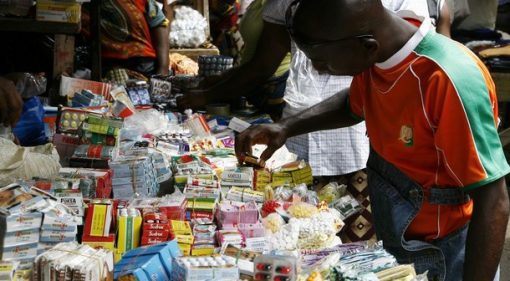
Despite efforts by the National Agency for Food and Drug Administration and Control (NAFDAC) and the Standards Organisation of Nigeria (SON), fake and adulterated drugs and food products are still common in Nigeria.
Speaking to The Guardian, Chimezie Anyakora, CEO of Bloom Healthcare and a Professor of Pharmaceutical Chemistry, said the problem continues because of criminals seeking personal gain. “As long as there are humans, there will be criminals.
And as long as there are criminals, there will be attempts to do illegal things for personal profit. This is not just a Nigerian issue; it happens worldwide,” he said.
Anyakora believes the solution lies in stricter punishments for offenders and making examples of them to discourage others. He also emphasized the importance of public awareness:
“Everyone has a role.
If you see something suspicious, report it.”
When asked if fake medicines could be completely eliminated, Anyakora said,
“I’m not sure they can be fully eradicated, but the problem can be reduced. Even in advanced countries, it is not entirely gone.”
On the high cost and scarcity of essential medicines, Anyakora explained that Nigeria’s recent currency devaluation has increased prices.
“Although we produce over 30% of the medicines we use, most of the raw materials are imported, making us dependent on foreign exchange. Many people cannot afford basic medicines,” he said.
To make medicines more affordable, he suggested increasing local production of drugs and raw materials.
He also called on the government to stock hospitals with essential medicines, which could be subsidized for affordability.
Discussing Bloom Healthcare’s recent partnerships and awards, Anyakora said they reflect the company’s impact on public health in Africa.
“Our team is committed to using African talents to solve African health problems. These awards recognize hard work and validate our vision,” he said.
Bloom recently partnered with the International Vaccine Institute (IVI) to improve vaccine access and health security across Africa.
The collaboration focuses on vaccine research, regulatory system support, local production, and public health projects.
“This partnership will help Africa produce 60% of its vaccines locally by 2040,” Anyakora said.
“It will make vaccines more accessible and strengthen Africa’s health systems.”
Reflecting on Bloom’s achievements, Anyakora noted several key initiatives.
Bloom led the pharmaceutical strategy for the IMPACT project in Nigeria, working with the National Assembly and Ministry of Health to ensure government ownership.
They also developed a supply chain program with Zipline and Sterling Bank to deliver medicines to healthcare facilities.
Currently, Bloom is running a Lab Optimization Program to improve access to diagnostics in underserved areas, aiming to support Universal Health Coverage.
“Bloom Public Health has contributed significantly to health in Nigeria and across Africa,” Anyakora said. “We also work with Africa CDC, AUDA, and NEPAD to transform the continent’s health systems.”
Comments