


Pandemonium in House of Reps over controversial Electoral Bill reversal

 Quick Read
Protests filled the floor, with visible agitation among members, particularly from the minority caucus, who appeared to hold the numerical advantage in the sparsely attended session.
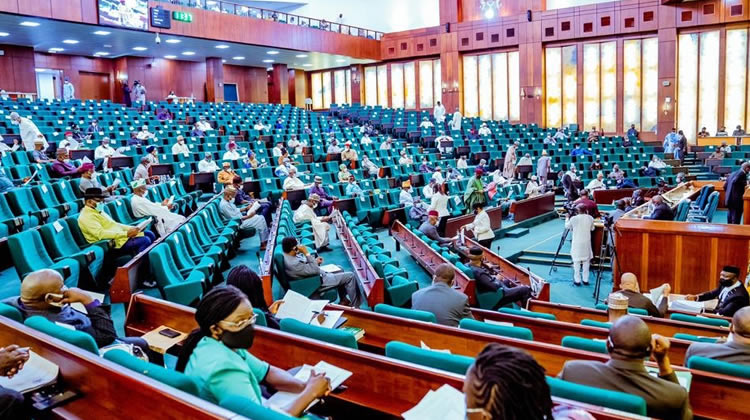
The Nigerian House of Representatives descended into chaos on Tuesday during an emergency plenary session presided over by Speaker Tajudeen Abbas, as lawmakers clashed over a contentious motion to rescind their earlier passage of the Electoral Act (Amendment) Bill, 2025.
The sparsely attended sitting, convened specifically for this purpose, featured a single item on the Order Paper: the rescission of the bill, which the House had approved in December 2025.
The motion at the House of Representatives was moved by Hon. Francis Waive, Chairman of the Committee on Rules and Business, and seconded by Hon. Adebayo Balogun, Chairman of the Committee on Electoral Matters.
Waive argued that a technical committee, including leadership from both chambers, conference committee members, National Assembly clerks, and legal experts, had identified anomalies in the harmonized version of the bill.
He emphasized the need to correct inconsistencies and unintended consequences to protect electoral timelines, promote inclusivity, fairness, administrative efficiency, and public trust in the system.
The motion sought to rescind the prior decision and recommit the bill to the Committee of the Whole for further consideration.
However, when House of Representatives Speaker Abbas put the motion to a voice vote, the chamber erupted. A majority of lawmakers vocally shouted “nay,” rejecting the rescission.
The Punch reports that despite this, the Speaker ruled in favour of the “ayes” from the fewer supporting voices, triggering immediate uproar.
Protests filled the floor, with visible agitation among members, particularly from the minority caucus, who appeared to hold the numerical advantage in the sparsely attended session.
One notable exchange involved Jigawa lawmaker Abubakar Yalleman pointing accusingly at Osun counterpart Bamidele Salam, though details of their interaction remained unclear.
Amid the growing disorder, the House adjourned into a closed-door executive session. As of the latest reports, plenary had not resumed.
The dispute centres on a key divergence between the House and Senate versions of the amendment, particularly regarding the transmission of election results.
The House version mandates real-time electronic transmission of results from polling units to the Independent National Electoral Commission’s (INEC) Result Viewing Portal (IREV), aiming to minimize human interference and enhance transparency ahead of the 2027 general elections.
In contrast, the Senate’s position allows manual transmission as a fallback where real-time electronic means fail due to connectivity or technical issues, reflecting concerns over infrastructure gaps in many parts of the country.
Comments