


Single African Currency: Nigeria to host African Central Bank, boost continental Influence

 Quick Read
Nigeria’s permanent seat on the AMI Board will last only during the transition period before the African Central Bank is formally established, in line with AU principles of rotation and regional balance.
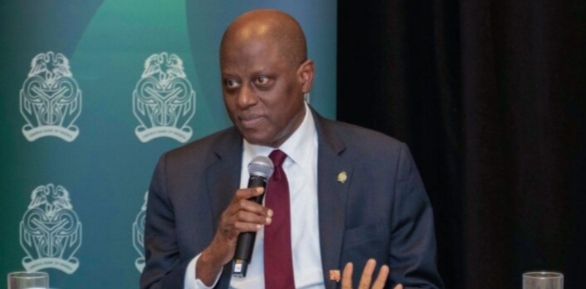
Governor of the Central Bank of Nigeria (CBN), Olayemi Cardoso, has said Nigeria is playing an important role in Africa’s plan to create a single currency.
In a statement released in Abuja, Cardoso explained that Nigeria is hosting the African Monetary Institute (AMI) and will later host the African Central Bank (ACB). This places Nigeria at the centre of Africa’s efforts to form a monetary union and introduce one common currency for the continent.
Recently, at the 39th Ordinary Session of the Assembly of the African Union (AU), Nigeria was granted permanent membership on the Board of the AMI during the transition period before the African Central Bank is fully established.
Cardoso described the development as a major achievement for both Nigeria and Africa. He said it strengthens Nigeria’s influence in shaping Africa’s financial system and supports the continent’s goal of economic integration and financial independence.
He added that the decision shows progress toward better cooperation among African countries in areas such as monetary policy, exchange rate stability, and payments systems.
The CBN governor also acknowledged the efforts of the CBN and the Federal Ministries of Foreign Affairs, Justice, and Finance in securing the achievement. According to him, the CBN played a key technical role in drafting the AMI statute and also provided facilities and logistics to help launch the institute.
The move is part of Africa’s long-term plan under the Abuja Treaty, which was adopted in 1991 and became active in 1994. The treaty aims to promote economic integration across Africa, including the creation of a common market and a single currency.
The proposed African Central Bank will coordinate a common monetary policy and issue a single African currency. Its goals include promoting international monetary cooperation, ensuring exchange rate stability, improving payment systems among member states, and removing foreign exchange restrictions that limit trade.
Cardoso said Nigeria’s progress is the result of years of reforms, diplomacy, and technical work. He noted improvements in monetary stability, foreign reserve management, banking supervision, and payment system modernisation, which have strengthened Nigeria’s credibility across Africa.
He added that Nigeria will continue working closely with the AU Commission, the Association of African Central Banks, member states, and development partners to ensure a strong foundation for the African Central Bank and the future single currency.
Nigeria’s permanent seat on the AMI Board will last only during the transition period before the African Central Bank is formally established, in line with AU principles of rotation and regional balance.
In addition, Nigeria will serve on the AMI’s Technical Convergence Committee, which focuses on harmonising fiscal and monetary policies across Africa as the continent moves toward a unified monetary
Comments