


Memory of Mabel Segun

 Quick Read
It was in the same interview that Mama Segun observed that she was born Mabel Dorothy Aig-Imoukhuede on March 5, 1930, in Ondo town in the part of Nigeria that would later be named Ondo state. Her father was Isaiah Aigbovbioise Imoukhuede, a clergyman who hailed from Sabongida Ora in Edo state, and was on mission work in Ondo when Eunice, his wife, gave birth to Mabel.
By Wale Okediran
One year after her departure, losing an icon of Mabel Segun’s stature despite her advanced age still remains very difficult. While on one hand her passing is unlikely to be that surprising, given her age and the passage of time, on the other hand, the incident still came as something of a shock to find someone of such immeasurable esteem, charm and grace who is well known to suddenly be no longer around.
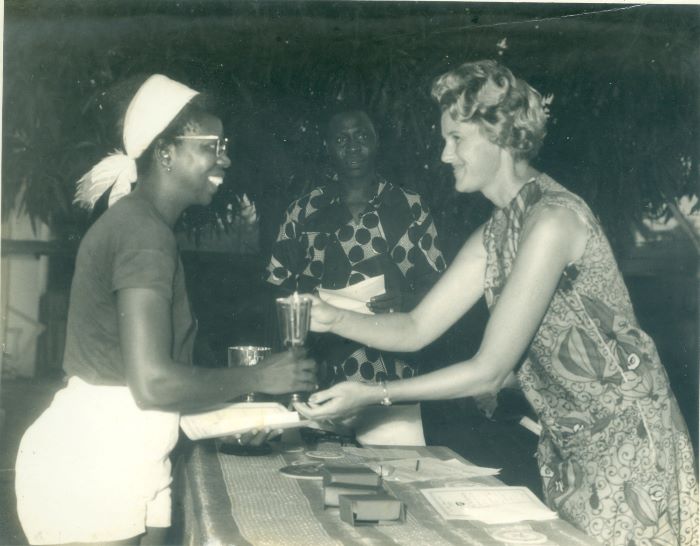
As a founding member of the Association of Nigerian Authors (ANA) established by Chinua Achebe in 1981, Mabel Segun contributed to the promotion of African Literature especially, literature for children. Some of her children’s books include autobiographies for younger readers ‘My Father’s Daughter’ published in 1965 and ‘My Mother’s Daughter’ published in 1986, as well as Olu and the Broken Statue (1985), The First Corn (1989) and The Twins and the Tree Spirits (1991/2004). Segun also has published poetry for children, including one she edited with Neville Grant – Under the Mango Tree (1980) – that features poems for all over Africa and the diaspora. A champion for children’s literature in Nigeria, Segun founded the Children’s literature Association of Nigeria in 1978 and set up the Children’s Documentation and Research Centre in 1990 in Ibadan, Nigeria.
I had an amazing relationship with Mama Segun that spanned about four decades. During this period, she played several roles in my life: literary teacher, editor, and family counsellor. Perhaps her greatest influence on me was in the area of Children’s Literature. Although as an official of the Association of Nigerian Authors (ANA), I was expected to help oversee a workshop on children’s Literature organized by the association many years ago in Kaduna State, I decided to join the workshop as a participant. The workshop which was sponsored by the late General Shehu Yar Dua was a testament to Mabel Segun’s influence and dedication to the field of Literature in Nigeria. Her tutelage at the workshop planted the seed of children’s literature in me which has now blossomed into a passionate interest with an award-winning children’s literature book; THE RESCUE OF UNCLE BAB’S to show for my interest.
During the workshop, I learnt from Mabel Segun that writing for children was more difficult than writing for adults; as she put it; “writing for children is much more difficult than writing for adults. Children at different ages have different interests, different psychological make-ups and different cognitive experiences. You must use simple language, and you must never talk down to children.’’
I once interviewed Mama Segun. During the interview, she reflected on her experiences as a fellow at the International Youth Library in Munich and her involvement with the Noma Award for Publishing in Africa. We also talked about the controversy over who should rightly be called the first published female writer in Nigeria. According to Mama Segun, Flora Nwapa is not the first published Nigerian female writer.
She narrated: “Phebean Itayemi, now Phebean Ogundipe, has this distinction.’ Her short story, which won a British Council competition in 1946, was published in an anthology. She co-authored a folktale collection in the fifties and that ended her creative writing career. I am the second Nigerian female to be published abroad. In 1954, twelve years before Heinemann published Flora’s first novel, Efuru (1966) three of my poems were translated into German and published in a German anthology, Schwarzer In 1958 one poem and a short story were similarly published in Orpheus. 2 published in another German anthology.3 Before these foreign anthologies were published, I contributed short stories, poems and essays to the Ibadan University College magazine, the University Herald (1950-54). In 1962 I was the only female writer included in Reflections 4 still before Flora’s debut with her novel. In these early days poetry and short stories were usually published in anthologies…’’
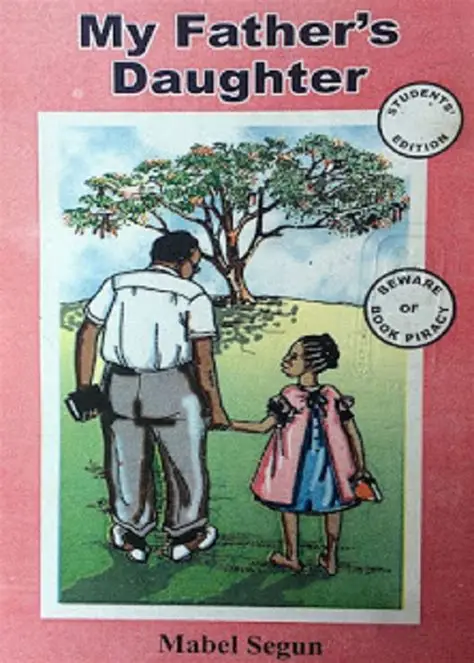
Regarding her famous autobiographical book, MY FATHER’S DAUGHTER’, I informed her that some critics argued that it is impossible for a girl who lost her father at the relatively young age of eight to remember as many details as are found in the book. In her response, Mabel Segun said: “Quite a few people have taken me up on this. You see, some people are gifted with remembering what happened to them at an early age. I am one of them. I particularly remember that part of my childhood because they impressed themselves on my mind. My father, a talented and versatile clergyman, had a strong, impressive personality and we were very close. When I saw our nursemaid after forty years and recognized her, she was surprised. I was, too, because I am not good at remembering faces. I had a very happy early childhood, and its memories can never be erased.”
It was in the same interview that Mama Segun observed that she was born Mabel Dorothy Aig-Imoukhuede on March 5, 1930, in Ondo town in the part of Nigeria that would later be named Ondo state. Her father was Isaiah Aigbovbioise Imoukhuede, a clergyman who hailed from Sabongida Ora in Edo state, and was on mission work in Ondo when Eunice, his wife, gave birth to Mabel.
Mabel’s father was also a writer of enormous repute who translated Yoruba hymn books to his local Ora language. He also wrote the first Ora primer, a short history of Ora people. Growing up in a scholarly home influenced Mabel’s perspective on knowledge, morality, and literary muse. She described her father as her “role model” and remembered every detail of the time spent with him, writing, learning, preaching and loving people. Mabel had her primary education in Akure and Ile-Ife, where one of her brothers, Frank Aig-Imoukhuede, the father of Aigboje, the former chairman of Access Bank plc, was born. She proceeded to CMS Girls School, Lagos, Nigeria’s oldest girls’ secondary school. Mabel’s warm literary glow, nursed under her father’s influence, encouraged her to take up writing as early as her secondary school days.
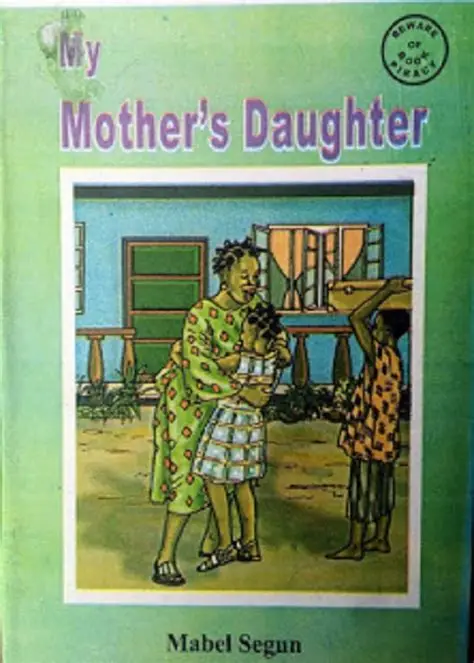
Mabel enrolled at the University College, Ibadan, after her secondary education. She studied English, Latin and History. Her contemporaries in the school include Grace Alele-Williams, first Nigerian female professor of mathematics; Christopher Okigbo, a renowned poet; Chukwuemeka Ike, the celebrated author of The Potter’s Wheel, Bola Ige, a former minister of justice, among others. She is revered as a champion of children’s books in Nigeria. Following her flirtation with the styles and beauty of poetry, she eventually discovered her talent for crafting complex ideas into simple language for kids to understand easily. Her debut work was the critically acclaimed ‘My Father’s Daughter’ published in 1965. The autobiographical work was built on Mabel’s gift of memory and was an account of her childhood bond with her father in south-west Nigeria. The book was a hit with African children who saw their experiences on the pages for the first time. The work was also considered a response to westernized narratives like The Adventures of Huckleberry Finn by Mark Twain, among others, that preceded it.
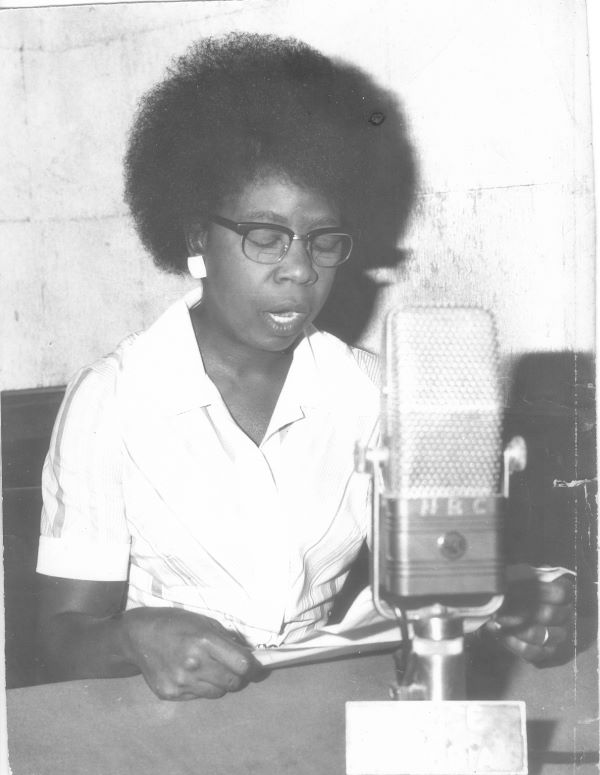
Mabel published ‘Under the Mango Tree’ in 1979 alongside Neville Grant. The book is an anthology of songs and poems for primary school students. Others followed: Youth Day Parade in 1984, Olu and the Broken Statue in 1985, My Mother’s Daughter in 1986, The First Corn in 1989, The Twins and the Tree Spirits in 1991. In 1978, she founded the Children’s Literature Association of Nigeria and twelve years later, she set up the Children’s Documentation and Research Centre in Ibadan.
According to Mabel Segun, “Some think children’s literature is easy to write. They don’t know it’s more difficult than adult literature. This is because you have to go into their minds,” she said. “To write for children, you have to write for different ages and that’s why it’s difficult. You have to study their psychology. Some write as if children are measured with one flat stick.
“For example, I can’t write for teenagers because I don’t know them or what they think about. You have to study the different ages of children.
“You have to know the children, what they consider important and what’s on their minds. You also have to find out their attention span.”
According to the famous American author and Nobel Laureate, Saul Bellow; ‘’Writers are sometimes persons of no character, socially speaking, but they should always be persons of character on the page; which is to say, they should have something strikingly original to say and they should have a marked idiosyncrasy which is noteworthy. They must persist, and they shouldn’t give up readily. They must want to make themselves known and go on record. The world has to be outwitted, and they should know how to impose themselves; yet their insistence should not be merely cranky or psychopathic. They should have something real to insist upon’’.
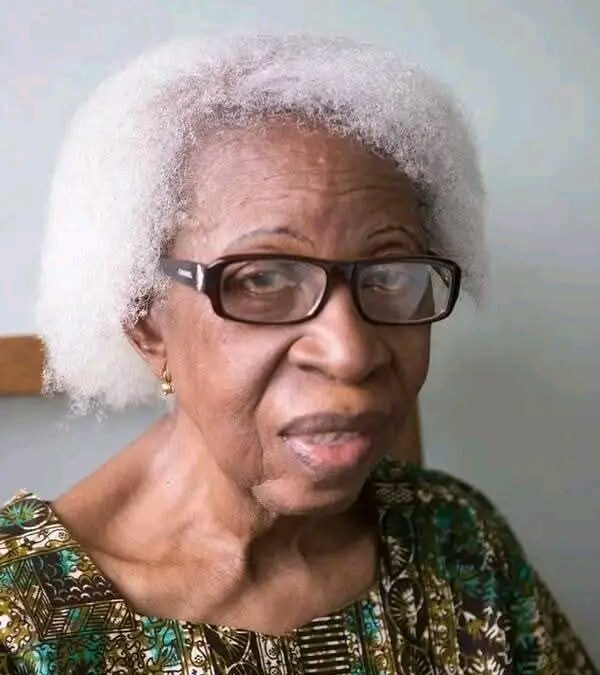
Mabel Segun had both social character and literary success especially in children’s literature as well as mentorship. Her legacy in children’s literature is marked by her commitment to authentic storytelling. On a personal note, my children have all benefited from her tutorship as can be gleaned from the poem INK OF GRATITUDE which was written by my daughter who herself is today a mother of two children.
To family and friends, Mama Segun will always be remembered as a loving mother and an adored mentor and friend whose enormous influence laced with calm wisdom and kindness will be sorely missed. For her, this eulogy is a celebration of life, and a thanksgiving for a life well spent.
May her dear soul continue to rest in perfect peace, and may the good Lord console all those he left behind, amen.
*Dr Wale Okediran is Secretary-General of the Pan African Writers’ Association, Accra, Ghana.
Comments