


Remembering Mabel Segun (1930–2025)

 Quick Read
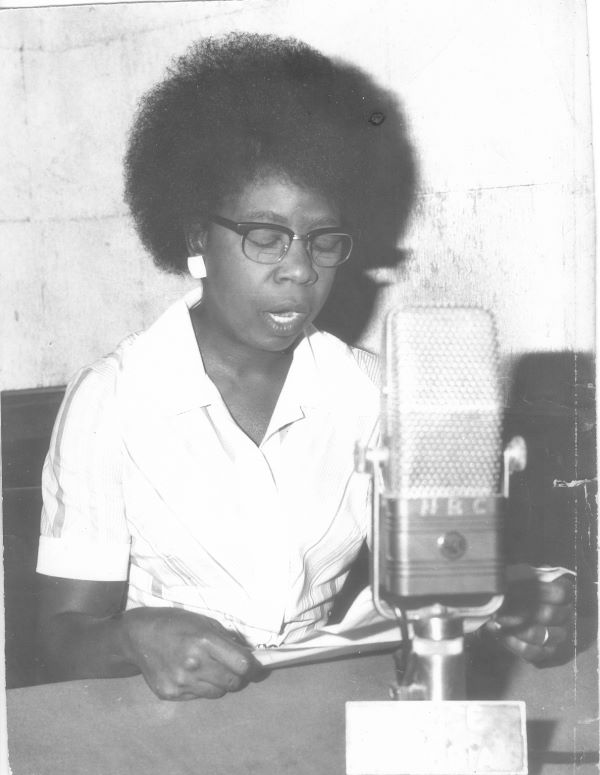
In Memory of a Pathfinder who was Unapologetically Herself. Mrs. Mabel Dorothy Okanima Segun, who passed away on 6 March 2025 at the age of 95, lived a life that redefined what was possible for Nigerian women in letters, sport, broadcasting, education, and public life. Hers was a life of trailblazing achievements and quiet, transformative influence. Mabel Segun was, quite simply, one of the most consequential figures in Nigerian letters.
By Bunmi Oyinsan
In Memory of a Pathfinder who was Unapologetically Herself.
Mrs. Mabel Dorothy Okanima Segun, who passed away on 6 March 2025 at the age of 95, lived a life that redefined what was possible for Nigerian women in letters, sport, broadcasting, education, and public life. Hers was a life of trailblazing achievements and quiet, transformative influence. Mabel Segun was, quite simply, one of the most consequential figures in Nigerian letters. But beyond her numerous accomplishments, she was also the first writer whose voice made me believe that writing was something I could do.
From Early Years to Literary Beginnings
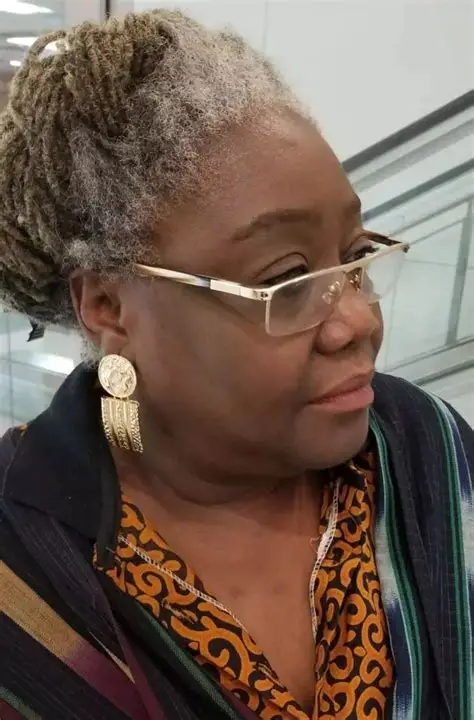
Born into the family of Rev Isaiah and Mrs. Eunice Aig-Imoukhuede in Ondo City, Nigeria, Mabel Segun grew up in a home where literature, music, and faith converged. Her father was both clergyman and scholar — translating hymns, writing texts, and instilling in his daughter an early love for language. This early attentiveness to stories, rhythm, and voice would shape a lifetime of creativity.
Mabel Segun’s grit was her own, but the foundation for her courage and ambition was laid by her mother. Though her mother longed to learn, every school she attended turned her away. In those days, girls were not meant to be educated. Even when she journeyed as far as Benin, from her home in Ora in pursuit of education, she was driven out again and again, not for lack of ability, but because society refused to grant her access to learning simply because she was female.
As Mabel Segun later recounted:
“My mother was great, too. Unfortunately, in those days there was discrimination against women. Each time she went to school, they drove her out… they said, ‘What is a girl doing here? Girls were not supposed to be there; they were supposed to be in the kitchen.’”
Perhaps because Mabel Segun knew about her mother’s struggles, the humiliation of exclusion, she never accepted limitations on women’s voices or aspirations. In the way she lived, worked, and wrote, she honoured women not with a label, but with example, perhaps the deepest feminism of all.
At University College, Ibadan, she was among a handful of young women in the first generation of university students in Nigeria. There, she studied alongside future literary giants. But despite Mabel Segun’s academic brilliance, this period was not only formative; it was often exceedingly difficult.
Having a mother who believed implicitly in her right to be educated, she did not know, that society still expected her to be demure, unassuming, and to avoid challenging her classmates. Because of the still paltry opportunities open to girls, she represented what men her age had never previously faced — a woman who could outthink and outperform them academically. Simply put, she unsettled many of her peers. Athletics and academics were arenas in which she excelled, and it was this excellence that made her life harder, not easier.
Worse still, some of her few female colleagues, pressured by the strictures of gender and expectation, kept their distance. In their eyes, she was too bold, too visible, too unwomanly, too competitive. They feared being “tarnished” by association, a profoundly sad demonstration of how early gendered expectations warped peer relations.
Decades later, during a reading, at which I was hosted by the Association of Nigerian Authors (ANA), Oyo, in the late Chief Bola Ige’s house, I had the privilege of witnessing something remarkable: Chief Ige offered a heartfelt apology on behalf of that generation of her male peers at UCI. He acknowledged that their discomfort, antagonism, and resistance had nothing to do with her, but in their own untested assumptions about women’s intellectual equality.
For Mabel Segun, this apology — half a century late — nearly brought her to tears. Not because she had waited for it, but because, at last, someone acknowledged that what she had endured was not a mark against her, but a proof of her uncompromising authenticity. On the way back to her house that night, she kept muttering, “I was simply being myself.”
The Woman Who Gave Me Permission to Write
As I wrote in my master’s thesis:
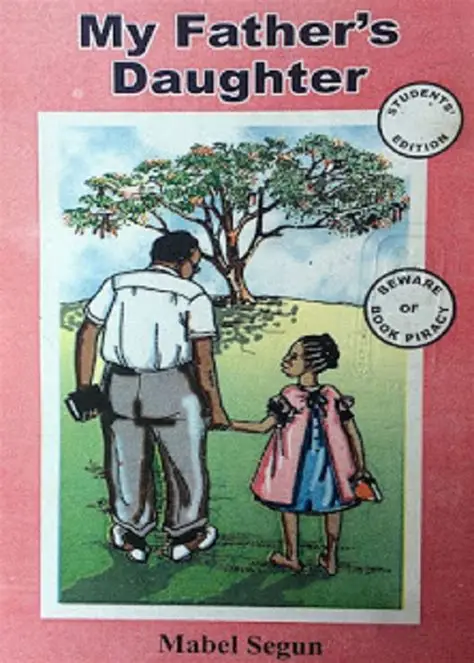
Whilst growing up, I did not have access to the works of any Black women writers except Mabel Segun who wrote a book for children titled ‘My Father’s Daughter (1965)’. The reason was mostly that women writers were never on our school reading list but also that women did not enjoy nearly as much critical or publishing attention as their male counterparts. That book — My Father’s Daughter — was often the only text by a Nigerian woman that most writers of my generation encountered. For people like me, who grew up seeing few women in print, it was nothing short of revolutionary. Mabel Segun’s book reached far beyond its audience; it reached deeply into the hearts of future writers who might otherwise never have seen reflections of themselves in literature.
Achievements Across Fields and Generations
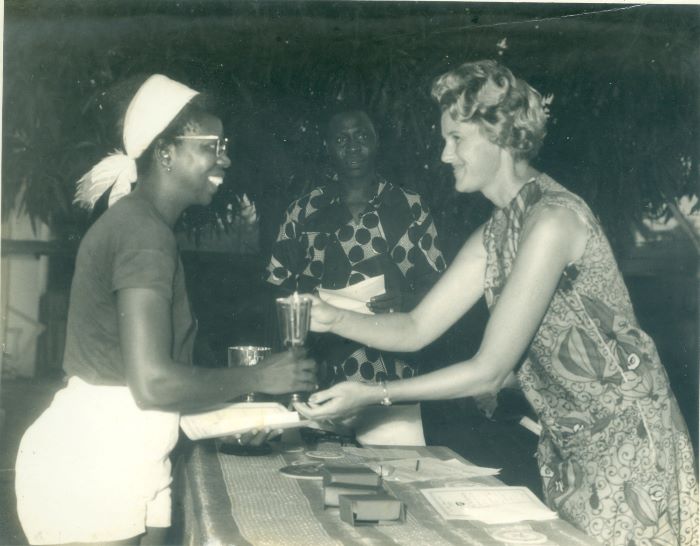
Her bibliography is vast and varied: children’s novels, poetry, short stories, memoirs, essays and cultural texts that celebrate Nigerian identity and imagination. She published works including My Mother’s Daughter, Conflict and Other Poems, The Twins and the Tree Spirits, and Rhapsody: A Celebration of Nigerian Cooking and Food Culture. Each one bears the imprint of her quiet intelligence and profound empathy. She did not limit herself to writing. She was the first Nigerian woman to compete in table tennis at national levels; she won medals and titles and continued competing into her late fifties. She excelled in badminton, taught literature, shaped broadcasting content, and helped build literary institutions that still sustain writers today.
She was a founding member and trustee of the Association of Nigerian Authors (ANA). She established the Children’s Literature Association of Nigeria (CLAN) and the Children’s Documentation and Research Centre (CLIDORC) — all frameworks that nurtured and uplifted voices, young and old. Her awards include numerous national and literary honours, yet her greatest legacy was never trophies or titles — it was the confidence she instilled in others to tell their own stories.
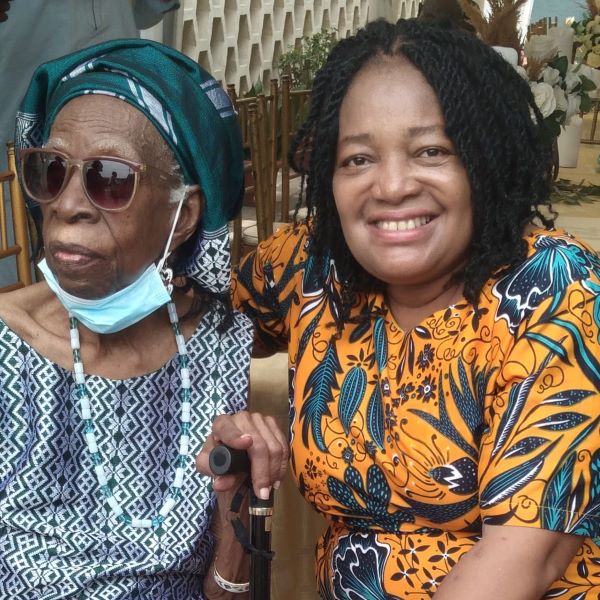
Some critics misunderstood Mabel Segun’s stance on feminism, believing that because she openly disavowed the label, she was opposed to women’s rights. Yet nothing in her life or work supports such a conclusion. Her career, whether in writing, sport, broadcasting, or mentorship, consistently affirmed women’s capacities, ambition, and equality. Like other African women writers and women writers of African descent in the diaspora of her generation, who refused to frame their philosophy in the language of movements, which was overwhelmingly Eurocentric, she embodied feminist principles in ways that most theorists never had to demonstrate. In a society that frequently celebrated men and overlooked women, her very presence: confident, unbowed, unashamed, was feminism in action long before the term became widely embraced in Nigerian circles.
A Legacy That Endures
Mabel Segun taught us that a writer need not wait for permission to be full-voiced, full-hearted, and full-bodied in her aspirations. She was never timid about claiming space, never reluctant to lead, and never shy about the value of her own voice. She leaves behind a world richer for her stories, her mentorship, her wry humour, her stamina, and her integrity.
To read her words is to encounter a mind that delights in life’s texture — its colours, contradictions, absurdities, and deep human connections. To be inspired by her life is to dare to live fully, loudly, and without apology.
In that sense, she is not gone. Her words remain. Her influence lives. Her legacy grows stronger every time a young writer writes her first sentence, her first story, her first poem.
And so, in verse, we honour the story she gave us…
Because She Held the Page Open
I learned to speak because my mother said,
“Let your voice find its own home,”
and taught me that words are wings
and not things to be afraid of.
I learned to love stories
because my maternal grandmother’s laughter
held tales like gentle sunlight —
every sentence a warm and living thing.
My paternal grandmother told me
I could be anything I set my heart toward,
and in that promise
I first believed in possibility.
But then she came —
Mabel Segun —
and in her sentences I saw
not just words,
but spaces to step into,
rooms where I might stand
and say:
Here I am.
I will write.
My Father’s Daughter
was not merely a book —
it was an invitation,
a mirror cutting through years of quiet wondering,
an acknowledgement
that stories belonged to me, too.
At university she walked among giants,
not timid, not small,
but bright and unfaltering,
her presence a quiet revolution
in lecture halls meant for men.
They did not always understand her —
some feared her light,
others dismissed it —
until, years later,
someone offered words that mattered:
“We did not know then
what we know now —
I apologise for myself and my peers.”
And she received it with grace
because grace was her quiet strength
even when the world made the path uneven.
She did not teach me to speak —
that gift was given to me by those who loved me first —
but she opened the page wide
so that I could see myself filling them,
not just as a consumer
but as a creator of worlds.
Her words taught me
to write my own.
She opened the page,
and in that gentle widening,
a generation of writers learned
how to begin.
We are indebted to this pathfinder, Mama Mabel Segun, not just for what she did, but for what she made possible.
*Dr Bunmi Oyinsan, a literary critic and novelist, wrote from Canada.
Comments