



U.S. Supreme Court smashes Trump’s Global Tariff Power in Stunning Blow

 Quick Read
By a 6–3 majority on Friday, the court ruled that Trump exceeded his authority when he invoked emergency powers to impose country-wide tariffs under the International Emergency Economic Powers Act (IEEPA).
By Kazeem Ugbodaga
In a landmark ruling, the Supreme Court of the United States has struck down President Donald Trump’s sweeping global tariffs, delivering a significant blow to his economic agenda.
By a 6–3 majority on Friday, the court ruled that Trump exceeded his authority when he invoked emergency powers to impose country-wide tariffs under the International Emergency Economic Powers Act (IEEPA).
The justices held that the 1977 law, designed to address genuine national emergencies, does not authorise a president to unilaterally impose broad-based tariffs.
The ruling marks a rare judicial check on Trump’s expansive use of executive authority. In recent months, the conservative-leaning court had largely allowed the president to advance controversial policies on immigration and federal restructuring while legal challenges unfolded.
However, in this expedited case, the majority drew a firm constitutional boundary.
Writing for the court, the justices concluded that Congress, not the president, holds the power to impose tariffs.
The IEEPA, they stated, permits regulation of certain economic transactions during emergencies but does not grant sweeping authority to tax imports.
The majority comprised Justices Ketanji Brown Jackson, Elena Kagan and Sonia Sotomayor, joined by conservative Justices Amy Coney Barrett, Neil Gorsuch and Chief Justice John Roberts. Justices Clarence Thomas, Samuel Alito and Brett Kavanaugh dissented.
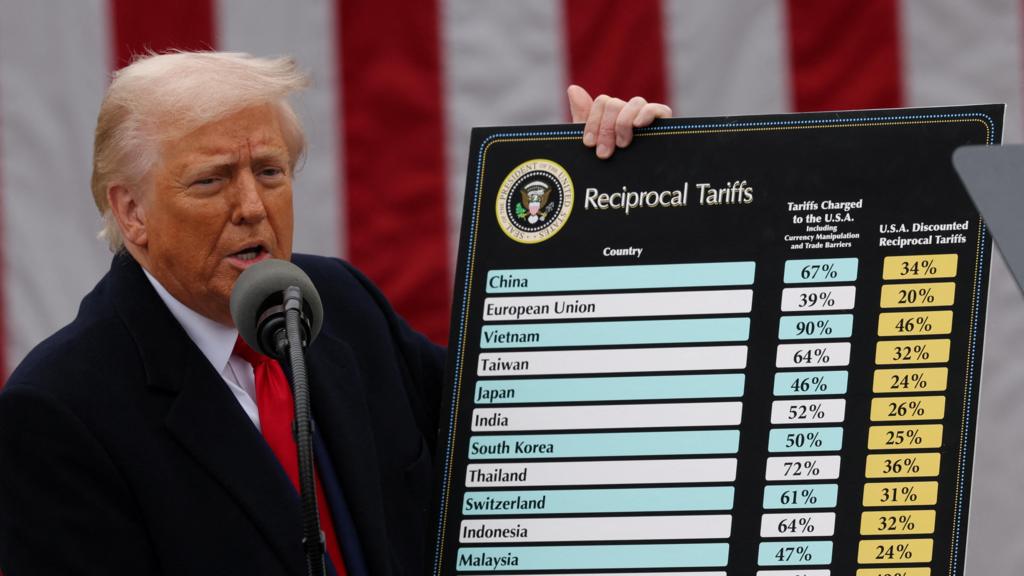
The ruling applies specifically to the so-called “Liberation Day” tariffs announced in April, when Trump imposed levies ranging from 10% to 50% on goods from nearly every country.
He had argued that the US trade deficit constituted an “extraordinary and unusual threat” to national security.
It also affects earlier country-specific tariffs imposed on China, Mexico and Canada under the same emergency statute, justified by the administration as a response to drug trafficking and migration concerns.
However, the decision does not invalidate industry-specific tariffs on steel, aluminium, lumber and automobiles introduced under Section 232 of the Trade Expansion Act, which cites national security grounds. Those measures remain intact.
Financial markets reacted swiftly and favourably to the ruling. Early trading on Wall Street showed gains across major indices, with the S&P 500 rising by 0.45%, the Nasdaq up 0.42%, and the Dow Jones Industrial Average edging 0.07% higher.
A long-time advocate of protectionist trade policies, Trump has consistently defended tariffs as essential to reviving American manufacturing, reducing trade deficits and strengthening the US negotiating hand globally.
Speaking in Georgia on Thursday, prior to the ruling, the president insisted it was his “right” to impose tariffs, arguing that “without tariffs, everybody would be bankrupt.”
He also expressed frustration over the court’s delay, stating he had been “waiting forever” for the decision.
The White House has yet to issue a formal response, though Trump is widely expected to react publicly, possibly via his Truth Social platform.
PM NEWS reports that the judgment carries broader implications for the balance of power between the executive branch and Congress. By reinforcing legislative authority over trade policy, the court has signalled limits to presidential discretion in economic matters framed as emergencies.
Comments