


NECA, CPPE, stockbrokers welcome CBN’s MPR cut, urge broader reforms

 Quick Read
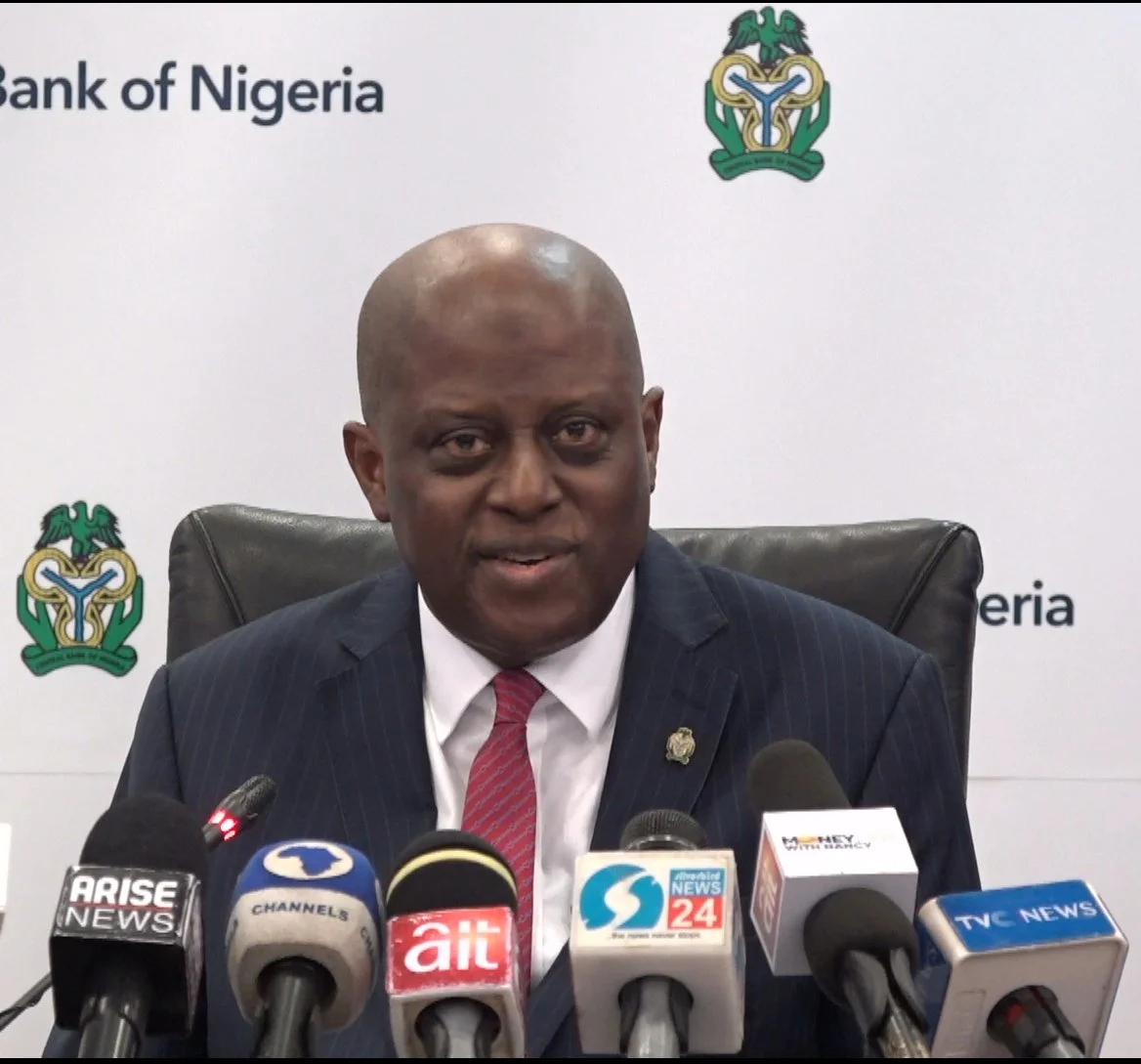
They said the decision of the Monetary Policy Committee, announced by the CBN Governor, Olayemi Cardoso, reflected improving macroeconomic fundamentals and a cautious shift from aggressive tightening
By Florence Onuegbu
Stakeholders in the Nigerian economy have declared support for the decision of the Monetary Policy Committee (MPC) of Central Bank of Nigeria (CBN) to reduce interest rates at its 304th meeting held from Feb. 23 to Feb. 24 in Abuja
The CBN’s MPC had cut the Monetary Policy Rate (MPR) by 50 basis points to 26.50 per cent.
The committee also adjusted the asymmetric corridor to +50/-450 basis points around the MPR but retained the Cash Reserve Ratio (CRR) for Deposit Money Banks at 45 per cent and 16 per cent for Merchant Banks and maintained the Liquidity Ratio at 30 per cent.
Reacting to the development, the Nigeria Employers’ Consultative Association (NECA) said reduction of the MPR by 50 basis point was “a cautious but noteworthy signal” that authorities were responding to sustained pressures on businesses.
NECA Director-General, Mr Adewale-Smatt Oyerinde said this while commending the decision in a statement issued on Tuesday in Lagos.
Oyerinde said the marginal reduction might not immediately lower lending rates but reflected “a gradual shift toward supporting growth without undermining price stability”.
According to him, the overall stance remained tight, with the Cash Reserve Ratio retained at 45 per cent and the liquidity ratio at 30 per cent.
He added that the asymmetric corridor around the MPR was also maintained, reinforcing a cautious monetary approach.
“With a substantial portion of deposits still sterilised, banks’ capacity to expand credit to the real sector may remain constrained in the near term,” he said.
Oyerinde described the move as “a careful balancing act” aimed at moderating inflation without worsening pressures on businesses.
He noted that firms continued to grapple with high operating costs, exchange rate volatility and weakened consumer demand.
“Inflation, particularly in food, energy and transportation, remains a significant challenge to employers and households,” he said.
He stressed that the modest easing must be supported by coordinated fiscal and structural reforms to address supply-side constraints.
Such reforms, he said, should improve infrastructure and enhance productivity across key sectors of the economy.
Oyerinde urged financial institutions to ensure the MPR reduction was gradually reflected in lending conditions for manufacturers and SMEs.
He affirmed that although the MPC had not fully relaxed its tightening stance, the rate cut signalled cautious optimism.
“Sustained improvements in inflation, exchange rate stability and investor confidence will determine scope for further easing that supports growth and employment,” he said. (NAN) (www.nannews.ng)
CPPE backs CBN rate cut, cites growth support
Speaking in the same vein, the Centre for the Promotion of Private Enterprise (CPPE) praised the CBN for cutting the Monetary Policy Rate by 50 basis points to 26.5 per cent.
CPPE, in a policy brief issued on Tuesday in Lagos said the move is growth supportive.
It said the decision of the Monetary Policy Committee, announced by the CBN Governor, Olayemi Cardoso, reflected improving macroeconomic fundamentals and a cautious shift from aggressive tightening.
The organisation noted that sustained disinflation, stronger external reserves, an improved trade balance and relative exchange-rate stability had created room for monetary easing.
It said the rate cut could boost investor confidence and support private-sector growth, but cautioned that weak monetary transmission might limit its impact on lending rates.
The CPPE identified high cash reserve requirements, elevated lending rates, government borrowing and structural banking costs as major constraints to effective transmission.
The group also stressed the need for fiscal consolidation, citing high public debt, persistent deficits and rising debt-service obligations as risks to macroeconomic stability.
The Chief Executive Officer of CPPE, Dr Muda Yusuf, said effective policy coordination and stronger transmission mechanisms were critical to unlocking investment and sustaining growth.
He commended the CBN for what he described as a measured and data-driven policy adjustment.
The CPPE bods noted that the easing reflected strengthening macroeconomic performance, declining inflation, growing reserves, improved trade balance and enhanced foreign exchange stability.
Yusuf added that for the benefits of monetary easing to be fully realised, authorities must strengthen transmission to ensure lower lending rates for the real sector and advance credible fiscal consolidation to safeguard stability.
He said that if supported by structural reforms and disciplined fiscal management, the current policy direction could unlock a stronger investment cycle and more durable economic growth.
CBN rate cut signals economic recovery – Stockbrokers
Also, stockbrokers said the decision of the CBN to reduce interest rates signals a cautious shift toward economic growth but warned that downside risks persist.
The stockbrokers, in separate interviews said the move reflected growing confidence in macroeconomic stability, particularly amid moderating inflation and relative stability in the foreign exchange market.
Mr Tajudeen Olayinka, Chief Executive Officer of Wyoming Capital and Partners said that the decision by MPC to drop MPR by 50 basis points was commendable, in view of numerous headwinds that could create shocks of different magnitudes.
“The committee was mindful of possible impact of a large interest rate cut on foreign portfolio inflows, and so, would not take interest rate decision that could hurt capital importation or disturb exchange rate stability.
“The decision to adjust interest rate to 26.5 per cent is in order. Time will come when interest rate will align with the market, and I think MPC of CBN is waiting for that opportunity to show itself,” he said.
Also speaking, Mr David Adonri, Vice President of Highcap Securities, said the rate cut suggested growing confidence by monetary authorities in the economy.
He noted that the move might had been influenced by recent moderation in inflation and appreciation of the naira, indicating a possible shift toward a pro-growth, expansionary monetary policy.
According to him, the MPC may be easing monetary policy on the assumption that fiscal interventions were beginning to address underlying structural imbalances in the economy.
“After the last reduction of MPR before this latest one, there was a spike in inflation rate.
“Perhaps current reduction indicates that the Monetary Authority is confident that prevailing economic factors now warrants relaxing monetary policy.
“This may be justified by the recent moderation in inflation rate and appreciation of the Naira.
“Meanwhile, the downside risks emanating from rural insecurity remains a big threat to inflation and financial stability,” he said. (NAN) (www.nannews.ng)
CBN interest rate cut will consolidate macroeconomic stability – Uwaleke
Speaking in the same vein, Prof. Uche Uwaleke, the President of the Capital Market Academics of Nigeria (CMAN) described the 50 basis points cut in interest rate by the Monetary Policy Committee (MPC) as a prudent, cautious and credibility-building move.
Speaking in Abuja on Tuesday, Uwaleke said the move was consistent with a central bank that wanted to consolidate macroeconomic stability.
He said the decision also aligned with the recapitalisation exercise, quoting the bank as saying that 20 banks had met the new capital thresholds.
Uwaleke noted that stability was critical during such structural adjustments adding that a measured rate cut would help to avoid unnecessary volatility.
He described the cut as a transition from tightening mode to calibrated easing mode which was important for market confidence.
According to him, granted, inflation has been falling for eleven consecutive months.
”Headline inflation is down to 15.10 per cent, food inflation has dropped sharply, and month-on-month inflation even turned negative. That is a very strong signal that prior tightening is working.
”Reserves are at a 13-year high, the exchange rate is relatively stable, and capital inflows are improving.
”Much of the disinflation we are seeing now is the delayed effect of earlier tightening.
”If the CBN eases too quickly, it could reverse those gains, remember, inflation expectations in Nigeria are historically fragile.
”The CBN wants to consolidate credibility before accelerating easing,” he said.
Uwaleke said the 50 basis points cut signalled three objectives which hinged on supporting growth as Purchasing Managers’ Index at 55.7 points suggested expansion, preserving exchange rate stability, and anchoring inflation expectations.
”The communique mentions potential election-related fiscal spending as an upside risk.
”If fiscal policy becomes expansionary, monetary policy may need to stay tighter for longer.
”A gradual easing cycle gives the CBN flexibility,” he said.
The expert said that if disinflation continued for another two to three months and external conditions remained stable, there could be further gradual cuts.
”But the era of aggressive easing is unlikely unless inflation falls much faster or growth weakens sharply”.
NAN
Comments