


Alleged $1.043 fraud: EFCC asks Supreme Court to revoke Ajudua’s bail

 Quick Read
The EFCC particularly faulted the Court of Appeal for allegedly holding that the Supreme Court did not order Ajudua’s continued detention, describing the lower court’s position as contrary to the doctrine of judicial hierarchy and the finality of Supreme Court’s decisions.
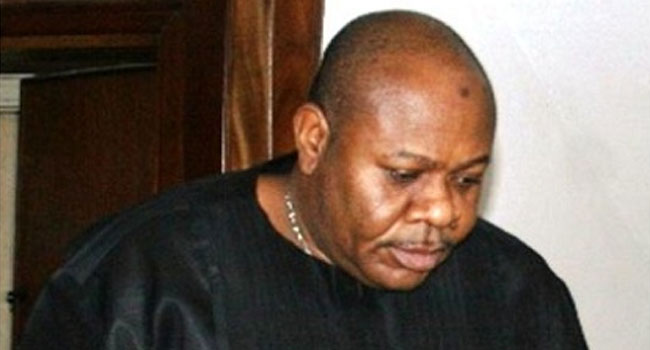
The Economic and Financial Crimes Commission (EFCC) has asked the Supreme Court of Nigeria to revoke the bail granted to Lagos socialite, Fred Chijindu Ajudua, by the Court of Appeal of Nigeria sitting in Lagos.
In a notice of appeal dated February 20, 2026 and filed at the apex court in Abuja, the anti-graft agency is challenging the entire ruling of the appellate court delivered on January 30, 2026, which admitted Ajudua to bail.
The Commission, through its counsel S.K. Atteh argues that the Court of Appeal erred in law when it dismissed the prosecution’s preliminary objection and proceeded to grant bail to the defendant.
According to the EFCC, the appellate court failed to properly interpret the earlier judgment of the Supreme Court delivered on May 9, 2025, in related appeals involving Ajudua.
The Commission argued that the apex court had effectively foreclosed further consideration of bail when it ordered that the respondent remain in custody pending the speedy trial of the charge.
The EFCC particularly faulted the Court of Appeal for allegedly holding that the Supreme Court did not order Ajudua’s continued detention, describing the lower court’s position as contrary to the doctrine of judicial hierarchy and the finality of Supreme Court’s decisions.
Central to the dispute is the interpretation of portions of the Supreme Court judgment where the apex court discussed the relationship between jurisdiction and bail.
The EFCC maintained that the Court of Appeal failed to address passages in the apex court’s decision which, in its view, meant that the issue of bail had been conclusively determined and could not be revisited by any lower court.
It further argued that by granting fresh bail, the appellate court violated Sections 235 and 275(1) of the 1999 Constitution (as amended), which make decisions of the Supreme Court final and binding on lower courts.
The anti-graft agency also attacked the appellate court’s reliance on Ajudua’s medical report dated November 19, 2025 as constituting changed circumstances warranting bail.
The EFCC claimed the respondent had been diagnosed with kidney-related ailments since 1987 and had repeatedly relied on the condition to delay trial since the charge was filed in 2005.
It further alleged inconsistencies in medical reports issued by the same consultant, arguing that the Court of Appeal failed to properly evaluate the evidence before admitting the defendant to bail.
The Commission warned that allowing Ajudua to remain on bail would frustrate the Supreme Court’s directive for speedy trial. It cited an earlier case in which, despite being on bail, only one prosecution witness had been called over an extended period.
In specific terms, the EFCC is praying the apex court revoke the bail granted to Ajudua by the Court of Appeal on January 30, 2026; and restore the trial court’s ruling of November 20, 2025 which refused bail.
No hearing date has yet been announced at the Supreme Court.
Ajudua is standing trial for allegedly defrauding Palestinian businessman, Zad Abu Zalaf the sum of $1.043million.
Comments