


Why I made Mothers of Chibok – Kachi Benson

 Quick Read
Mothers of Chibok is a story that follows the lives of four mothers over the course of a farming cycle as they fight for the future and the education of their kids despite countervailing forces both man-made and natural against them.
By Nehru Odeh.
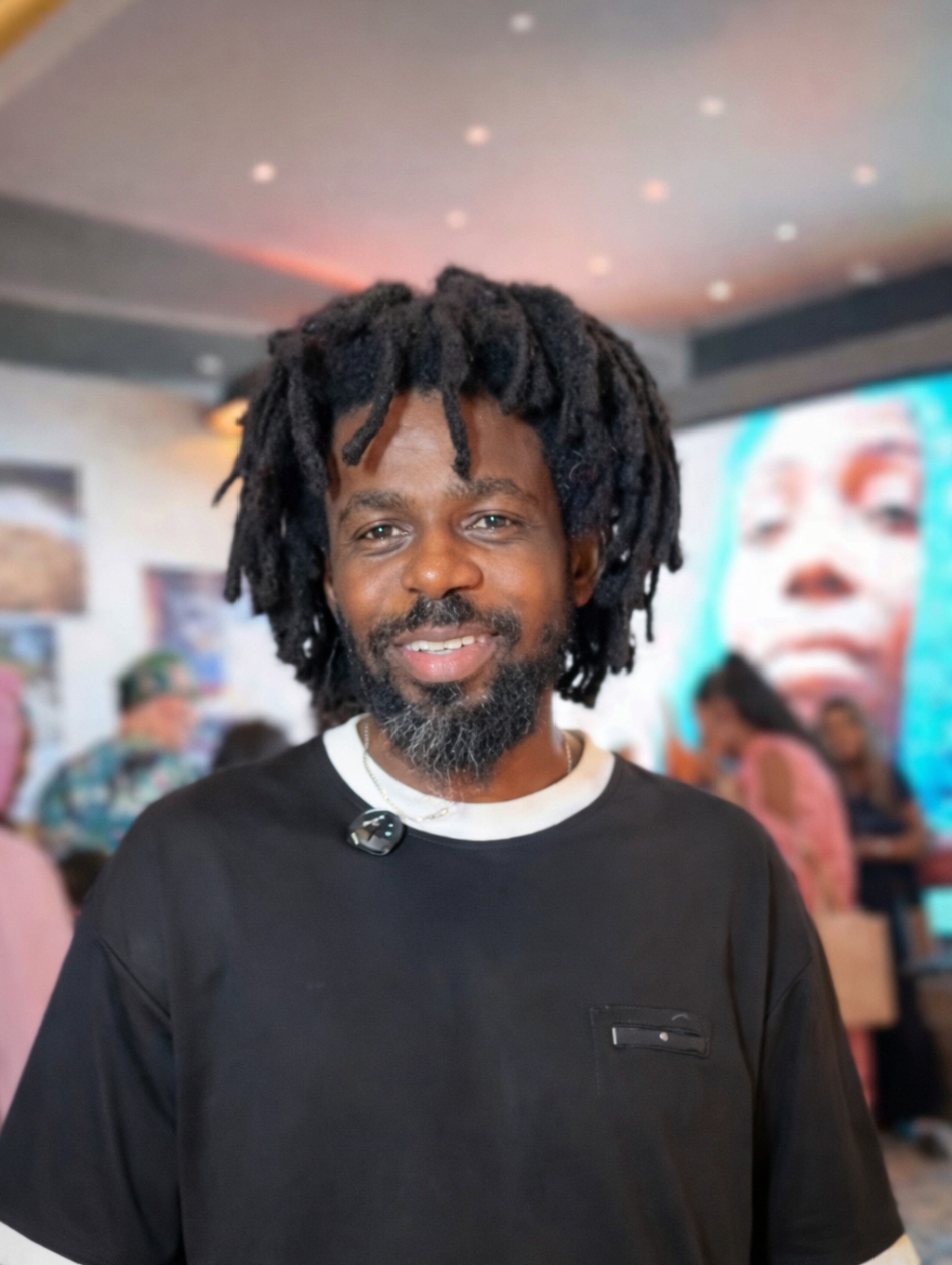
Emmy award filmmaker Joel Kachi Benson has revealed that he made the documentary, Mothers of Chibok because he wanted to show a different side to the mothers of the schoolgirls who were kidnapped by Boko Haram on Chibok on April 14, 2014, beyond tragedy, pain and grief.
Benson made this disclosure at the premiere of Mothers of Chibok at Imax Cinemas, Lekki, Lagos on Saturday, February 28 which drew a mammoth crowd made up of distinguished Nigerians eager to watch the movie whose reputation preceded it.
It would be recalled that the globe was shocked and dismayed when the news of the abduction of 276 Chibok school girls aged from 16 to 18 by Boko Haram terrorists that ill-fated April 14, 2014 went viral, triggering reactions and condemnation from across the world. Twelve years on, the world is now opportune to see via the screen how the mothers of those abductees coped – and are still coping- with that tragedy.
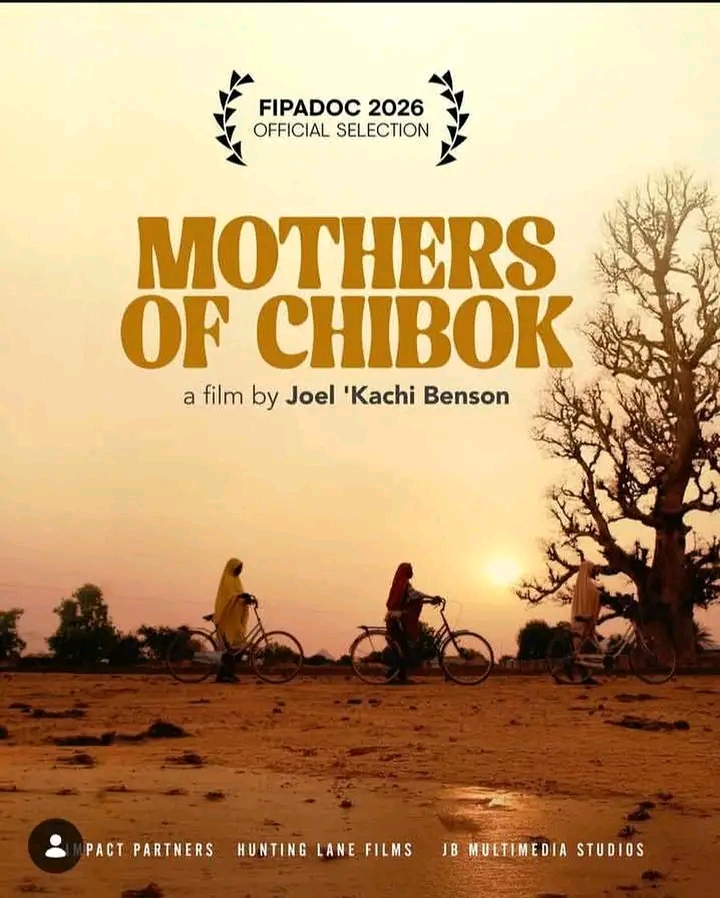
Mothers of Chibok is a story that follows the lives of four mothers over the course of a farming cycle as they fight for the future and the education of their kids despite countervailing forces both man-made and natural against them.
It tells the story of a group of women who farm their land to support their families and pay for their children’s education, years after Boko Haram abducted the over one hundred schoolgirls from their community in 2014. The movie was directed by Benson, while multiple award-winning actress Joke Silva was the executive producer.
“After spending such a long time with them (the mothers of Chibok) – I’ve been working with them since 2018 – I realized that there is more to these women than the tragedy. There’s more to these women than the pain. And that’s what I chose to focus on, the beauty, the humour, the grace, the dignity. Spending time with the mothers of Chibok, every day was an inspiration.
“Just their ability to wake up every day with the same commitment and the same resolve to want to make a better life for their children was just so inspiring, ” Benson, dressed in jeans and T-shirt and wearing dreadlocks – exuding youthfulness, energy and free spiritedness – said.
“But every time we met the women and saw their lives and how beautiful it was, and how committed they were to their children and to the education of their children and to the future of their children, I was inspired to go back. I was like, you know what, we have to finish the story. And the world needs to see the story,” Benson enthused, foreshadowing not just the greatness of the movie but the indomitable spirit of the Mothers of Chibok.
However, Benson, who was filled with enthusiasm and vivacious energy couldn’t hide his joy of seeing his brain child hit the big screen that evening. “It feels great to be here. It’s amazing. When I started making documentaries years ago, I never saw a day like this coming,” he confessed, beaming with smiles..
“It’s also humbling. But here we are. I’m glad to be here. I’m glad that we’re making a film, an impact film,.a film that really shows women through this lens of dignity and pride and resilience.
“I’m super proud to be here. It’s a great day. I was inspired to make Mothers of Chibok because I really wanted to present these mothers through a different lens, that of hope, resilience, courage and dignity.
“We think we know these women because we know their pain and their tragedy. But there’s more to them than that. There’s courage, there’s resilience, there’s beauty, there’s humour. And we don’t get to see that side often,” Benson revealed.
It was an evening of remembrance, of revelations and of the demonstration of courage, resilience and determination in the face of daunting odds on the part of the Mothers of Chibok.
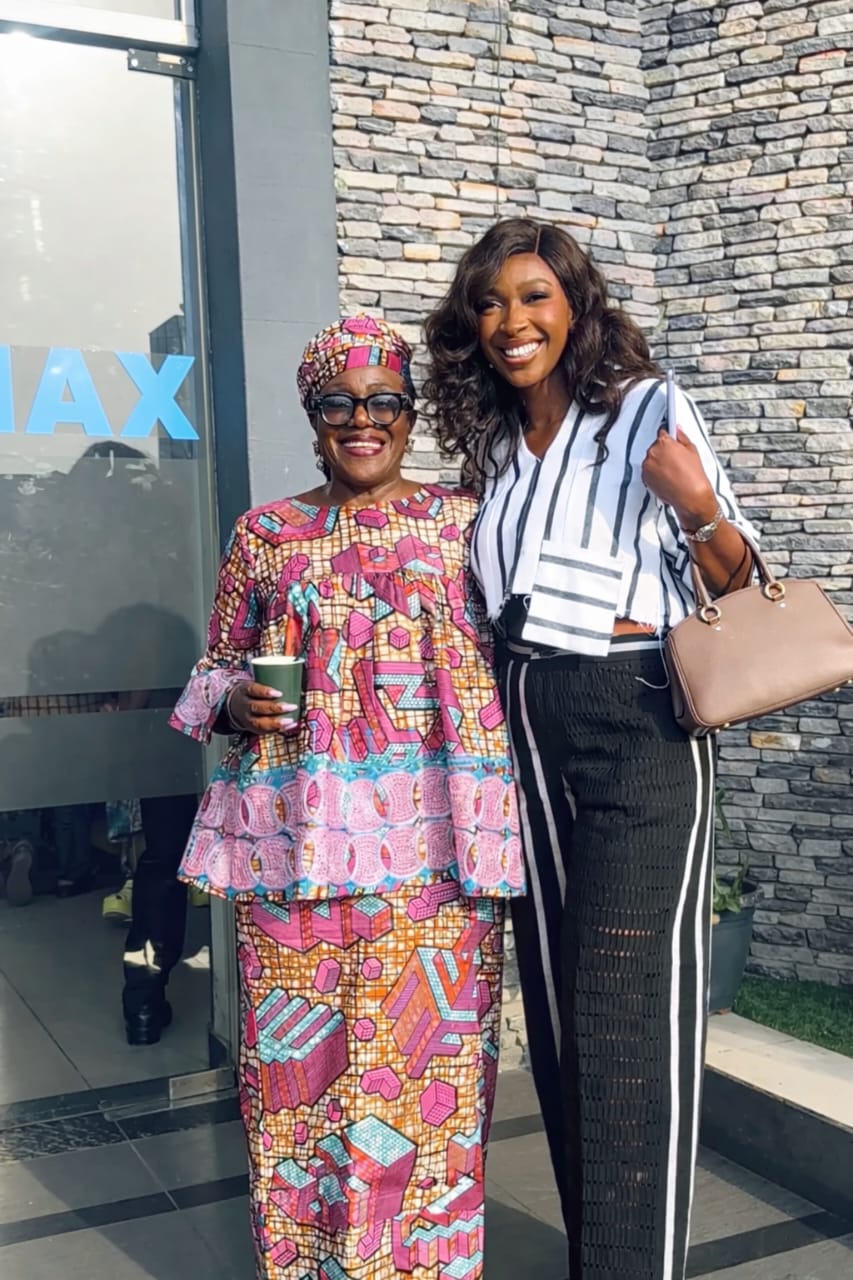
Still, a very important feature of the evening was that some of the mothers of Chibok, made up of women who have shown so much resilience, the inevitable love of motherhood and were part of the unforgettable cast were present at the premiere.
Another striking feature was that the premiere took place on the eve of March the International Women’s Month, the month in which women are celebrated. The theme of this year’s International Women’s Day, which comes up on March 8, is “Rights. Justice. Action. For All Women and Girls”.
However, the fun evening began on a very promising note in a session tagged “Meet and Taste Experience” when guests were opportune to meet the Mothers of Chibok in person and enjoy an exclusive tasting of their handcrafted groundnut creations with love and care.
This was followed by the film screening which made the audience sit on the edges of their seats and drew rounds of applause throughout. There are so many magical moments in the film. Some of them include the scene showing a lady climbing a hill to fetch water, the change of weather foreshadowing an imminent downpour, the rain clouds and the downpour.
Others include the woman with a load on her neck, using her leg to pick up a hoe, Ali’s dread of the hospital and his first day at boarding school. “This is not a hospital, it’s a school,” his mother says to him, allaying his fears. And that speaks volumes.
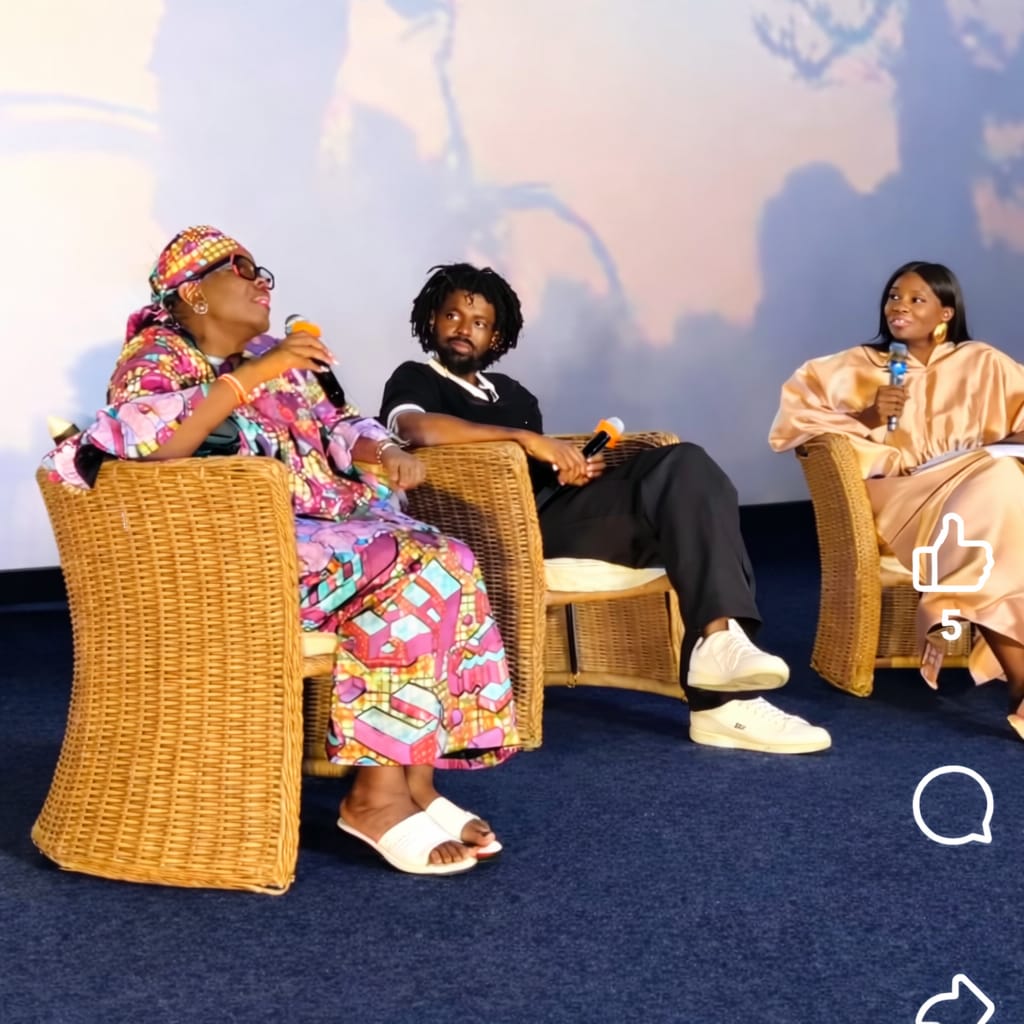
Then there was the live discussion with the Mothers of Chibok, Benson, Joke Silva, which was moderated by former New York Times journalist Lola Ogunnaike.
Seyintan Atigarin, broadcast journalist with Arise News anchored the event that evening. She set the ball rolling by giving a context for that illustrious evening.. “We’re looking at strong women who have taken this pain and made it their strength,” she averred. “This evening is also a powerful reminder that film and storytelling can be a catalyst and a narrative for change, as well as social and economic impact.
“What we are sharing tonight extends beyond cinema. It speaks to visibility, it speaks to responsibility, and it speaks to action. We are especially honored to have the Mothers of Chibok with us this evening, Atigarin said and the hall roared with applause.
Multiple award-winning filmmaker Femi Odugbemi gave a brilliant speech in which he spoke about how the movie had restored humanity where the world once saw only statistics. “He has turned a global news event back into what it has always been: a story of mothers, of families, of faith, of unbreakable endurance.
“When I first encountered this film, I wrote that it is not simply about tragedy — it is about memory, resistance, and love. It is about women who refused to disappear into silence. Women who insisted that the world must not move on. Women whose grief became a form of protest, and whose hope became an act of defiance.”
In her speech, Maryam Marshall, Senior Special Assistant to the President on Regional Development, said the Mothers of Chibok captures that social science that is called thick data, which according to her “is lived, textured experience. It’s the nuances, the silences, the silent strength that the spreadsheets cannot hold. And that’s what we’re witnessing today.
“A dashboard, for instance, isn’t going to tell you how trust was broken or how grievance feels in a household and how resilience feels in a household that is grieving either. And that’s where storytelling becomes indispensable,” she noted.
During the post-screening, fireside chat, Lola Ogunnaike enlivened the hall the more when she started the conversation by reading some comments.
“Tonight, we did not witness a story about what was taken. We witnessed what was built. The film reframes Chibok not as a headline, but as a community of women who are committed to architecting their own destinies. What we watched is enterprise, leadership, ingenuity, and immeasurable strength.
And the indomitable spirits of these women, these mothers, is beyond inspiring,” she said.
When Ogunnaike asked Benson what he hoped the audience would think after watching the documentary, the documentary filmmaker responded this:
“I think that comes from the reaction that we got when the women stood up and there was a standing ovation, not for the film, but for the women.
“I hope I’m not wrong, but what I felt in that applause was admiration for the women, admiration for their strength and their resilience. And for me, the original impetus was not to frame these women through the lens of grief and tragedy, but to frame them through the lens of strength.
“And you come away from the film not feeling pity but admiration. You think you need a story? Well, now you know their story.”
Asked to talk about why the fact that the project was not defined by tragedy was important for the movie, Joke Silva said: “Out of the ashes of what they had been through, you see these women so dignified about how they look after their children, how they make sure that their children go to school. No matter what it takes, no matter how breaking it is, those children must go to school. For us, it was very important that people see them from that lens.
“Tragedy happens. But what is important for anybody who has been through trauma is to be allowed to get through it to the other side and be given the respect that they deserve. Getting through it and getting on with their lives. Because whether you like it or not, you learn to live with it. And that was what was so amazing about this film – the incredible dignity of these women.
Asked again how he tells a story like Mothers of Chibok without documenting the pain, how he narrates a story that has been defined by something so horrifying in a way that is not exploitative, Benson stated: “I think you start by spending time. You have to be committed to spending time.I spent three years. It was a long time. when you spend time, you learn. You see other sides. And the approach that we took wasn’t just sit down, record an interview, shoot some B-roll and put it out.We spent time observing. So it was a very observatory type of film.”
When Joke Silva was asked to talk about the power of Nigerian cinema and how it can be used to shape national memory, given the fact that she is a force on camera and behind the scene, she said the women’s story had now been archived. “We will never forget the mothers of Chibok because we have it on film.
“And the film is so powerful that it has documented their story from their own perspective. They told their story. And what is fascinating for me about the film is that, I don’t know how many people remember one lady who is riding a bicycle, and by the way, there are landmines on that.
“When she’s riding the bicycle, it looks like a desert, doesn’t it? And then all of a sudden, you see green, and it gets greener and greener. And that’s the power of a film like this. What it is saying to us, and what Bensoni has done with this film, is to switch the narrative and say that these women are farmers.”
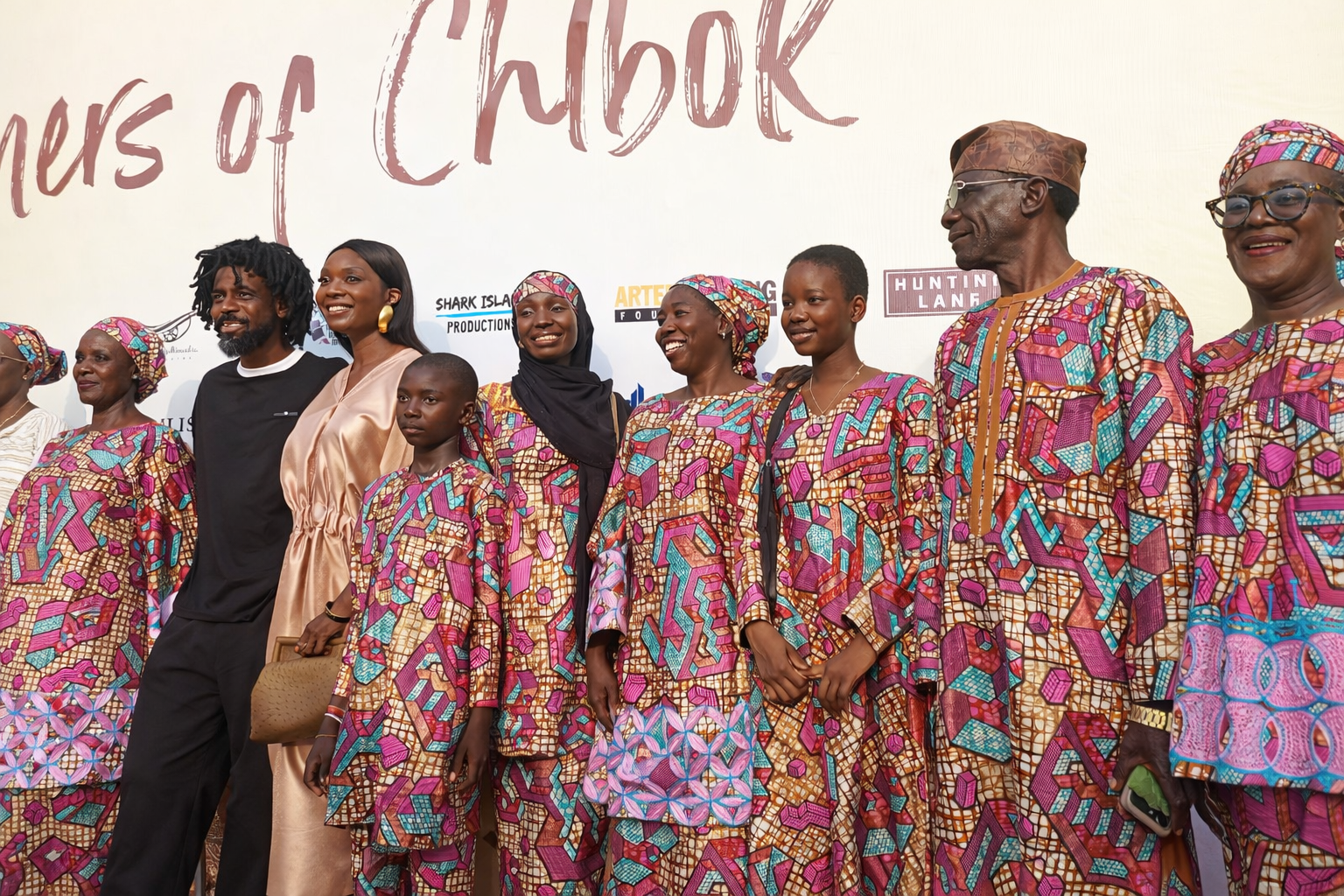
The conversation went on and on. And it came to a point when some of the Mothers of Chibok were invited to join in the conversation. That was indeed another highpoint of the event and it drew a round of applause from the audience as the women walked up to the centre stage with dignity. Their
indomitable spirit, their strength, their perseverance was indeed awe-inspiring. And they expressed appreciation for the support they have received so far.
“What do you hope the audience leaves with this evening? Ogunnaike asked Benson.
“I think I’ve played my part as a filmmaker, and usually you put your mind into the universe and see what happens. But I hope that when we leave today, we leave with a sense, with a better understanding of the Mothers of Chibok, with a better understanding of the story,” Benson said, obviously speaking the minds of the teeming audience at the cinema.
And as the audience left the hall with the precious gifts that the Mothers of Chibok had given them with love and care, the fact that Chibok is not only about tragedy, pain and grief but also about the resilience of the women, their indomitable spirit and courage in the face of daunting challenges was not lost on them.
Comments