


I Love Nigeria wholesomely, I’ll die Loving It – Obasanjo

 Quick Read
“I love this country with all its contradictions, and I will die loving it. I love Nigeria wholesomely and totally without bias or prejudice against anyone or any group," Obasanjo said.
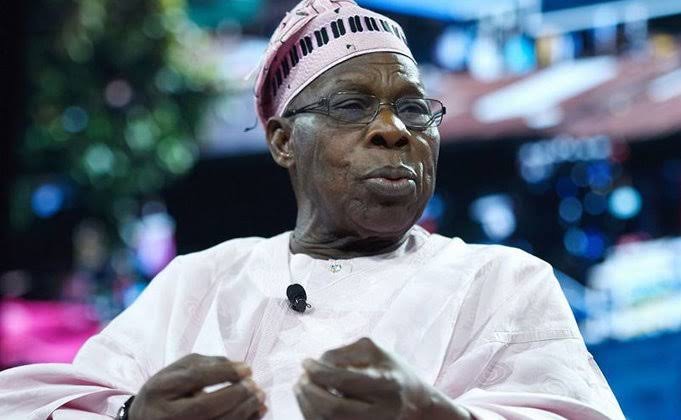
Former Nigerian President Olusegun Obasanjo has declared that his deep attachment to Nigeria remains unshaken despite decades of political turbulence, imprisonment and leadership challenges, saying he would “die loving Nigeria.”
Speaking in Abeokuta, Ogun State, during an international colloquium marking his 89th birthday, titled “Burden and Blessing of Leadership: Reflections from Global Africa to the World,” Obasanjo reflected on nearly nine decades of life shaped by war, governance, exile and national service.
The former head of state described Nigeria as a complex but extraordinary nation that gave him both opportunity and responsibility, insisting his commitment to the country has never wavered.
“I am grateful to Nigeria, this complex, magnificent and potently great country that gave me everything and asked everything of me in return,” Obasanjo said.
“I love this country with all its contradictions, and I will die loving it. I love Nigeria wholesomely and totally without bias or prejudice against anyone or any group.”
Obasanjo, who served both as a military ruler from 1976 to 1979 and as a democratically elected president between 1999 and 2007, used the occasion to reflect on the heavy burden leadership places on those entrusted with power.
Drawing from his military career and political life, he said leadership decisions often come with immense loneliness because the final responsibility rests on the shoulders of the leader.
He recalled the difficult moment near the end of the Nigerian Civil War in January 1970 when he commanded the Third Marine Commando Division and had to decide how to end the conflict without worsening the humanitarian crisis affecting civilians.
“No textbook told me what to do,” he said, noting that the responsibility of such decisions illustrates the true cost of leadership.
Despite the challenges, Obasanjo maintained that leadership also brings immense fulfilment, particularly when it provides an opportunity to serve humanity and influence historic moments.
He cited the peaceful transfer of power to a civilian government in 1979 and Nigeria’s Paris Club debt relief during his presidency as examples of moments where leadership offered both moral test and national benefit.
Reflecting more broadly on the continent, Obasanjo argued that Africa’s greatest challenge remains leadership failure rather than lack of resources or opportunities.
According to him, the continent possesses vast mineral wealth, fertile land and the world’s youngest population, yet poor governance has prevented many countries from translating these advantages into prosperity.
“The primary cause is leadership failure, the failure of those entrusted with power to lead for the people and serve them rather than against them,” he said.
Obasanjo also urged African leaders to strengthen democratic institutions and invest in the continent’s youth, warning that millions of out-of-school children could become recruits for insecurity if governments fail to act.
He further called for stronger engagement with the African diaspora, describing it as an underutilised resource capable of accelerating development across the continent.
Looking ahead, the elder statesman said Africa is on the threshold of a historic transformation but warned that real progress will depend on leaders willing to build strong institutions rather than personalise power.
As he marked his 89th birthday, Obasanjo said he remains committed to serving Nigeria and Africa for the rest of his life.
“I will continue to serve until my last breath,” he said.
Comments